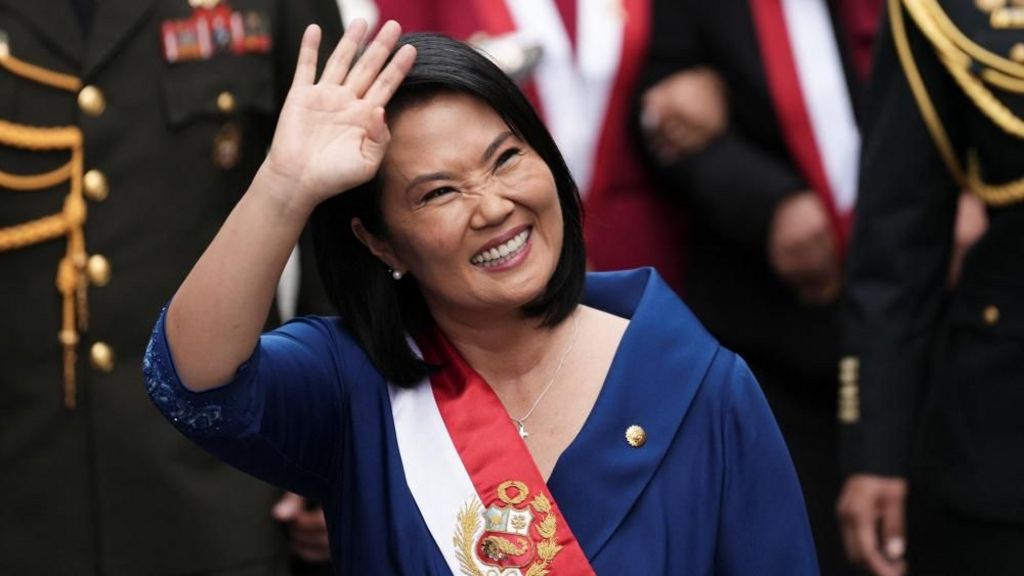
On a historic yet tense Tuesday in Lima, Keiko Fujimori took the oath of office as Peru’s first female elected president, capping four attempts at the nation’s highest office and extending a wave of conservative political leadership across Latin America. Her inauguration comes at one of the most unstable periods in Peru’s modern history: she is the country’s 10th president in 10 years, a tumultuous stretch where no chief executive has managed to complete a full five-year constitutional term.
Fifty-one-year-old Fujimori, who defeated left-wing challenger Roberto Sánchez in a razor-thin June runoff election, used her first address to the nation to lay out her administration’s core policy priorities, starting with a hardline approach to Peru’s spiraling security crisis. The country is currently grappling with its worst public safety emergency in decades, driven by the rapid expansion of local and transnational criminal gangs that run large-scale extortion rings and contract killing operations across wide swathes of the territory. In response, Fujimori announced that the Peruvian armed forces will temporarily lead all security operations in violence-plagued regions during declared states of emergency, until public order can be fully restored. This policy echoes the heavy military deployment central to the anti-insurgency campaign of her father, Alberto Fujimori, who served as Peru’s president through the 1990s before being jailed on convictions for corruption and systemic human rights abuses. The elder Fujimori died in 2024.
Beyond security, the new president acknowledged the deep challenges facing the South American nation, noting she inherited a country in “catastrophic condition.” She also pledged to take aggressive action to protect Peruvian communities from the damaging impacts of the El Niño weather phenomenon, raise the national minimum wage, and address staggering economic inequality – a problem she admitted leaves Peru with the worst wealth gap in all of Latin America, despite the nation’s long-term potential for growth.
The inauguration was not without unrest. Agence France-Presse reported that more than 100 demonstrators gathered in central Lima to protest Fujimori’s assumption of office. Many of the protesters were relatives of people killed or disappeared during past periods of state violence, including dozens of victims from her father’s crackdown on left-wing guerrilla insurgencies in the 1990s. Riot police clashed with demonstrators in the capital on inauguration day, as seen in on-the-ground reporting from Reuters.
A cohort of foreign dignitaries attended the swearing-in ceremony to mark Fujimori’s victory, including the conservative sitting presidents of Argentina, Ecuador, and Chile, reflecting the regional shift toward right-wing leadership that Fujimori’s win reinforces.