GENEVA — Tuesday brings a landmark milestone: 75 years since the adoption of the 1951 Refugee Convention, the foundational global treaty forged in the aftermath of World War II’s catastrophic chaos to extend safety to people fleeing war, violence and targeted persecution. For three-quarters of a century, supporters of the agreement estimate it has saved more than 10 million lives, but rising anti-asylum policies across the globe have left the treaty’s core principles facing unprecedented pressure.
Driven by the collective trauma of mass displacement that followed World War II, the 1951 Convention revolutionized global refugee protection by formalizing a universal legal definition of who qualifies as a refugee, outlining their inalienable rights, and setting binding standards for how signatory nations must treat people seeking safety. Today, nearly 150 countries are party to the agreement, which centers on the non-negotiable principle of non-refoulement — a rule prohibiting states from sending refugees back to territories where they would face credible threats of persecution, torture, or severe harm.
“It codified a simple but powerful principle that people forced to flee persecution, conflict or violence must be able to find safety and protection,” explained Elizabeth Tan, director of international protection and solutions for the United Nations High Commissioner for Refugees (UNHCR). “The entire framework rests on a universal truth: no community, no nation, is immune to the outbreak of war, the rise of persecution, or sudden, catastrophic upheaval.”
Despite the convention’s decades of success, compliance has eroded sharply in recent years, as a growing number of nations have closed their borders to asylum seekers and rolled back long-standing protections. During the administration of former U.S. President Donald Trump, the United States broke with decades of established policy to implement a controversial policy of forcing asylum seekers to wait out their claims in third countries, setting a global precedent that weakened the international asylum system.
The urgency of upholding the convention has never been clearer: global data shows more than 41 million people around the world are currently forcibly displaced from their homes, with nearly 70% of this population hosted by low- and middle-income nations that often lack the resources to support large refugee populations. The International Committee of the Red Cross has documented more than 130 active armed conflicts across the globe, a number that experts warn could push millions more people to flee their homes in coming years.
To mark the 75th anniversary, six refugees from across the globe shared their firsthand experiences of displacement and how the convention changed — and saved — their lives:
### Rohingya Fleeing Ethnic Cleansing in Myanmar
Sayed Alom, a humanitarian aid worker, is one of the roughly 700,000 Rohingya who fled systematic violence and persecution carried out by Myanmar’s military in 2017, crossing the border into Bangladesh where he has remained confined to overcrowded refugee camps outside Cox’s Bazar ever since.
Recalling the violence that forced his family to flee, Alom described atrocities that include mass rape, the burning of entire villages, and the killing of children. “We were persecuted until we could no longer live there,” he said. What he expected would be a temporary stay before returning home has stretched into years of limbo, made worse by rising crime including kidnapping for ransom, and recurring natural disasters that have destroyed camp infrastructure. “The situation has become imaginably worse,” he added.
### Escaping Nicaragua’s Deadly Government Crackdown
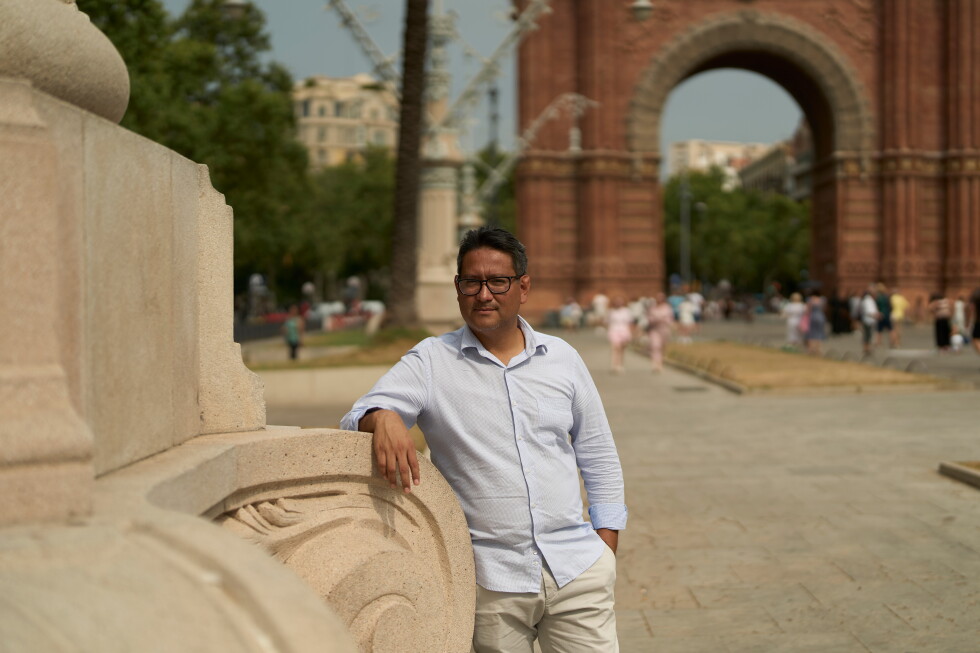
Human rights lawyer Juan Carlos Arce counts himself among the millions of people whose lives have been saved directly by the 1951 Convention. In 2018, a brutal government crackdown on anti-government protesters left hundreds dead across Nicaragua. Arce worked for the Nicaraguan Center for Human Rights, which documented the state-led violence, leading President Daniel Ortega’s regime to label the organization a terrorist group.
Arce fled Nicaragua on foot, first seeking asylum in Costa Rica. When attacks on Nicaraguan opposition figures and human rights defenders in Costa Rica turned deadly, he was resettled to Barcelona, Spain, last year through a joint UNHCR and International Organization for Migration program. “Feeling safe and protected, that is priceless,” he said during an interview in Barcelona.
### A Palestinian Refugee Decades Waiting in Lebanon
At 88 years old, Hussniyah Ahmad Ghozlan has lived in the Shatila Palestinian refugee camp in Beirut, Lebanon, for more than seven decades. She was a child when her family was forced to flee their village in what is now Israel during the 1948 war. Though she has never heard of the 1951 Convention — she never learned to read or write — she has built a life in the camp, raising children and sustaining her family through work. “We got by because we worked, raised our children and built our lives,” she said.
### A Jewish WWII Displaced Person Who Found Welcome in the U.S.
Hershel Greenblat, now 85, was born in a cave in Ukraine in 1941, where his Jewish family hid from Nazi persecution during World War II. After the war ended, his family spent years in displaced person camps in Austria before being approved to immigrate to the United States in 1949. He still remembers his father waking him in the middle of the night to see the Statue of Liberty as their ship pulled into New York Harbor, and the welcome boxes filled with supplies packed by American middle schoolers for new refugee arrivals.
Decades later, Greenblat, who has lived in Atlanta for most of his life, says refugees today face a drastically different reception. Though he had not previously heard of the 1951 Convention, he says all refugees deserve access to protection, work and education. “Refugees in the ’50s worked their butts off to get what they wanted, what we needed,” he noted.
### From South Sudanese Refugee to NBA and Olympic Basketball Star
Wenyen Gabriel’s story is one of the most visible success stories enabled by the convention. Born in Khartoum, Sudan, in 1997 to parents who had fled civil war in southern Sudan, Gabriel and his family first sought refuge in Egypt before being resettled to New Hampshire in the United States when he was two years old.
Standing 6-foot-10, Gabriel earned a basketball scholarship to the University of Kentucky before going on to play in the NBA. In 2024, he represented the newly independent nation of South Sudan at the Paris Olympic Games. Just this week, he was named a UNHCR goodwill ambassador. “We had to struggle and figure out how to become something inside of the United States,” he said. “It’s not easy to make something of yourself in a foreign country.”
### Syrian Swimmers Who Paved Their Own Path to Safety in Germany
Yusra and Sarah Mardini’s story of escaping Syria’s civil war in 2015 captured global attention, becoming the subject of a major feature film. After fleeing first to Lebanon then Turkey, the two sisters paid smugglers to take them across the Mediterranean to Greece. When their overloaded motorboat began to take on water, the competitive swimmers jumped into the sea and pushed the boat to shore, saving everyone on board.
After a dangerous trek through the Balkans, the pair received asylum in Germany, and Yusra was named a UNHCR goodwill ambassador in 2017. Though Syria’s civil war has formally ended, and roughly 1.3 million Syrian refugees have returned home, Yusra says healing and rebuilding will take time. “After such an ordeal, change doesn’t just happen overnight. You can’t just snap your fingers,” she said. “But I do believe that my country and its people are very strong, and that I’m going to contribute in the best way possible.”
This report features contributions from AP journalists across five countries, with on-the-ground reporting from Barcelona, Beirut, Atlanta, and Cox’s Bazar.