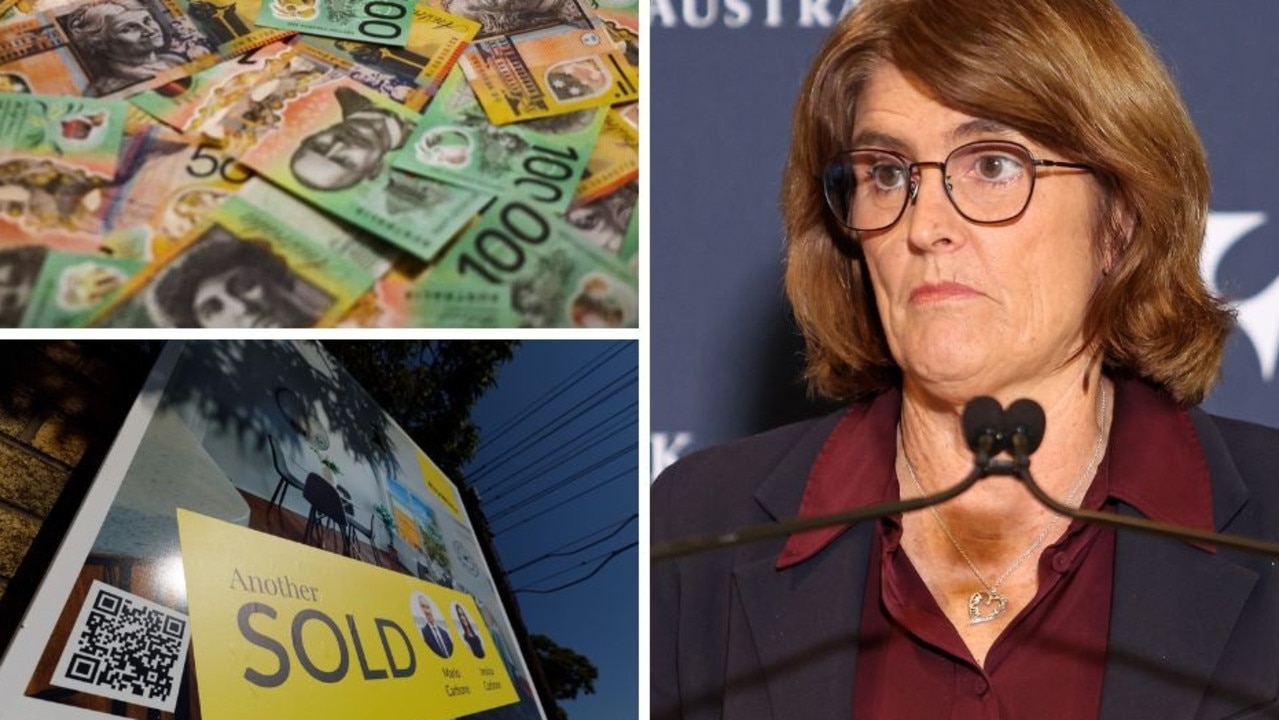
In her final public appearance ahead of the Reserve Bank of Australia’s (RBA) August 11 interest rate decision, Governor Michele Bullock has delivered a stark warning to financially strained Australian households, confirming the central bank is ready to lift borrowing costs again if required to curb persistent high inflation.
Speaking at a fundraising lunch hosted by the Anika Foundation in Sydney, Bullock emphasized the RBA’s unwavering commitment to its statutory mandate: keeping inflation low and stable while supporting maximum employment. “The board is prepared to act as required to achieve its mandate, including by increasing the cash rate further if needed,” she stated.
To hit the RBA’s 2-3% inflation target, Bullock acknowledged that a period of slower economic growth will likely be necessary, and the RBA board is willing to accept this outcome. “This does mean that some further easing in the growth of demand is likely to be required if we’re to bring inflation back down sustainably to target,” she explained. “A key question in the period ahead is whether the tightening in monetary policy earlier in the year is sufficient to achieve this.”
Bullock’s comments come after the RBA held the official cash rate steady at 4.35% in July, following three consecutive rate hikes that added 75 basis points to borrowing costs at the start of 2026. That sequence of increases reversed three rate cuts implemented in 2025.
The cumulative policy shifts have already impacted the Australian housing market, which is cooling faster than RBA officials projected earlier this year. “The housing market has eased by more than we had anticipated in May,” Bullock noted, attributing the faster slowdown to a mix of targeted housing policy changes and weakening consumer sentiment toward property. Even so, she added that overall price declines have remained modest after years of rapid growth.
Global geopolitical tension has also compounded domestic cost-of-living pressures, Bullock confirmed, pointing to the ongoing war in the Middle East between the U.S. and Iran as a major disruptive force for global energy markets. Even before the conflict erupted, however, Australia’s inflation rate was already on an upward trajectory, she clarified.
Since the war began, global benchmark crude oil prices have swung dramatically: jumping from roughly $US56 per barrel to a peak of $US120 per barrel before stabilizing near $US90 per barrel. Every $US10 per barrel rise in crude adds approximately 10 cents per liter to Australian fuel costs, though most Australian motorists have been shielded from the worst volatility thanks to a temporary 50% cut to the national fuel excise, which reduces prices by 32 cents per liter.
Bullock emphasized that despite the added complexity from the global oil shock, the RBA’s core policy goals remain unchanged. “The full effects of increases in the cash rate from earlier in the year will take time to materialise, and even if the renewed disruption to oil supply abates quickly, underlying inflation is still expected to be higher as fuel price rises flow through to other prices,” she said.
The governor’s warning comes just days ahead of the release of June quarter inflation data, scheduled for Wednesday. Financial markets currently forecast that the RBA’s preferred trimmed mean inflation measure – which strips out volatile price movements for items like fuel – will come in between 3.7% and 3.8% annually, matching the RBA’s projections released in May. That would mark an increase from the 3.5% annual rate recorded in the 12 months to March.
AMP chief economist Shane Oliver told NewsWire that a higher-than-expected inflation reading would almost certainly trigger a rate hike next month. “The RBA’s forecast for the June quarter is a headline inflation figure of 3.8 per cent, so if the figure comes in above that I think it would scare the Reserve Bank,” Oliver said. “I think a number of 3.9 per cent would be a level that makes a tightening next month almost certain.”
Oliver added that delayed second-round impacts from the Middle East oil shock are likely to push up Australia’s annual inflation rate for the June quarter. “The first-round effect (of the war) is the flow-on to petrol prices at the bowser, which is not quite instantaneous but is usually felt within a few weeks, whereas the flow-on effects to paints, plastics, fertilisers and so on take a lot longer to show up,” he explained.