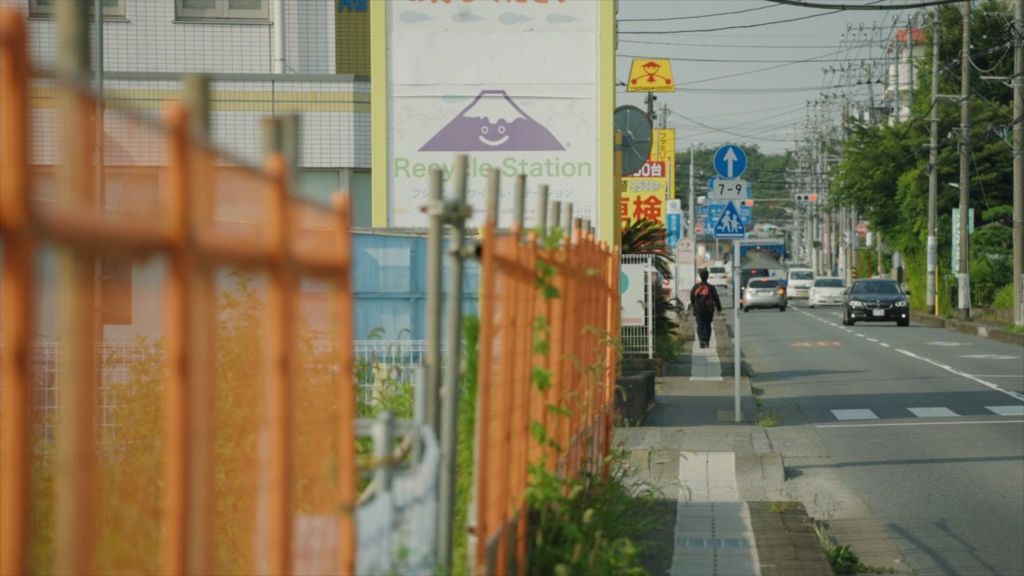
Nestled an hour’s drive south of Tokyo, the quiet coastal town of Fujisawa currently holds only an empty grassy field at the corner where a new place of worship will soon rise. That proposed construction – Japan’s first official mosque in the town – has ignited fierce, split public debate, laying bare the growing national anxiety over shifting demographics and cultural change as Japan grapples with crippling labor shortages driven by its shrinking, aging population.
For decades, Japan has maintained tightly restrictive, politically sensitive immigration policies, even as it has become increasingly dependent on foreign labor to fill gaps in its workforce. This quiet expansion of foreign workers has brought a corresponding influx of new cultures, religions, languages, and social norms to communities across the country – and the debate unfolding in Fujisawa cuts to the core of Japan’s ongoing struggle to define its national identity in an era of demographic change.
Longtime Fujisawa resident Noriko Izumizawa is one of many locals who voice unease about the project. “It makes me worry about how our community might change,” she explained, adding that polarized global debates around immigration in the U.S. and Europe have only amplified her personal concerns. Izumizawa is far from alone in her perspective: earlier this year, thousands of protestors gathered outside Fujisawa’s central train station to demonstrate against the mosque’s construction. Some critics have argued that the mosque, which will be larger than the town’s local Shinto shrine, is an act of disrespect to local Japanese traditions. Misinformation and hate speech have spread rapidly across Japanese social media, with local media outlets confirming that existing Islamic centers across the country have received hundreds of abusive phone calls and emails in response to the plan. In response, anti-hate speech advocacy groups have organized counter-protests, calling for tolerance and respect for religious diversity.
Not all local opposition is rooted in outright hostility, however. Hiroki Suzuka, who owns a coffee shop directly across from the planned construction site, takes a middle ground. “I’m not particularly opposed, but I wouldn’t say I’m strongly in favor either,” Suzuka said. “I think the first step is to learn about them, what Islam is, what kind of people they are, and what values and perspectives they hold. It begins with having an open mind and a desire to understand each other.”
For Muslim residents across Japan, the rising anti-mosque sentiment marks a noticeable shift from decades of quiet coexistence. Mohamed Mohideen, a Sri Lankan-born gem and used car trader who has lived in Osaka for 39 years, first moved to Japan during the 1980s economic bubble, when foreign residents were far fewer and more integrated into local life. Today, he says hostility toward Muslim communities has grown sharply both online and in public.
“On social media, there are countless comments like, ‘Get out of Japan’ and ‘Go back to your own country,’” Mohideen said. “People have also started coming to the mosque and shouting abuse.” While he says he has never felt his personal safety was at risk, and has maintained positive, long-standing relationships with his Japanese neighbors, he has watched the growing climate of fear with concern: “Now, I feel that people are afraid of us.”
Common verbal attacks against Muslim communities in Japan include accusations of terrorism and bomb-making, Mohideen explained. When confronted with abuse, he says Muslim leaders have chosen patience and non-confrontation, because most Japanese people simply lack familiarity with Islamic faith and culture. Still, he acknowledges that Muslim communities bear some responsibility for the current divide: “We focused only on our work and, for a long time, didn’t make enough effort to help people understand who we are. We also didn’t do enough to become part of the society. From now on, I want to work harder to increase dialogue and build better mutual understanding.”
Shakeel Mohamed, a 61-year-old Pakistani immigrant who has represented the Yashio Mosque in Saitama prefecture for 10 years, echoes this commitment to integration. After working 26 years as a construction supervisor in Japan, he speaks fluent Japanese and says his community prioritizes abiding by local rules and customs, from proper waste sorting to following traffic laws to greeting neighbors politely. “We make every effort to respect the way things are done in Japan and to follow the rules,” he said. “Of course, there are some Pakistanis who behave badly, but they’re only a small minority. And the same is true of Japanese people.”
Data confirms the rapid growth of Japan’s Muslim population: according to Hirofumi Tanada, professor emeritus of Islamic studies at Waseda University, the total number of Muslim residents (including foreign-born and Japanese converts) reached roughly 420,000 at the end of 2024, up from just 230,000 in 2019. That growth tracks a broader national shift: Japan’s total foreign resident population surpassed 4 million in 2025, with a record 2.57 million foreign workers employed across the country, per official government data. In the same year, Japan’s native population declined by nearly 1 million people, driven by decades of low birth rates.
For years, Japanese officials have avoided framing the country as an immigration nation, instead favoring a system of temporary work visas that critics have called a “stealth immigration policy.” Current Prime Minister Sanae Takaichi has taken a hardline conservative stance against large-scale permanent immigration. In June 2026, the government enacted a fivefold increase in visa fees for foreign nationals, the first such increase in nearly 50 years, and is currently moving to add 230 new staff to the Immigration Services Agency to step up enforcement against overstayers. Officials are also considering introducing formal caps on the total number of foreign residents allowed in the country.
As immigrant communities grow more visible across Japan, the country is now forced to confront a question it has long avoided: can it embrace greater cultural and religious diversity while preserving the shared national identity and social cohesion it values deeply?
Back in Fujisawa, even Izumizawa acknowledges that her anxiety stems from lack of exposure, not personal experience. She admits she has never had a negative interaction with a Muslim neighbor. “The truth is, maybe I just fear the unknown,” she shrugs.