A fragile three-day ceasefire between the United States and Iran has raised cautious hopes for diplomatic progress, after 13 consecutive nights of renewed US airstrikes brought the two long-standing adversaries back to the brink of open conflict. In remarks made aboard Air Force One on Monday, former President Donald Trump expressed guarded optimism that a negotiated peace deal could end the months-long war that broke out in late February with a joint US-Israeli military campaign that sent shockwaves across the Middle East and global energy markets. “I think there is a good chance that something could happen,” Trump stated, adding that he retained patience to see diplomatic efforts through. If talks fail, however, the president confirmed the US would quickly resume its previous military operations.
Trump pushed back against growing concerns over dwindling US ammunition stockpiles five months into the conflict, asserting that the US military retains more than sufficient munitions, including mid-range weaponry, to sustain any future operations. Despite Trump’s claims of ongoing negotiations, Iranian officials have pushed back publicly on any active talks with Washington. Iranian Foreign Ministry Spokesman Esmaeil Baqaei clarified Monday that while mediators may relay communications between the two sides, Tehran is not currently engaged in direct negotiations with the US. Baqaei also launched a scathing attack on US policy in the region, comparing Washington’s conduct over recent years to that of a “mafia gang” that rejects international rules and norms.
Even as the US and Iran hold their fire, regional instability persists. On Monday, Saudi Arabia’s defense ministry announced it had intercepted multiple drones launched from Iraqi territory by Iran-aligned militant groups, targeting key Saudi oil facilities. While no group immediately claimed the attack, Riyadh called on Iraqi authorities to crack down on militant groups operating from its soil to prevent further incursions. Iraqi Prime Minister Ali al-Zaidi has since ordered a full investigation into Saudi Arabia’s claims. Yemen’s Iran-backed Houthi rebels later claimed responsibility for a separate drone strike on Saudi oil infrastructure, launched in retaliation for recent Saudi drone incursions, though Riyadh has not yet responded to the claim. Pakistan, which has served as a key mediator in efforts to de-escalate the conflict, condemned the attacks, warning they pose a severe threat to regional peace and security. In a separate development, the Israeli military announced it intercepted two unmanned aerial vehicles near the Jordanian border, and is currently working to trace their origin. Israel has not taken part in the latest round of fighting between the US and Iran.
The ceasefire has delivered immediate relief to global energy markets, which have been roiled by tensions around the Strait of Hormuz – the world’s most critical chokepoint for global oil and gas trade. Global stock markets rallied on Monday, while benchmark Brent crude prices tumbled 6% to settle around $86 per barrel, bringing much-needed respite to Gulf shipping operators and the global energy industry.
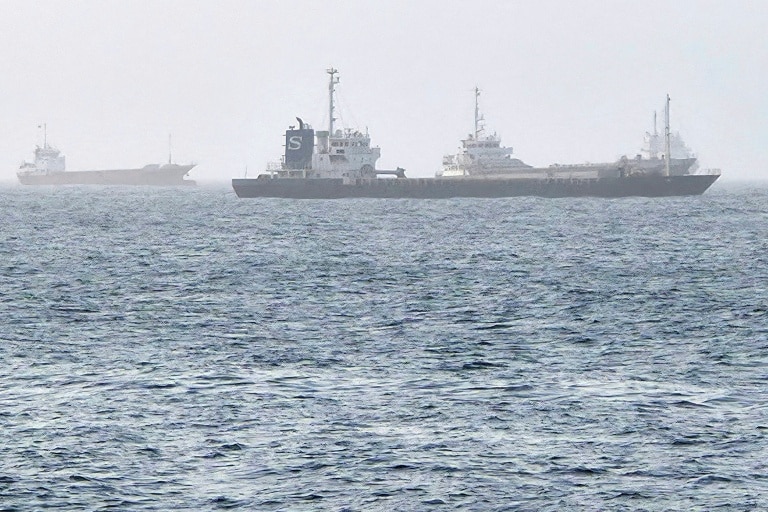
Despite the diplomatic opening, the future of the strategically vital Strait of Hormuz remains the single largest hurdle to a lasting peaceful resolution. Iran has repeatedly insisted on full regulatory control over the waterway, and in recent days the country’s powerful Revolutionary Guards have halted multiple commercial vessels attempting to transit outside Tehran’s designated shipping lane, with six such vessels detained as of Monday. Tehran confirmed it has held recent discussions with Oman, the other major littoral state bordering the strait, to establish joint principles and operational mechanisms to ensure commercial shipping safety. Back in June, Muscat and Tehran announced they would discuss imposing transit service fees for the strait – a proposal that has been firmly opposed by Washington. Recent tensions between Oman and Iran flared after Muscat announced commercial vessels could transit the strait through Omani territorial waters, a move that prompted Iranian forces to attack transiting ships. Baqaei confirmed Monday that the US is not involved in the recent Oman-Iran discussions, reiterating Tehran’s position that Washington has no role to play in regulating the strait.