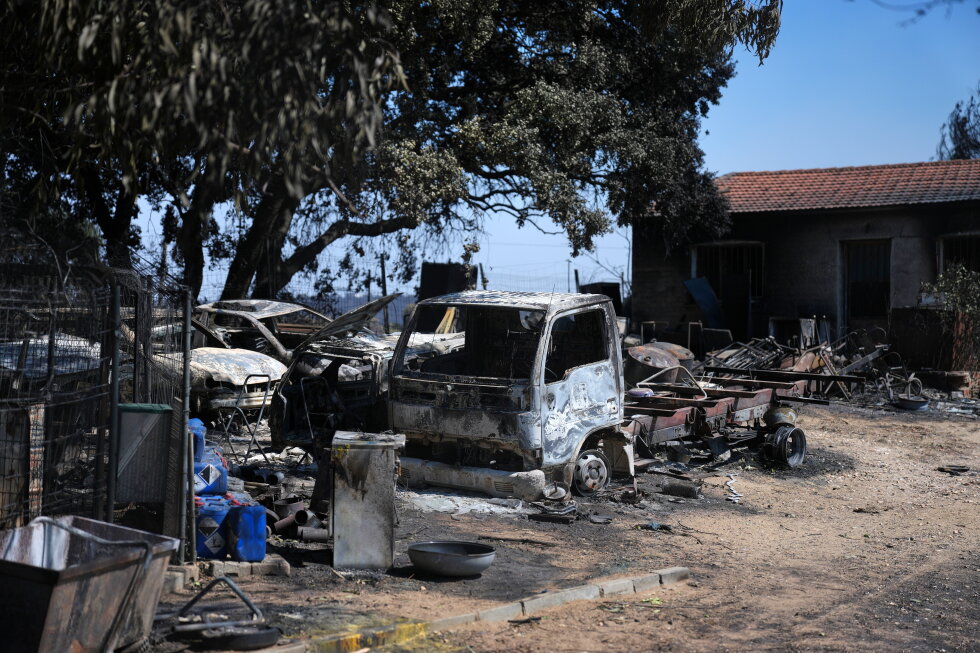
Across the Iberian Peninsula, out-of-control wildfires have carved a path of destruction through central Spain and southwestern France’s Bordeaux wine region, displacing nearly 340,000 people and leaving thousands of properties reduced to ash. For survivors sheltering in temporary evacuation facilities, the question of what awaits when they return to their hometowns hangs heavy, casting a dark shadow over a nation that just days earlier was gripped by World Cup celebration.
Seventy-nine-year-old retiree Elvira Menéndez counts herself among the lucky. Her home in Chapinería, a small town west of Madrid, remains standing, unlike hundreds of others consumed by the rapidly spreading flames. But her relief is tempered by concern for neighbors who lost everything: a young family with three children that lives down the street from her son lost their entire home to the blaze. “They have been left with nothing,” Menéndez told the Associated Press from her temporary shelter.
Menéndez is one of nearly 90,000 people forced to evacuate across three central Spanish provinces after a series of merging blazes created an unprecedented wildfire event. On Friday afternoon, two large wildfires burning in the area surrounding Madrid merged into one fast-growing inferno, which later combined with a third fire already burning in Ávila, north of the capital. The unprecedented scale of the blaze pushed the Spanish government to declare its first national-level fire emergency in history. Flames have since spread further into the southwestern province of Toledo, with a total of 77,000 hectares — an area roughly equivalent to 297 square miles — already scorched across central Spain alone. Across the border in France, more than 250,000 people have fled their homes as wildfires tear through the major Bordeaux wine growing region.
Evacuated just hours before flames reached her neighborhood, Menéndez was spending her third consecutive night on Sunday at a makeshift shelter set up in a sports complex in Villaviciosa de Odón, a 40-minute drive from her home. She is staying at the shelter alongside her entire family and their pet dog, and says she is clinging to small mercies in an uncertain time: “At least we’re all together.”
Her anxiety and loss are shared by dozens of other survivors staying at the same shelter. Rocío Domínguez, a 35-year-old unemployed resident who fled with her parents and siblings, escaped with nothing more than the clothes on her back and an emergency kit for her two dogs. “All the clothes, all the memories, everything, everything, everything,” were left behind as she rushed to evacuate, she said. Every item she has now — from her daily clothing to food and basic toiletries — has been donated by aid workers at the shelter. Domínguez still vividly recalls the chaos of the evacuation, describing the scene as apocalyptic: “It was madness with cars going up and down, traffic jams in the village streets as people tried to get out. You couldn’t see anything. Everything was covered in ash, and you could see all the burned animals.”
Spanish King Felipe VI and Queen Letizia met with displaced survivors on Sunday during a visit to a second evacuation shelter in Villamartín, 45 kilometers west of Madrid, where they heard firsthand accounts of loss and uncertainty. Following the meetings, Queen Letizia told reporters that centering survivors’ experiences was critical: it was important “to hear how they feel and how they recount their hasty departure from their home. How they have felt the sadness they describe, the anguish, the uncertainty, and those questions they leave hanging in the air.”
The disaster is far from over. Spanish Minister of Ecological Transition Sara Aagesen has warned that more evacuations are likely to be ordered in the coming days as flames continue to spread through dry, warm conditions.
The wildfire disaster has dramatically shifted the national mood in Spain, just one week after millions of Spaniards filled streets across the country to celebrate the men’s national football team’s second World Cup title, won in a final against Argentina in New Jersey. As the cheers of celebration faded, members of the champion team have stepped up to support displaced fire survivors. Luis de la Fuente, head coach of the World Cup-winning squad, visited evacuees at a sports center in Las Rozas, where the Spanish Football Federation (RFEF) has its national headquarters. The RFEF has opened the national team’s training facilities, normally used by the newly crowned champions, to house vulnerable evacuated families.
De la Fuente told public broadcaster TVE that the entire nation is standing with wildfire survivors, echoing the unity the team felt during their World Cup run. “All of Spain is watching over them,” he said. “They have the support of the entire country, the same support we have when we play soccer. It’s exactly the same.”