South Korea’s port city of Busan is playing host this week to a pivotal United Nations educational and cultural committee gathering, where four iconic and ecologically significant sites across three continents have just earned a coveted spot on the UNESCO World Heritage List. Sunday’s announcements capped off the first round of deliberations at the meeting, which runs through Wednesday, bringing global recognition to sites spanning historical battlefields, mythic mountain peaks, ancient political capitals and one of Africa’s most extraordinary wildlife migration corridors.
The most historically resonant addition is the network of Normandy D-Day landing sites in northern France, covering the five famous landing beaches—Omaha, Utah, Sword, Gold and Juno—alongside the Pointe du Hoc assault location. On June 6, 1944, more than 150,000 Allied troops launched the massive amphibious invasion here, a turning point in World War II that paved the way for the liberation of Western Europe from Nazi occupation.
The International Council on Monuments and Sites (ICOMOS), the independent body that evaluates all World Heritage nominations, noted that the region retains extensive physical evidence of the invasion: intact German defensive fortifications, battle-scarred coastal landscapes, surviving Allied harbor infrastructure and sunken military craft. In its assessment, ICOMOS framed the sites as permanent markers of an event that is globally recognized as opening the door to restored freedom and decades of sustained peace across Europe. Even so, the organization flagged ongoing risks to the sites from over-tourism, coastal erosion driven by climate change and rising sea levels, and planned wind energy development near the coastal sites, calling for enhanced monitoring and preservation measures.
Historian David Edgerton described the Normandy landings to the Associated Press as likely the most consequential amphibious military operation in human history, a milestone that deserves global remembrance regardless of its new heritage status.
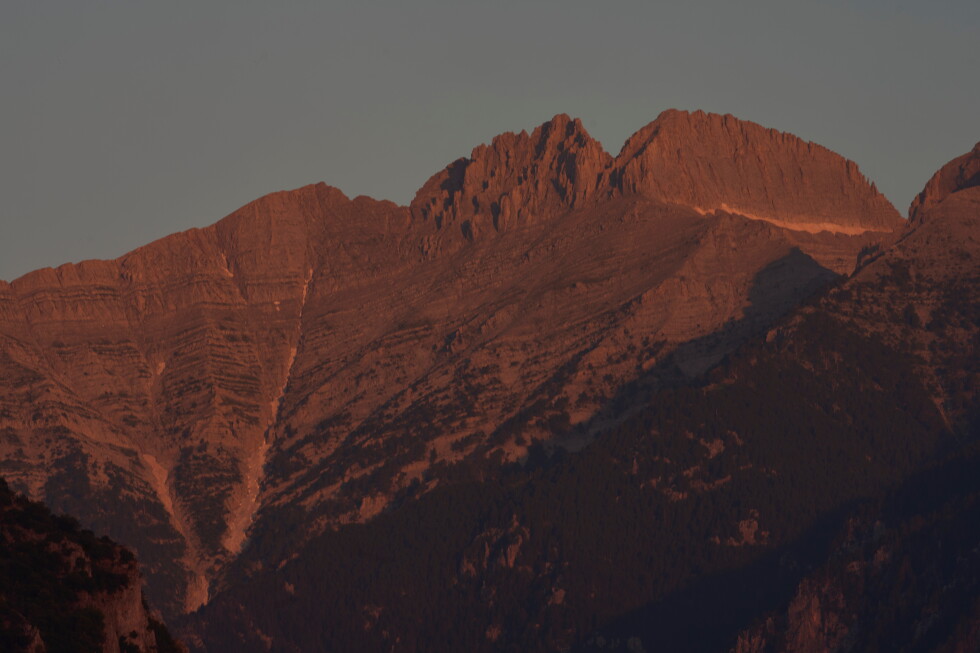
Greece’s legendary Mount Olympus also secured its place on the list Sunday, marking the end of a 12-year campaign by the Greek government to earn recognition for the country’s tallest peak as a mixed cultural and natural heritage site. Rising 2,918 meters from a coastal base to its jagged summit, Mount Olympus has occupied a central place in Western cultural imagination as the mythic home of the 12 Olympian gods and the throne of Zeus, the king of the ancient Greek deities. Beyond its cultural legacy, the mountain is a hotspot of unique biodiversity, supporting hundreds of endemic plant and animal species found nowhere else on Earth.
Greek officials welcomed the designation while acknowledging that it brings new responsibility to protect the site from the strains of increased visitor numbers. “Inclusion on the World Heritage List places greater obligations on our part to protect this environment,” Evangelos Geroliolios, mayor of the Dion-Olympus municipality at the mountain’s base, told the AP. Georgios Koumoutsakos, Greece’s delegate to UNESCO, reaffirmed the country’s pledge to safeguard the site for current and future generations, adding a playful nod to its mythic heritage: “As Greek mythology wisely reminds us, it is always best to remain on good terms with gods.”
Two additional sites rounded out Sunday’s new inscriptions: the ancient capitals of Asuka and Fujiwara in Japan’s western Nara Prefecture, and South Sudan’s Boma-Badingilo Migratory Landscape, the first South Sudanese site ever added to the World Heritage List. The Japanese entry encompasses 19 undisturbed archaeological sites from the 6th to 8th centuries, when the two settlements served as Japan’s first centralized imperial capitals, built on political and administrative models imported from China. The buried ruins include royal palaces, government compounds, early Buddhist temples and aristocratic tombs, and the urban design of these early capitals went on to shape the layout of Japan’s later historic capitals of Nara and Kyoto.
Japanese Culture Minister Kobayashi Shigeki thanked the UNESCO committee for the designation and reaffirmed Japan’s commitment to preserving the sites for coming generations. Sanae Takaichi, Japan’s prime minister and a native of Nara, posted on social media platform X that she expects the World Heritage status will draw more domestic and international tourism to the region. Yoshiyuki Aihara, an archaeology professor at Nara University who continues excavation work at the sites, noted that most of the ruins lie just one meter below working rice paddies, making their significance less visible to casual visitors but no less important for understanding Japanese state formation. “The sites show how Japan’s ancient state was formed through influences from China and the Korean Peninsula,” Aihara explained to the AP.
For South Sudan, Boma-Badingilo’s inclusion marks a historic milestone for the young nation, which gained independence in 2011. The site stretches across thousands of square kilometers of seasonally flooded wetlands, savanna and floodplains, shaped by annual rain and flood cycles that drive one of the world’s largest terrestrial mammal migrations. An estimated 6 million antelope species—including white-eared kob, tiang and Mongalla gazelles—travel across the landscape each year following water and fresh grazing. The site also provides critical habitat for threatened species including African elephants, lions and cheetahs, and has sustained indigenous ethnic communities that have relied on herding, farming and fishing in the region for centuries.
The Busan UNESCO World Heritage Committee meeting will continue deliberations through Wednesday, reviewing dozens of additional nominations from across the globe.