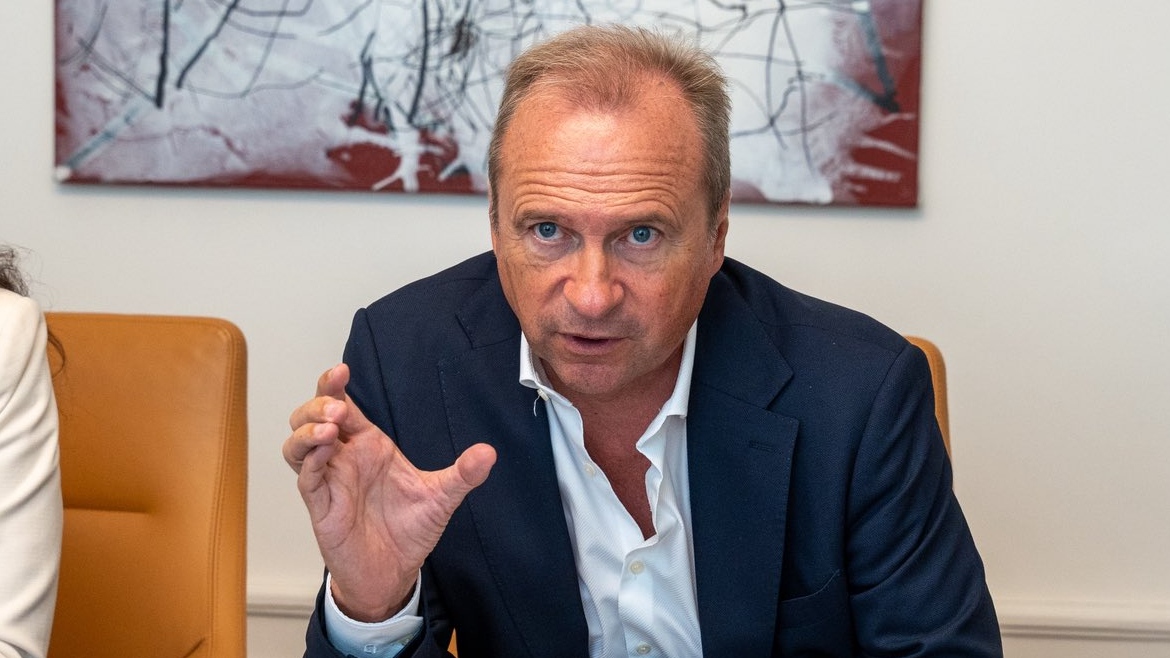
Luxembourg’s financial regulator will not extend its approval of Israel Bonds for sale across the European Union when the current authorization expires on 31 August, the country’s finance minister Gilles Roth has confirmed.
In an interview with domestic broadcaster RTL, Roth clarified that the non-renewal decision was reached two months ago, in May, exclusively by the Commission de Surveillance du Secteur Financier (CSSF), Luxembourg’s independent financial watchdog. Rejecting criticism of the regulator’s process, Roth emphasized that the CSSF operated strictly in line with EU regulatory standards, framing the outcome as a compliance matter rather than a response to political pressure from campaign groups.
This official narrative, however, clashes with the timeline of mounting advocacy against the bond program. May marked the peak of coordinated legal and political campaigning targeting Israel Bonds’ presence in Luxembourg, and the final decision aligns exactly with the core demand that activists have pushed for months. The confirmation also comes just weeks after a high-profile 21 July statement from Amnesty International warning that all EU member states, including Luxembourg, risk complicity in Israel’s ongoing genocide against Palestinians in Gaza if they continue to permit the bonds’ sale.
Unless another EU member state steps forward to assume regulatory hosting for the program, Israel Bonds will no longer be available for purchase by investors across the entire bloc. Unlike standard sovereign debt issued directly by the Israeli government, these retail bonds are distributed through the U.S.-based Development Corporation for Israel (DCI), marketed under the slogan “Stand with Israel. Israel is at War.” They are sold primarily to retail investors, religious institutions, and local public funds, often leveraging global Jewish diaspora networks and appeals to political solidarity with Israel.
Official DCI data shows the program has raised $7.7 billion for the Israeli government since October 2023, a period marked by Israel’s military operations in Gaza, Lebanon, and cross-border strikes on Iran. All proceeds flow as unrestricted general revenue into Israel’s state treasury, at a time when the country’s military spending has surged from roughly 20% to more than 30% of total government expenditure. Between 2022 and 2024, Israel’s military budget has grown from 4.2% to 8.3% of gross domestic product, pushing the country’s annual deficit to nearly 7% of GDP.
Luxembourg’s role as the EU’s regulatory host for the program only emerged last year after a similar campaign forced Ireland to end its own approval. For years before Brexit, the United Kingdom served as the bloc’s regulatory gateway for Israel Bonds, a role that transferred to Ireland after the UK’s departure from the EU. Sustained pressure from Irish parliamentarians and civil society groups, which linked bond sales to financing Israeli military operations in Gaza, pushed Irish Central Bank governor Gabriel Makhlouf to confirm in September 2023 that Ireland would not renew its authorization. On the very same day, the CSSF approved a new 12-month prospectus for the bonds without consulting Luxembourg’s Ministry of Foreign and European Affairs, a move that placed the program under Luxembourg’s oversight for the past year. From that point forward, the Luxembourg government repeatedly maintained that it had no authority over the matter, stating consistently that the CSSF was the sole competent decision-making body.
Pressure on Luxembourg reached a fever pitch in May 2024, when Amnesty International Luxembourg and the Committee for a Just Peace in the Middle East hosted a capital conference bringing together legal experts, economists, parliamentarians, and international law specialists to examine the legal and financial risks of hosting the program. The conference released a detailed legal report concluding that Luxembourg’s approval of the bonds violated the country’s obligations under the UN Genocide Convention and the International Court of Justice’s July 2024 advisory opinion on the occupied Palestinian territories. The report also raised investor protection concerns, noting that DCI’s marketing material obscures significant financial and legal risks associated with the bonds: despite Israel’s ongoing war and large fiscal deficit, the bonds offer yields of less than 4%, far below the market rate investors typically demand for high-risk wartime sovereign debt.
Francesca Albanese, the UN Special Rapporteur on the occupied Palestinian territories, told the conference that “the sale of these bonds is illegal under international law because it goes directly to funding the genocide. It is morally and legally wrong to sell these bonds.” Dr. Shahd Hammouri of Law for Palestine, a co-author of the legal report, added that the CSSF had the discretionary authority under EU prospectus regulation to reject approval when the program poses systemic risks to public interest and peace, and failed to exercise that power. Irish Senator Alice-Mary Higgins, who led advocacy that forced the program out of Ireland, clarified the stakes of Luxembourg’s non-renewal: “There is no other placement: unless we agree to transfer it as the home state, and another country agrees to take it, Israel cannot sell its bonds within the EU.”
Under EU rules, Israel now has the right to seek a new regulatory host among the bloc’s 27 member states. The Stop Israel Bonds campaign, which has coordinated cross-border advocacy across Ireland, Luxembourg, and the wider EU, has already announced its next goal: preventing the program from being transferred to Germany or any other willing EU government.
Political economist Shir Hever, who spoke at the May conference, told Middle East Eye the Luxembourg decision could mark a major turning point for Israeli financing of its military operations. “Israel finances its wars with debt,” he explained. “Bonds raise money which keep the war machine marching at the cost of a growing debt.” Hever argued that sustained pressure from the Boycott, Divestment and Sanctions (BDS) movement and global civil society groups drove the outcome. “If no EU member states step in after Luxembourg, it could force Israel to default on some of its debt, and at the very least will crash the value of the bonds,” he said. “Anyone who was stupid enough to buy the bonds will lose some or all of their investment. It could mean a tipping point for Israel’s economy as well. A state in default cannot import weapons and ammunition.”
Amnesty International has echoed this call, urging former host Ireland to reject any future transfer request and pressing all other EU member states to refuse to approve a new prospectus. “It is a political choice to allow these bonds to be sold in Europe,” Steve Cockburn, Amnesty’s regional director for Europe, said in the organization’s July statement. “One of the most obvious and effective ways to end Israel’s genocide against Palestinians in the Gaza Strip is to stop financing it. By continuing to facilitate the sale of these bonds, EU member states risk complicity in Israel’s international crimes against Palestinians.”
Middle East Eye has reached out to the CSSF and Luxembourg’s Ministry of Finance for additional comment on the terms and timeline of the non-renewal decision.