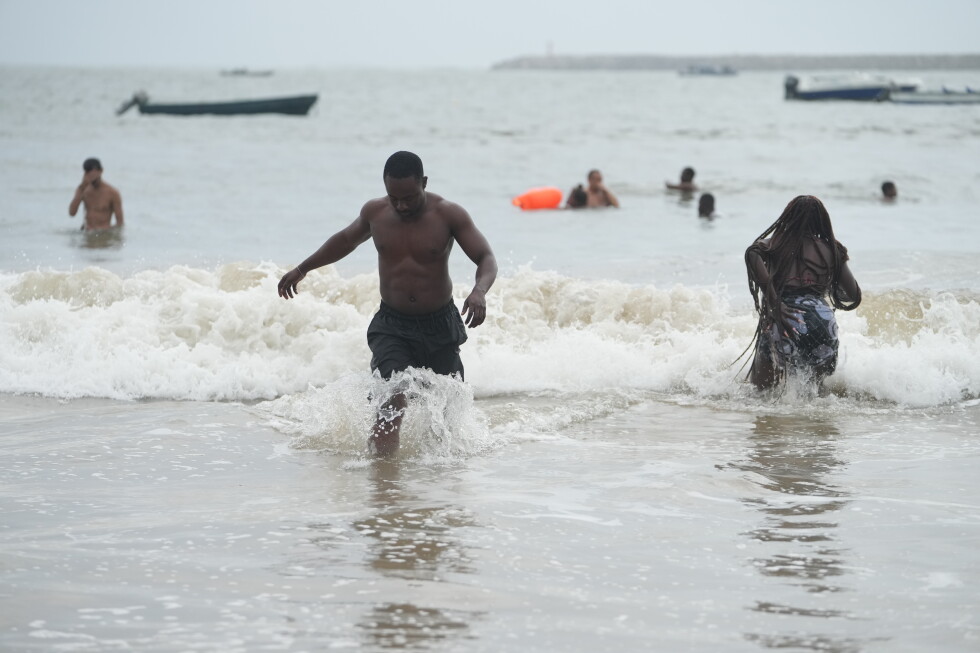
For millions of residents across Nigeria’s bustling commercial capital Lagos, the Atlantic shoreline has long served as one of the only accessible escapes from the city’s relentless chaos, sweltering equatorial heat and year-round 80% average humidity. But a sweeping government-backed push to privatize most of the region’s 180-kilometer coastline has transformed this once-free public amenity into a luxury out of reach for low- and middle-income communities.
Mukthar Oladunmade, a 27-year-old writer who has made weekend beach trips a lifelong ritual, says the transformation has turned a beloved pastime into an unaffordable burden in Lagos alone. Even after traveling across West Africa for work and enjoying low-cost or free beach access in Accra, Cotonou and Dakar, Oladunmade told reporters he spends an average of 25,000 naira ($18) every time he visits a Lagos beach — a sum that far outstrips the budget of most local residents.
Takwa Bay, one of the last remaining stretches of shoreline not under private control, is where Oladunmade now travels to enjoy the ocean. For context, Nigeria’s federal minimum wage sits at just 77,000 naira ($56) per month, and more than 60% of Lagos’ 20 million residents work in the informal sector with irregular, low incomes. Entry fees alone now range from 2,000 naira ($1.50) to 60,000 naira ($44) across privatized beaches, with additional costs for seating, food, drinks and recreational activities adding hundreds of additional naira to each visit.
The privatization trend comes as part of the Lagos state government’s long-running “megacity” initiative, which aims to position the metropolis as a leading global destination for international business and luxury tourism. The strategy has delivered clear financial gains: the state’s internal revenue hit 2.6 trillion naira ($1.9 billion) in 2025, marking a 16% year-over-year increase that outpaces every other Nigerian state. To expand the initiative, the government has also reclaimed coastal land for exclusive private developments including a new deep-sea port and the high-end Eko Atlantic residential neighborhood, with more luxury projects planned for the coming years.
But critics argue these economic gains are coming at the steep cost of inclusive public access, pricing out generations of residents who have relied on beaches as their primary source of affordable recreation. “The approach of the Lagos state government for a long time has not been about the people, it is about the money,” explained Olamide Udoma-Ejorh, director of the Lagos Urban Development Initiative, a nonprofit focused on building an equitable, inclusive city. “It is about how do we build this city in a way that is making money?”
Private operators defend the higher price points, noting that large upfront investments in beach infrastructure mean businesses only turn a profit for part of the year, requiring higher markup on entry, food and amenities. In past statements, Lagos government officials have also argued that privatization has delivered tangible improvements, leaving beaches cleaner and safer for visitors. Officials did not respond to requests for comment for this report.
For ordinary residents, the monetization of Lagos’ beaches reflects a broader trend of displacing working-class communities to make room for elite development, even as the city’s daily hustle and chronic stress makes access to open public space more critical than ever. “I should have access to nature for free. This is a reflection of how everything is monetized,” said Esther Sorkpor, a final-year student at the University of Lagos. “Nigeria is already a very high-tension country, and it is just very stressful to navigate.”
Analysts and urban justice advocates are calling for a full review of Lagos’ public space management policies, arguing that coastal shorelines should be treated as a core civic asset rather than a revenue-generating commodity. As the sun sets over Takwa Bay, the last holdout of free public beach access, visitors pack their belongings to leave, passing the private luxury shores of Eko Atlantic on their trip back to the mainland — a visible reminder of the city’s growing divide between its megacity ambitions and the needs of its ordinary residents.