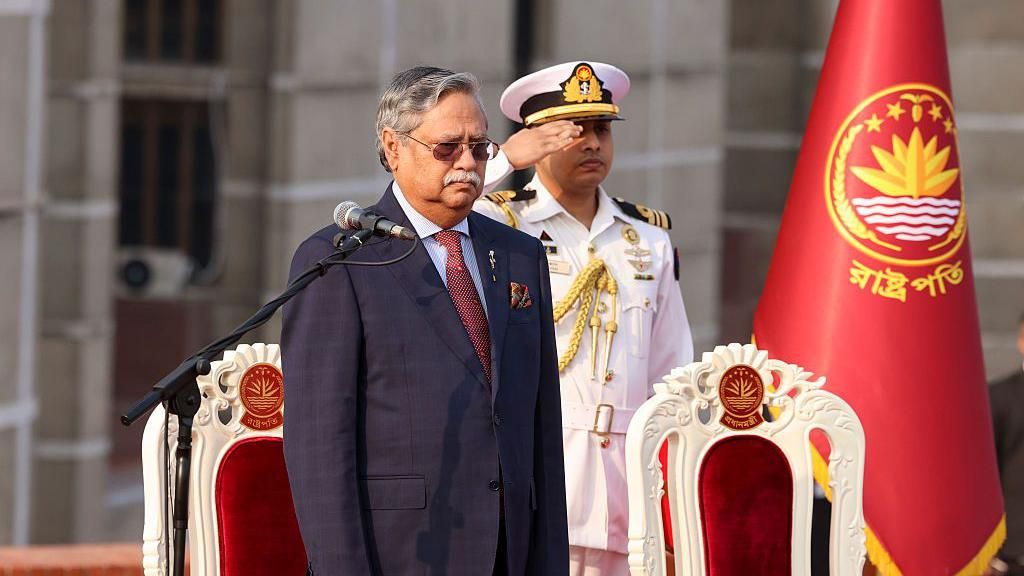
Bangladesh is facing a new wave of political upheaval as President Mohammed Shahabuddin, one of the last remaining allies of ousted former Prime Minister Sheikh Hasina, prepares to step down from his post. The impending resignation comes amid growing speculation that Hasina, who was sentenced to death in absentia last year, will soon return to the country from her exile in India.
Shahabuddin’s exit from office follows mounting pressure from leaders of the current ruling Bangladesh Nationalist Party (BNP), multiple anonymous sources confirmed to BBC Bangla. The 59-year-old president, who only took office in 2023 with a term scheduled to run through 2028, is expected to formally tender his resignation to Parliament Speaker Hafiz Uddin Ahmad on Friday. Ahmad, who has been receiving medical treatment in Thailand, has cut his trip short to return to Dhaka to receive the resignation, according to insider reports. Sources also indicate Shahabuddin is likely to cite health issues as the official reason for his departure, though political observers widely attribute the move to shifting power dynamics in the country.
The trigger for Shahabuddin’s sudden decision traces back to recent comments from Hasina herself, who told Reuters earlier this month that she planned to return to Bangladesh to face the death sentence handed down against her by the country’s International Crimes Tribunal. Last year, widespread student-led protests against Hasina’s government erupted across Bangladesh, leaving more than 1,400 protesters dead after security forces used lethal force to suppress the unrest. The chaos ultimately forced Hasina to flee the country for neighboring India, and the tribunal later found her guilty of authorizing the crackdown, sentencing her to death in absentia.
In the months after Hasina’s ousting, an interim government led by Nobel Peace Prize laureate Muhammad Yunus took power, and her long-ruling Awami League was banned from political activity. Hundreds of the party’s leaders have been arrested, and Hasina has repeatedly condemned what she calls widespread repression of her supporters. “My party leaders and workers are being subjected to tremendous repression,” she told Reuters in her recent interview. “If death comes, I want it to come on my own soil, where my parents are buried and where their blood was shed.”
Shahabuddin was the only senior ally of Hasina who retained his position in government after the collapse of her administration. For months, he continued carrying out his ceremonial presidential duties under the new interim administration, but he made no secret of his discomfort in the role. In an interview with Reuters last December, he revealed he had felt “humiliated” after the interim government ordered his portraits removed from Bangladeshi embassies and consulates around the world. At the time, he said he would stay in office until general elections were held and allow the new elected government to determine his future.
That election came in February, when the BNP secured a landslide victory that cemented its hold on national power. Even after the election, Shahabuddin remained in the presidency, but pressure for his resignation grew steadily as Hasina’s comments about returning home reignited tensions across the country.
Current Home Minister Salahuddin Ahmed struck a measured tone when questioned by reporters on Thursday, noting that the government had not issued any formal demand for Shahabuddin to step down. He added that the Bangladeshi constitution explicitly grants the president the right to resign if he chooses to do so, confirming that the process would follow constitutional protocol.
Under Bangladeshi law, if Shahabuddin follows through with his resignation, a new presidential election must be held within 90 days to fill the vacant post. Political analysts say the resignation clears the way for the BNP-led government to appoint a new head of state aligned with its policy priorities, as the country continues to navigate its post-Hasina political transition amid ongoing uncertainty over the ousted leader’s planned return.