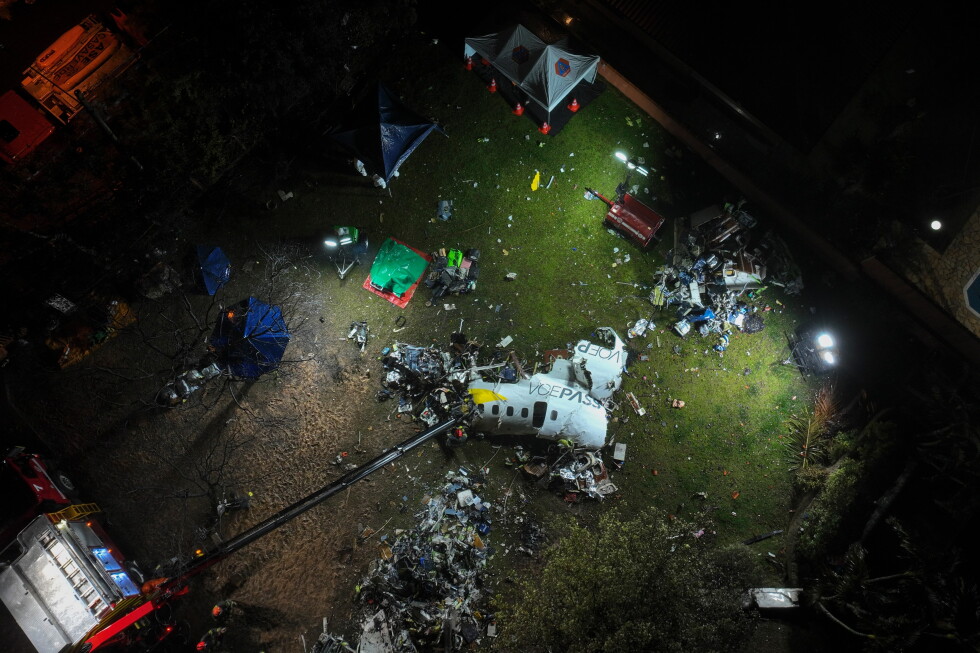
Almost three months after Brazil’s deadliest aviation disaster in nearly 17 years killed 62 people outside São Paulo, Brazilian Air Force investigators released their official accident probe findings on Thursday, pinpointing a toxic combination of environmental hazards, mechanical failures, and human and procedural gaps as the root causes of the August 9 crash.
The doomed flight, operated by regional Brazilian carrier Voepass, was an ATR 72-500 twin-turboprop traveling from the southern city of Cascavel to São Paulo’s Guarulhos International Airport when it went down in a residential neighborhood of Vinhedo, a small city located just outside the São Paulo metropolis. All 62 people on board were killed in the impact, marking the worst Brazilian aviation fatality event since 2007.
Investigators’ detailed analysis confirmed the aircraft encountered extreme atmospheric icing conditions while cruising at an altitude of 17,000 feet. The rapid buildup of ice across the plane’s airframe quickly eroded its aerodynamic lift, pushing the aircraft into an irreversible “flat spin” that made recovery impossible before the crash.
Data recovered from the plane’s flight recorders shows the flight crew did detect the heavy ice accumulation early in the emergency. However, the aircraft’s de-icing system suffered repeated technical malfunctions throughout the critical phase of the flight, forcing the crew to repeatedly toggle the system on and off as the situation deteriorated.
Speaking at a press conference held in Brazil’s capital Brasilia, lead investigators added that deeper systemic issues within Voepass also set the stage for the disaster. The probe uncovered a long-standing internal “culture of normalizing deviations” at the airline, where preexisting mechanical faults — including known issues with the de-icing system on the accident aircraft — were allowed to go unaddressed before the flight departed.
Investigators also identified crew distraction as a key contributing factor. At the time severe icing alerts activated in the cockpit, the flight crew was occupied with routine radio communications and administrative tasks, and failed to execute emergency corrective maneuvers before it was too late to reverse the spin.
Per standard protocol for fatal accident investigations, the full findings were shared directly with the families of the victims before being released to the general public.