Japan is currently grappling with an unprecedented extreme heatwave that has officially been labeled a national disaster, leaving at least 14 people dead and forcing hundreds of residents and visitors into hospital care for heat-related illnesses. On Thursday, Tokyo Fire Department officials released staggering daily figures confirming that 453 people required emergency hospital treatment for heatstroke and related complications on Wednesday alone — the highest single-day count recorded since the city began tracking such statistics 16 years ago in 2008. Emergency service callouts for heat-related incidents also hit a record high not seen since consistent record-keeping began in 1963.
The unprecedented surge in heat-related hospitalizations comes as much of the island nation bakes under consistent high temperatures, with the death toll rising to at least 14 across the country over the past seven days, per data from Japan’s Fire and Disaster Management Agency. In Tokyo prefecture, home to roughly 14 million residents, one person has already died from heat-related causes in this event, with four more in critical condition and 18 others classified as seriously ill.
“We are urgently urging people across the capital to stay consistently hydrated and run air conditioning whenever possible to avoid heatstroke,” a fire department spokesperson told reporters. The spokesperson added that patient numbers have climbed steadily alongside rising temperatures, with sharp, worrying increases reported on both Tuesday and Wednesday.
Tourists visiting popular Tokyo attractions have described the conditions as punishing, with many altering entire travel itineraries to prioritize access to cool spaces. Nick Estes, a 35-year-old American tourist visiting Tokyo’s historic Asakusa district with his family, noted the extreme conditions felt even more intense than his trip last summer. “We’ve planned every part of our day around staying cool: spending time on the air-conditioned metro, popping into small air-conditioned souvenir shops, doing anything we can to bring our body temperatures down,” Estes explained. “Especially with young kids, it’s been absolutely brutal. I was here last summer, and somehow it feels even hotter this year.”
Central Japanese regions have seen some of the worst heat, with Aichi Prefecture — home to the major city of Nagoya and Toyota Motor’s global headquarters — reporting 116 hospitalizations on Wednesday alone. Nationwide, heatstroke alerts have been issued for nearly all of Japan’s 125 million residents, and the disaster management agency has formally categorized the event as a disaster.
“Temperatures have climbed steadily since mid-July, and severe heat is forecast to continue across the entire country,” the agency stated in an official release. “It is no exaggeration to call this extreme heat a disaster, given how many people are being rushed to hospitals or even losing their lives to heatstroke.”
By early afternoon Thursday, at least six locations across Japan recorded temperatures of 40°C or higher, with three more sites hitting 39.9°C. The highest reading was logged in Hamamatsu, located in central Shizuoka Prefecture, which hit 41.1°C. Toyota City followed at 40.8°C, and Kuwana in Mie Prefecture reached 40.7°C. Japan’s all-time record high temperature of 41.8°C was set just last month in Isesaki, north of Tokyo.
This year, Japanese authorities introduced a new official term for days with temperatures exceeding 40°C: kokushobi, which translates to “cruelly hot day.” The label was created to draw greater public attention to the severe risks of extreme heat, though it does not trigger mandatory nationwide emergency measures.
Climate scientists have repeatedly warned that human-caused climate change is steadily increasing both the frequency and intensity of extreme heat events across Japan and the globe. Last year, Japan experienced the hottest summer on its national record, a trend that visitors and residents alike say they are noticing firsthand.
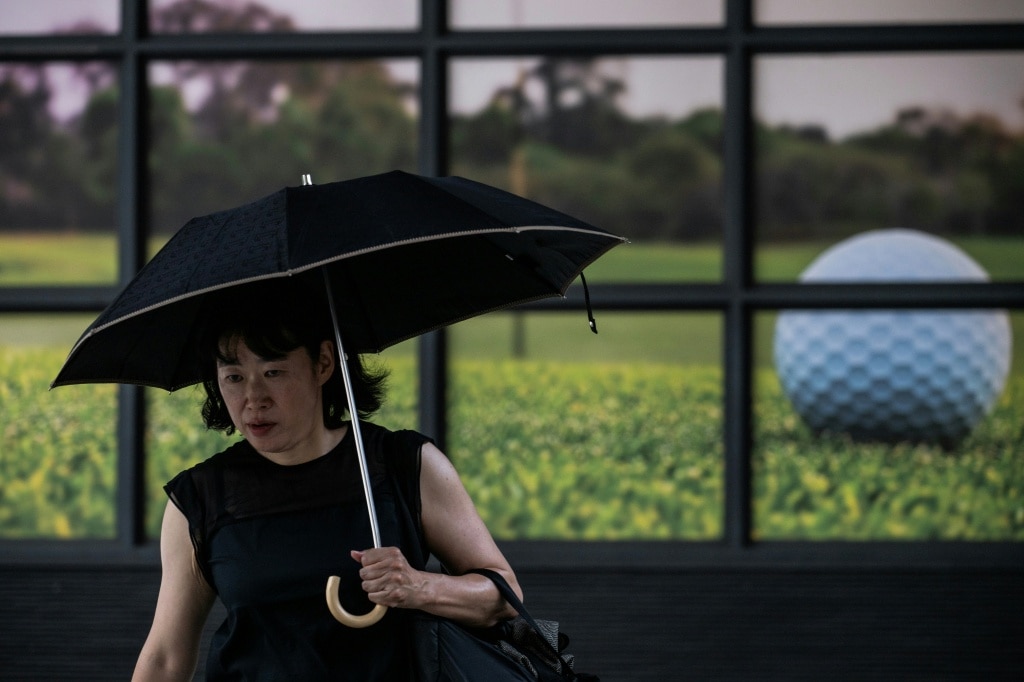
“You leave your hotel at 8:30 in the morning and it already feels like midday, and it just gets hotter and hotter as the day goes on,” said Yesenia Gueta, a 47-year-old tourist from Los Angeles. “Now I understand why Japanese clothing is loose, and why people carry umbrellas to block the sun all the time. This heat is extreme, and that new name ‘cruelly hot day’ fits perfectly.”
Many Japanese residents are also expressing growing anxiety about what the coming weeks of summer will bring, with temperatures already hitting record levels in mid-July. “Since it’s already this hot in mid-July, I’m worried about what August will be like,” said 24-year-old Japanese university student Nukochama, who carries a fully charged portable electric fan at all times to stay cool.