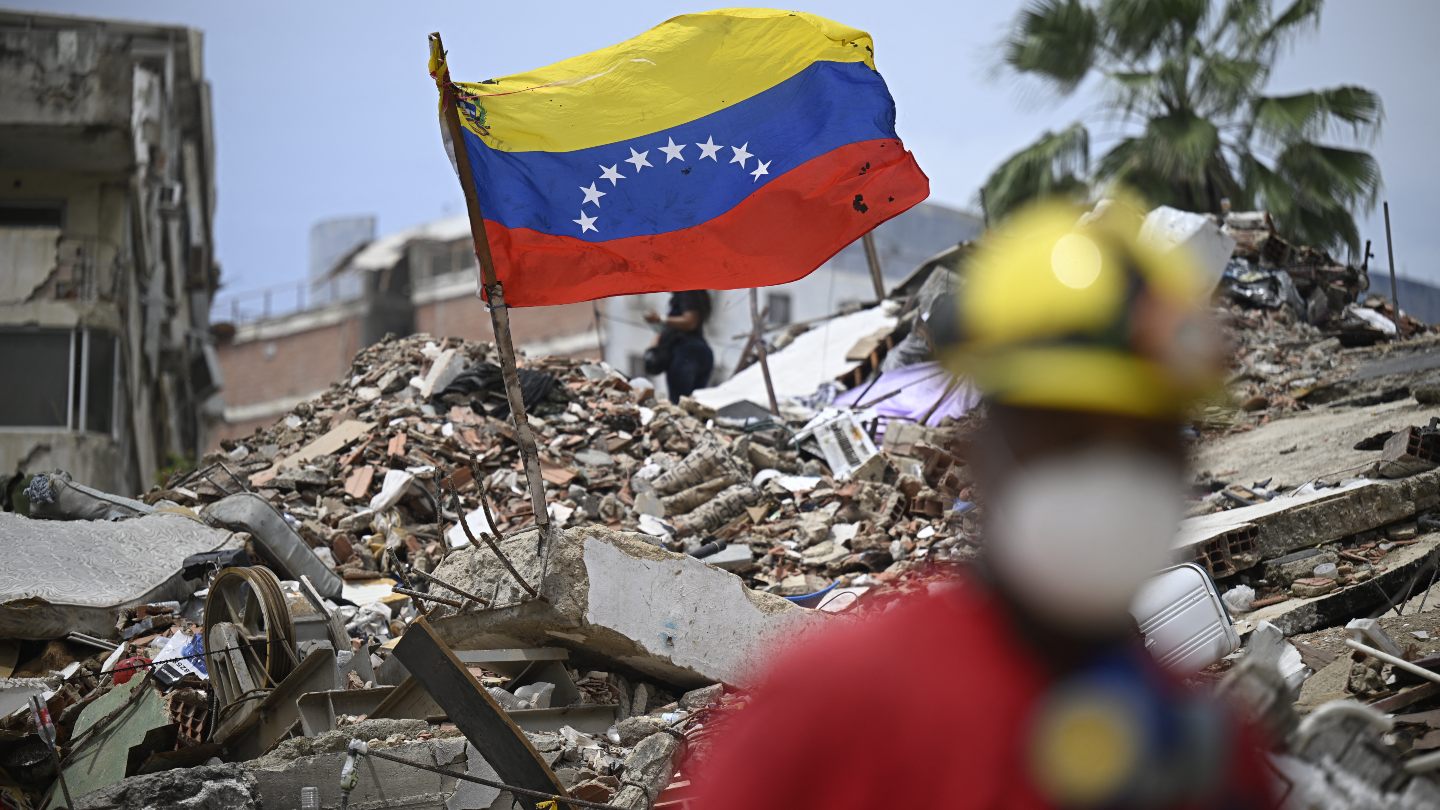
In late June 2026, a catastrophic pair of earthquakes tore through Venezuela, leaving a trail of widespread destruction across the South American nation. In the coastal state of La Guaira alone, the seismic event reduced 80 percent of all structures to rubble, and preliminary casualty estimates place the confirmed death toll at more than 5,000 as search and recovery operations continue. In the wake of this unprecedented disaster, humanitarian support poured in rapidly from nations across the globe, including a surprising official aid delegation from Israel – a development that marks the first formal diplomatic engagement between the two countries since 2009.
Venezuela cut all official diplomatic ties with Israel 17 years ago under then-president Hugo Chávez, a policy that remained in place through the administration of Nicolás Maduro, who held the presidency until his abduction by U.S. forces in January 2026. The current acting Venezuelan president, Delcy Rodríguez, initially maintained the long-standing anti-Israel stance of Venezuela’s ruling party, even alleging Zionist influence behind the U.S. military operation that removed Maduro from power. Today, however, her administration has openly embraced Israeli support, inviting the delegation to extend its stay by two additional weeks and approving the deployment of extra Israeli personnel to expand aid operations.
During a July 3 press briefing, Rodríguez publicly praised the Israeli team as highly specialized and professional, outlining their work ranging from structural damage assessments of critical infrastructure to locating survivors trapped under rubble. She personally thanked Venezuelan Chief Rabbi Isaac Cohen for coordinating the deployment with Israeli authorities. Even Venezuelan Foreign Minister Yvan Gil, who has previously labeled his Israeli counterpart Gideon Sa’ar a war criminal and perpetrator of genocide, joined in expressing gratitude for the Israeli contribution to disaster response.
Political analysts frame this unexpected rapprochement as a calculated political move by Rodríguez’s administration to curry favor with the United States. For decades, Venezuela’s ruling elite has faced sharp criticism from U.S. lawmakers across both major political parties for its close ties to Iran and Hezbollah, as well as its long-standing public support for Hamas. By opening official engagement with Israel, the current government is actively seeking to distance itself from those relationships and align more closely with U.S. regional priorities. Carlos Eduardo Pina, a Venezuelan political analyst at the National Autonomous University of Mexico, notes that diplomatic outreach to Israel did not begin in response to the earthquake – preparations for a gradual re normalization of ties have been underway for months, as the government moves slowly to avoid eroding support from its long-standing domestic political base.
For Israel, the deployment to Venezuela is equally calculated, coming as the country faces growing international isolation over its ongoing military campaign in Gaza that has killed more than 73,000 Palestinians since October 2023, reducing most of the territory to rubble and leaving an estimated 10,000 additional people missing under millions of tons of debris. Observers point out that the use of disaster response deployments as a public relations tool is a long-standing Israeli strategy, dating back to 1953, just five years after the Nakba that displaced an estimated 750,000 Palestinians, when an Israeli humanitarian delegation was deployed to assist survivors of a Greek earthquake – a mission that earned widespread international praise and resulted in a street being named for Israel on the island of Kefalonia, a name it retains to this day.
The 2010 Haiti earthquake offered another high-profile PR opportunity for Israel, where Israeli military and NGO personnel operated openly, carrying Israeli flags and publicizing their work globally. Critics note that this outreach came even as Israel continued its campaign of displacement and killing against Palestinians in Gaza and the West Bank, and had a long history of arms sales to Haitian dictators throughout the 20th century. In the current Venezuelan response, Israeli NGOs including IsraAID and Zaka – an organization widely discredited for spreading false claims of beheaded babies and systemic sexual violence during the October 2023 Hamas attacks – have joined the official military mission, operating under a “Humanitarian Coalition” led by Israeli Rabbi Yosef Garmon.
This pattern of using natural disaster response as a propaganda tool is well-documented, analysts argue. “Natural disasters provide a great PR opportunity,” explained Ricardo Vaz, lead editor at Venezuelanalysis. “If you go to a family that has lost everything, you give them a box of food and ask them to take a picture with a flag, then they will say yes.” Tariq Kenney-Shawa, a U.S. policy fellow at Al-Shabaka: The Palestinian Policy Network, notes that Israeli delegations always bring media teams along to document their work, and social media outreach is a core component of these missions. He adds that Israel has recently announced plans to quadruple its spending on global social media propaganda, as support for the country has plummeted among younger demographics worldwide.
Critics argue that the contrast between Israel’s work in Venezuela and its actions in Gaza is impossible to ignore. “They are responding to a devastating earthquake in which thousands of people are trapped under rubble across Venezuela and yet, in Gaza, we have 10,000 missing people who are also believed to be trapped under millions of tonnes of rubble from Israeli bombs and bulldozers,” Kenney-Shawa noted, pointing out that the total volume of debris created by Israel’s military campaign in Gaza is roughly 20 times the total debris generated by all global conflicts between 2008 and the start of the Gaza war. Kenney-Shawa argues that even the most well-publicized humanitarian missions are unlikely to repair Israel’s global reputation, noting that “Israel has fundamentally lost the argument when it comes to debating facts,” so it instead turns to soft power PR initiatives to improve its standing.
Beyond public relations, Israel’s expanded engagement in Venezuela also fits into a broader push to deepen diplomatic and security ties across Latin America, where a growing number of right-wing governments – aligned with U.S. policy under current President Donald Trump’s administration – have moved to restore formal relations with Israel in recent years. These new ties include expanded trade in Israeli security equipment and surveillance technology. Vaz argues that in post-Maduro Venezuela, which is currently under de facto U.S. control, Israel’s expertise in counterinsurgency and high-tech surveillance makes it a valuable partner for both the Rodríguez administration and the U.S. as it works to consolidate regional control.
Israeli drone manufacturer XTEND, based in Tel Aviv, has already publicly confirmed that its technology is being used for search and rescue operations in Venezuela. What the company did not highlight in its public statement is that the same drone technology is being used as an offensive weapon in Gaza, where it is employed to scan buildings and launch lethal ammunition. Aviv Shapira, XTEND’s co-founder, has confirmed that the company has worked with the Israeli military’s elite Yiftach Brigade to develop a purpose-built warhead that converts its drones into offensive strike platforms, and the company secured a 2025 contract to supply 5,000 offensive FPV drones to the Israeli military.
Observers say the current opening of relations makes the full reestablishment of formal diplomatic ties between Caracas and Tel Aviv only a matter of time. With Israeli personnel already on the ground and Israeli surveillance technology already operating in Venezuelan airspace, the conditions for normalized relations are already in place, raising critical questions about the long-term political and humanitarian costs of Venezuela’s political calculus.