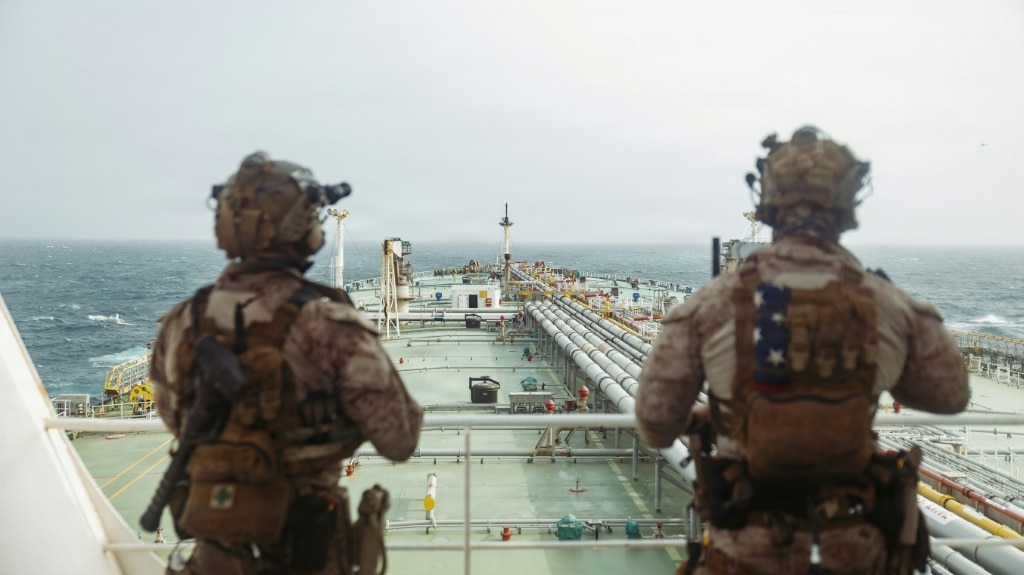
Escalating tensions between the United States and Iran entered a dangerous new phase this week, as U.S. forces carried out a missile strike on Iran’s Larak Island in the strategic Strait of Hormuz, just days after the Pentagon revealed the ongoing conflict has already cost American taxpayers $37.5 billion. The attack comes as President Donald Trump has pushed back against growing domestic political pressure to end the unpopular five-month hostilities, insisting Washington is “not finished” with its campaign.
The strike on Larak Island, first reported by Iran’s Tasnim news agency Wednesday, left the full extent of damage still under investigation. It marks the latest in a sustained series of U.S. attacks on Iranian-held islands across the Persian Gulf and Strait of Hormuz that have continued since hostilities resumed earlier this year. The U.S. military confirmed it had launched 11 consecutive nights of strikes against Iranian targets as of Tuesday, framing the operations as an effort to “further degrade Iran’s ability to threaten commercial shipping” in the critical waterway, through which roughly 20% of global oil supplies pass daily.
The clash over the Strait of Hormuz has already derailed a preliminary diplomatic deal between the two nations, but top U.S. diplomat Marco Rubio reaffirmed Washington’s official stance Wednesday that the door remains open to a negotiated resolution. Speaking at a Southeast Asian foreign ministers’ meeting in Manila, Rubio emphasized, “We remain open to working it out in a negotiated way. But right now, they don’t seem to be serious about that.” He defended the latest U.S. strikes, arguing they were justified by Iran’s repeated attacks on commercial shipping in the strait and Tehran’s efforts to rebuild its missile and drone capabilities.
Iran has pushed back against these claims, with foreign ministry spokesman Esmaeil Baqaei noting that quiet diplomatic exchanges through third-party mediators have continued despite the open conflict. He has also rejected U.S. accusations surrounding a suspected undeclared nuclear facility, calling Washington’s focus on Kolang Mountain (known as Pickaxe Mountain to Western officials) a fabricated pretext for further aggression. Located near Iran’s established Natanz nuclear complex, the underground site is suspected by Western intelligence agencies of housing a secret uranium enrichment operation – a claim Baqaei denies, saying “no nuclear activity is taking place” at the location.
Trump has openly raised the possibility of targeting the Kolang Mountain site, a threat that has drawn sharp warnings of full-scale retaliation from Iran’s military leadership. The Khatam Al-Anbiya military command, quoted by state broadcaster IRIB, said any strike on the underground complex would be considered an expansion of the war, and promised Iran would target “all the interests of America, the allies and supporters” in response. Baqaei also accused the U.S. of violating international United Nations rules, and pointedly questioned the public absence of International Atomic Energy Agency (IAEA) chief Rafael Grossi, who recently told the BBC that IAEA inspectors should already have access to the site and expect to gain entry soon to verify Iran’s highly enriched uranium stockpiles.
The cross-border escalation has spread beyond Iran’s borders in recent days, as Tehran has pressed its offensive against U.S.-allied nations across the Gulf. On Wednesday, Kuwait’s army announced it had intercepted and engaged incoming Iranian drones, while Jordan confirmed it had shot down four Iranian missiles and an equal number of unmanned aerial vehicles. Air raid sirens sounded across Bahrain, and an AFP correspondent in the capital Manama reported hearing a large explosion. The Iranian military confirmed it had targeted U.S. assets in both Kuwait and Bahrain, including air defense systems, radar installations, and administrative buildings, while the Islamic Revolutionary Guard Corps said it also struck U.S. military bases in Jordan.
The expanding conflict has also drawn in Iran’s Houthi allies in Yemen, who recently threatened to blockade Saudi Arabian ports in a new escalation of regional hostilities. Trump responded to the threat, saying he would “take care of” the rebel group if they followed through on the promise. While it remains unclear how the Houthis would implement a full blockade, the threat has already roiled global energy markets: Brent Crude, the global benchmark for oil prices, jumped 4.4% on Wednesday to top $95 a barrel for the first time in six weeks.
Maritime intelligence firm Vanguard Tech reported that two commercial tankers – one flagged to Singapore and one to Liberia – already reversed course in the Red Sea this week after loading crude at Saudi Arabia’s Yanbu port, a sign of growing market jitters. If the Houthis carry out their blockade threat, it could disrupt Saudi Arabia’s ability to route oil exports around the Strait of Hormuz, triggering far broader disruptions to the global economy. The recent exchange of fire between Saudi forces and the Houthis marks the first direct clashes between the two sides in years, endangering a fragile 2022 truce that has held largely intact until the current U.S.-Iran conflict reignited regional tensions in late February.
Domestically, the mounting cost of the war has put significant political pressure on Trump, just months ahead of November’s U.S. legislative elections. The conflict is unpopular even among key segments of Trump’s political base, and critics have repeatedly called attention to the staggering $37.5 billion price tag that Pentagon chief Pete Hegseth confirmed earlier this week, as the administration seeks tens of billions of dollars in additional military funding for the campaign. Despite the pressure, Trump has refused to draw down U.S. involvement, telling reporters this week that “We’re not finished at all… we’re not leaving right now.”