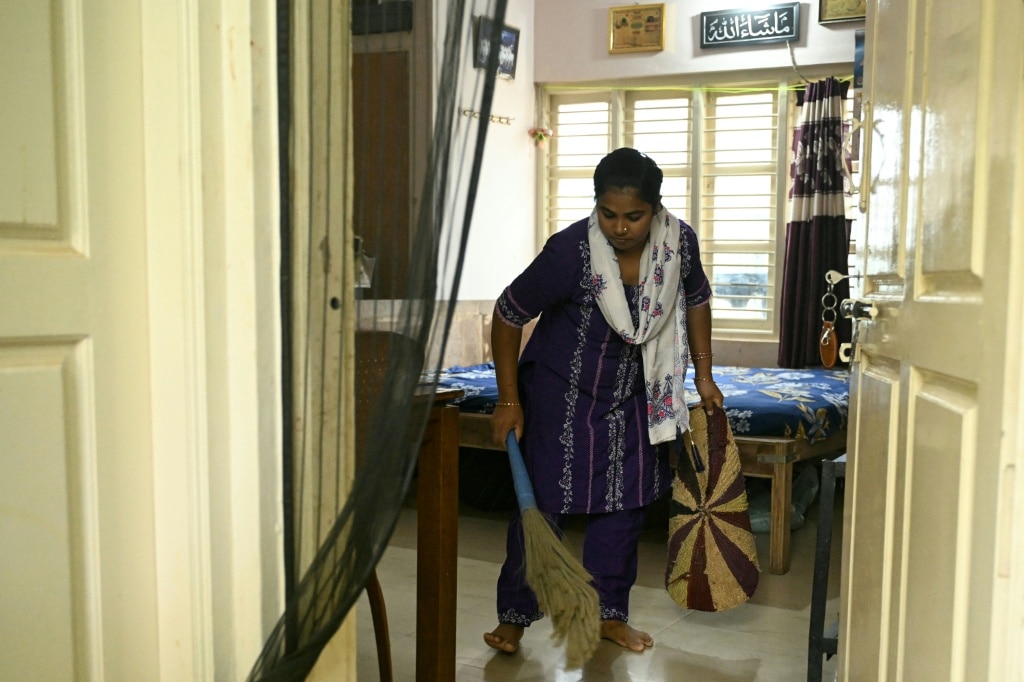
India’s vast informal domestic work sector, which employs roughly 30 million people, is undergoing a tech-driven transformation as a new wave of startups move the industry online, mirroring the disruptive growth of ride-hailing platforms. The shift promises better pay and flexible working arrangements for workers, though it has also sparked criticism from labor advocates who warn that the new digital model carries new risks of exploitation.
At training facilities like Snabbit’s hub in Bengaluru, southern India’s leading technology center, groups of aspiring domestic workers practice time-bound tasks ranging from folding linens to chopping vegetables, preparing to join the app-based service economy. Before going live, all workers complete police background checks and soft skills training covering professional etiquette and customer service standards. Once active on the platform, workers receive job bookings digitally, navigate to assigned homes, and log their working hours directly through their smartphones. Performance is tracked via customer ratings, with algorithm-generated incentives for high scores and penalties for consistent low ratings.
For many workers, the digital model has delivered a dramatic improvement in earnings. Heena Bibi, a 34-year-old mother of four who joined Snabbit, told reporters she earns roughly 45,000 Indian rupees ($472) per month — three times the income she earned through traditional informal arrangements with multiple private clients. “I get three-four jobs on a normal day. If there’s any festival… more work comes,” she said, highlighting the flexible scheduling that allows workers to match work to their availability rather than being tied to a fixed set of long-term clients. The model has also proven popular with customers: 63-year-old homemaker Atiya Khusro explained that app-based services let her avoid adjusting her entire daily routine around the fixed schedule of a traditional full-time domestic helper, with on-demand support available whenever she needs it.
One of the largest players in this growing market, Snabbit currently operates across 10 major Indian cities including Delhi and Mumbai, with 20,000 registered workers completing an average of 60,000 individual service jobs daily. Other platforms including Pronto and Urban Company have expanded the model to cover a wide range of on-demand home services: Pronto offers everything from hourly window cleaning to same-day post-party cleanups, while Urban Company provides on-demand access to everything from home repair services to at-home salon treatments.
Snabbit founder and CEO Aayush Agarwal argues that the platform’s biggest selling point for workers is the flexibility it offers, particularly for women balancing care responsibilities. “Today a mother can send her kid off to school, work at Snabbit for four hours and come back before the kid comes back from school,” he said. Agarwal added that the goal of the platforms is to expand options for both workers and customers, rather than replacing the traditional informal domestic work system, framing the shift as similar to the digitization of the ride-hailing sector that made on-demand transport widely accessible.
Bhoomika Saigal, Snabbit’s director of training and quality, noted that customer ratings are central to maintaining service standards. “If anybody is less than four (out of five), our training team ensures that we call her and understand what is the problem,” she explained, allowing the platform to address performance gaps and support worker improvement.
Despite the benefits cited by workers and industry leaders, the new model has not won universal support. Some long-time domestic workers remain wary of the unvetted new clients they would be required to serve through the app. Renu Devi, a 38-year-old worker from Uttar Pradesh who has stuck with traditional arrangements, said the existing informal system feels more secure. “I am scared that I might have to go to a house where I don’t know if I will be safe,” she said. “At the moment, I know the people who I work for and I can trust them.”
Labor advocates have raised broader structural concerns about the gig-based model, arguing that it simply replaces one form of exploitation with another. Sanjay Gaba, president of the All India Gig and Platform Workers Union, called the app-based system 100 percent unfair. “They don’t have any job security. They don’t have benefits like pension because they are not permanent employees,” he told AFP, pointing to the longstanding lack of regulation in India’s domestic work sector that leaves gig workers without basic labor protections. Even before the shift to digital platforms, domestic work in India has long been associated with stagnant low wages and widespread risks of abuse and exploitation, though low barriers to entry continue to draw millions of rural migrant workers to the sector in search of urban economic opportunity.