Two weeks after open conflict between Iran and the United States reignited, the Middle East has entered a dangerous new phase of escalation, with multiple waves of missile and drone attacks striking targets across the region on Tuesday and fresh threats to global energy supply chains raising alarms worldwide.
The latest round of hostilities follows the collapse of a June framework peace deal and an April ceasefire, reviving a full-scale confrontation that began after a US-Israeli strike on Iran in late February. In response to that attack, Tehran reimposed its blockade of the Strait of Hormuz— the strategic chokepoint through which roughly one-fifth of the world’s annual oil supplies transited in peacetime— triggering reciprocal port blockades from Washington.
On Tuesday, air raid sirens wailed across Bahrain and Jordan as regional defense forces intercepted two waves of Iranian projectiles. Bahrain’s interior ministry issued an emergency alert urging civilians to seek shelter, while Jordan’s military confirmed it had shot down five Iranian drones followed by three missiles, with no reported casualties or damage from the strikes. Iran’s Islamic Revolutionary Guard Corps (IRGC) claimed responsibility for the first wave of attacks, stating in an official statement carried by state news agency IRNA that the strikes targeted a “complex housing US terrorist forces in the region of Rukban”. The Iranian military had previously announced targeting US assets across Kuwait and Bahrain, including air defense systems, radar stations and administrative facilities. In a stern warning to Washington, the IRGC added that “With this radar sweep, the enemy should prepare for even more decisive and powerful waves of drone and missile attacks.”
Alongside direct Iranian strikes, Tehran’s Yemeni allied movement the Houthis has thrown additional fuel on the fire, announcing it will blockade Saudi Arabia’s commercial ports. If the Houthi threat is carried out, it would disrupt Saudi Arabia’s ability to route crude oil exports around the Strait of Hormuz via its Red Sea export terminal at Yanbu, deepening chaos already roiling global energy markets. For months, energy analysts have warned that a resumption of Houthi attacks on Red Sea and Gulf of Aden shipping— a tactic the group employed during the Gaza war— would further shrink available global crude supplies. Despite the high-stakes threat, global oil markets eased slightly on Tuesday after a brief surge to a one-month high on Monday. It remains unclear how the Houthis, who had largely stayed on the sidelines of the current conflict since late February despite a resumption of cross-fire with Saudi Arabia last week that broke a 2022 truce, would implement the port blockade. Saudi Arabia has condemned the announcement, labeling the Houthis a “terrorist militia” and reaffirming its support for Yemen’s internationally recognized government.
In the Strait of Hormuz itself, the IRGC announced Tuesday it had seized and disabled two “non-compliant” oil tankers that attempted to violate the blockade. The UK Maritime Trade Operations (UKMTO) agency separately confirmed two separate projectile strikes on tankers off the coast of Oman in the past 48 hours, leaving both vessels dead in the water after major fires broke out on board.
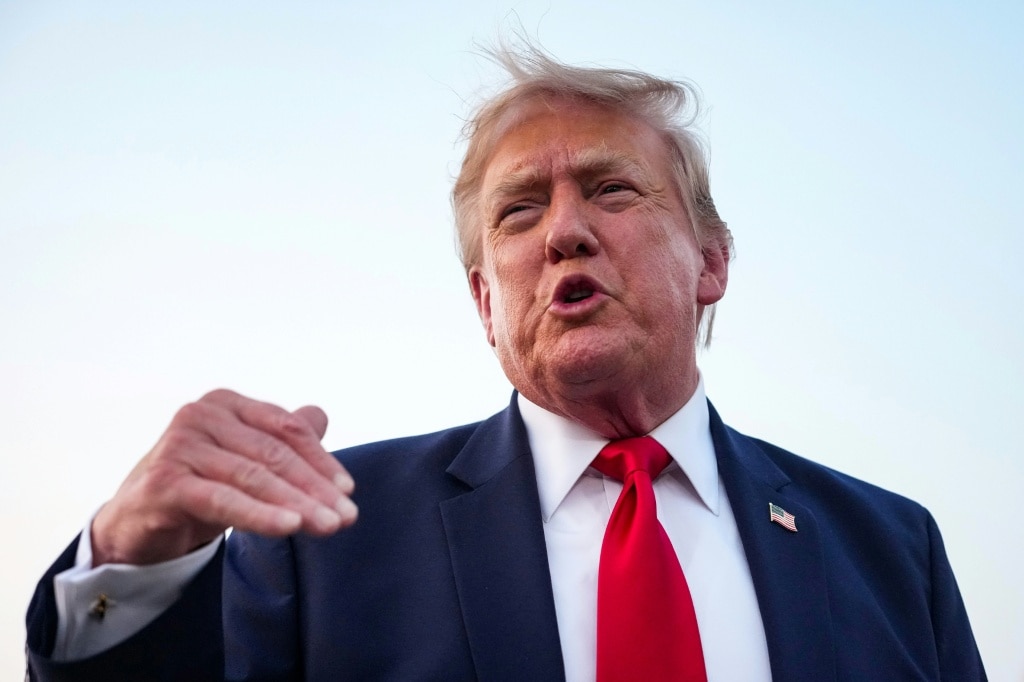
The escalation comes just one day after the US launched a new round of retaliatory strikes against Iranian targets, following the deaths of at least three American soldiers in recent attacks. US officials said the Monday strikes were intended “to further degrade Iranian military capabilities used to attack commercial shipping” in the strait. The Pentagon confirmed Monday that nearly 100 US service members have been wounded since hostilities resumed on July 7, most suffering minor concussions. In a public address, US President Donald Trump warned that Iran would pay “many times over” for every American service member killed, while Iranian President Masoud Pezeshkian acknowledged the conflict had escalated into “a full-scale war”.
Surprisingly, even amid open fighting, diplomatic channels remain partially open. Iranian foreign ministry spokesman Esmaeil Baqaei confirmed that indirect diplomatic exchanges between Tehran and Washington are still ongoing via regional mediators. Parallel diplomatic activity is unfolding across the region: Iranian Interior Minister Eskandar Momeni is in Islamabad for a two-day visit, scheduled to hold talks with Pakistani Prime Minister Shehbaz Sharif and army chief Asim Munir. Meanwhile, Lebanese President Joseph Aoun is set to meet with Trump in Washington on Tuesday, as international pressure grows on Beirut to disarm Hezbollah— a non-negotiable condition Israel has set for withdrawing its forces from southern Lebanon.
The rapidly unfolding escalation has left global policymakers bracing for further unrest, with the potential for the conflict to draw in more regional powers and send energy prices soaring in the coming weeks.