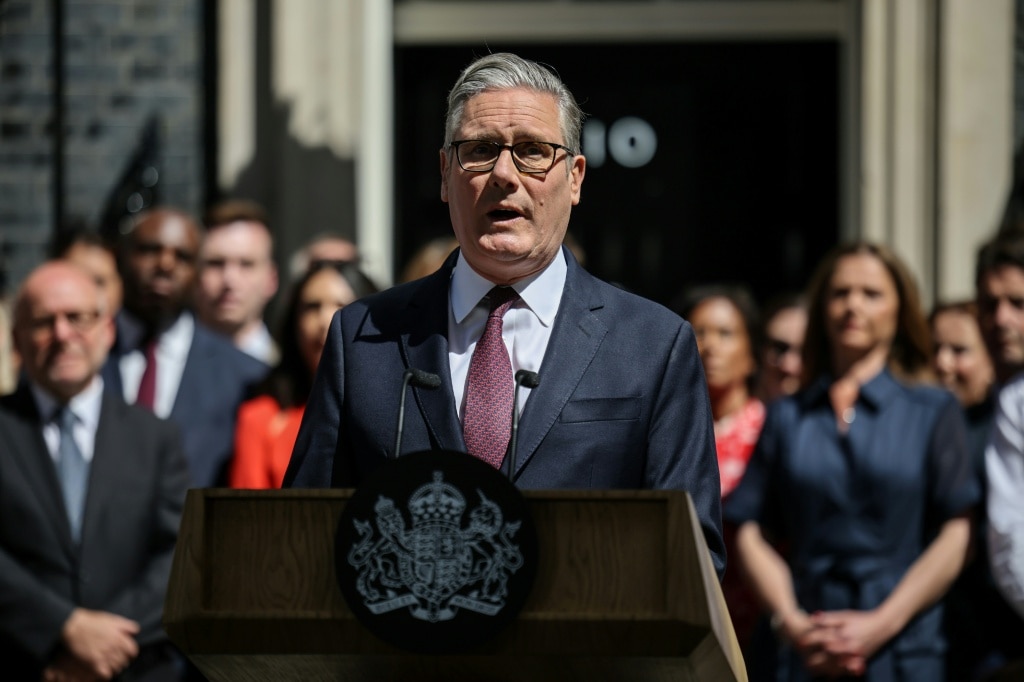
London — A historic transition of power unfolded in the United Kingdom on Monday, as Andy Burnham accepted King Charles III’s invitation to form a new government, stepping into 10 Downing Street just moments after outgoing Prime Minister Keir Starmer formally tendered his resignation to the monarch. The handover caps a turbulent period for the ruling Labour Party, and leaves Britain’s new leader facing a daunting stack of urgent challenges that have already brought down two previous premierships in less than a decade.
In his final remarks outside his Downing Street residence before departing for Buckingham Palace, Starmer struck a defiant, positive tone about his two years in office. Elected in a 2024 landslide that ended 14 consecutive years of Conservative Party rule, Starmer said he left office confident that the country had improved under his leadership. “I am confident that Britain is now stronger and fairer than it was two years ago,” Starmer told assembled reporters. “I go with good grace, I go with a smile, and I go proud of everything that we have achieved.”
Starmer’s resignation came last month, brought on by a cascade of internal scandals, policy missteps and repeated last-minute policy reversals that eroded public and parliamentary confidence in his leadership. At 56, Burnham, the former popular mayor of Greater Manchester who only regained a seat in Parliament four weeks ago, becomes the sixth UK prime minister to enter Downing Street over the past 10 years.
Labour Party lawmakers tapped Burnham as the party’s new leader and prime minister in large part to counter the rising electoral threat of Nigel Farage’s right-wing, anti-immigration Reform UK party, which has climbed steadily in national polls ahead of the next general election scheduled for 2029. With Reform already leading voting intention surveys, Burnham told supporters ahead of his swearing-in that his leadership represents the “last chance” for Labour to course-correct and retain power.
From his first day in office, Burnham faces an overflowing in-tray with no time to settle into the role. His most pressing challenges include persistently sluggish economic growth, soaring government borrowing costs, a rapidly expanding public welfare bill, and the ongoing small-boat irregular migration crisis that has fueled much of Reform UK’s electoral gains. Global headwinds add additional instability: unpredictable energy prices driven by ongoing tensions between the United States and Iran, and the volatile policy agenda of U.S. President Donald Trump threaten to upend domestic policy plans from the start.
In an interview with *The Times* published Sunday, Burnham framed his premiership as a clear break from a decade of political dysfunction that has failed to deliver for British voters. “What we’ve been doing hasn’t been working. That’s the way I see it,” he said. “I am going to try and do things in a different way.”
That different approach extends to economic policy, where Burnham said he will shift public spending toward long-term early investment and intervention, rather than the reactive spending on failed outcomes that defined previous governments. “We will be much more focused on setting people up for success, and much less paying for failure,” he explained.
In one of his first policy moves after taking the leadership, Burnham already scrapped Starmer’s signature £1.8 billion national digital ID scheme, a policy that faced widespread criticism over cost and civil liberty concerns. A spokesperson for the new prime minister said the resources earmarked for the three-year project would be redirected to address immediate public needs, primarily easing the financial strain of the ongoing cost-of-living crisis.
Burnham’s first public address outside 10 Downing Street on Monday is expected to lay out his core policy priorities: restoring public trust in national politics, delivering immediate relief for households struggling with the cost of living, boosting long-term economic growth, and devolving more governing power to regional communities across the UK. Later in the day, he is set to announce his senior cabinet appointments, with widespread political attention focused on who will replace outgoing Chancellor of the Exchequer Rachel Reeves at the head of the finance portfolio.
Nicknamed the “King of the North” for his popular tenure leading Greater Manchester, Burnham has rebranded himself as a man-of-the-people politician, combining an approachable, folksy public image with a polished modern social media strategy. The former Labour minister served in the Cabinets of Tony Blair and Gordon Brown between 2001 and 2017, giving him decades of Westminster experience ahead of taking the top job. Still, critics have raised questions about the speed of his rise to the premiership — and whether his stated plan to fix Britain’s challenges will hold up amid severe fiscal constraints. Burnham inherits a framework of strict financial rules requiring balanced government spending and limited tax increases, paired with near-stagnant growth and high public debt that leaves him little room for policy maneuvering, with just three years to deliver results before the next general election.