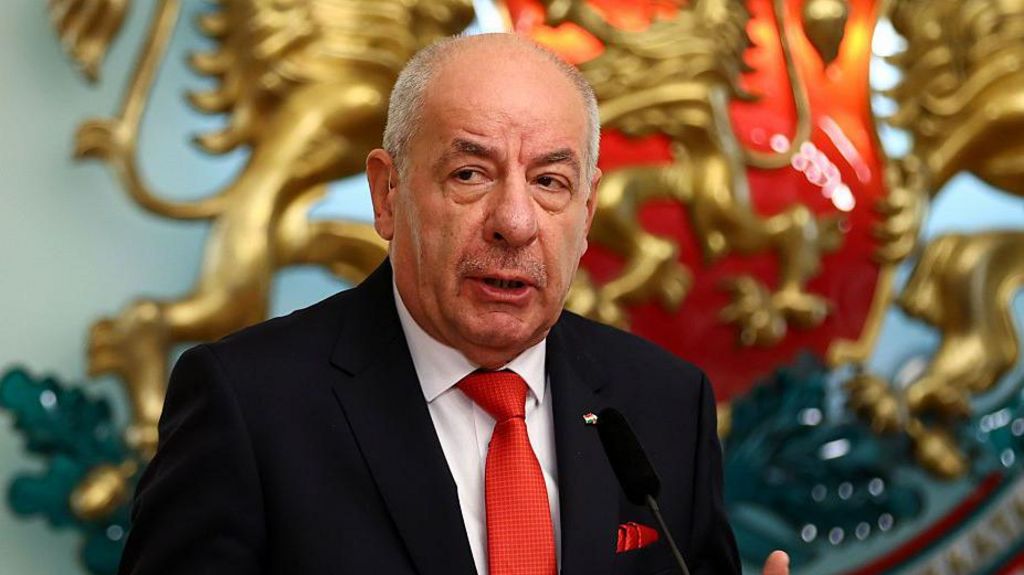
In a dramatic shakeup of Hungarian politics that caps months of upheaval following the April general election, President Tamás Sulyok has formalized his early exit from office, signing a controversial constitutional amendment that will end his term at midnight Sunday. The move comes after Prime Minister Péter Magyar’s ruling Tisza party pushed the constitutional change through parliament in a fast-track process to remove Sulyok, a figure widely recognized as a key loyalist to long-serving former Prime Minister Viktor Orbán, whose 16-year grip on power ended with a landslide defeat for his Fidesz party in April.
Sulyok faced an explicit five-day deadline to sign the amendment, with the alternative being a messy constitutional crisis and formal impeachment proceedings. As the clock ran down on Saturday evening, the outgoing president confirmed he would comply with the new law — but used his final statement to deliver a scathing rebuke of Magyar’s new administration. He argued that the forced ouster via constitutional amendment represents a clear breach of the rule of law, calling the moment a “breaking point in Hungarian constitutional democracy.” In his remarks, Sulyok claimed that the “core values of a free society… have been trampled underfoot for the sake of political power,” adding that he had no existing constitutional pathways to challenge the amendment.
This ouster marks the most high-profile and consequential action taken by the Tisza government to date, which has framed Sulyok as a leftover puppet of the Orbán era that had no place in the new administration. Since taking power after a commanding election victory in April, the party has moved rapidly to implement sweeping constitutional changes to undo the institutional legacy of Fidesz.
The amendment has already drawn fierce pushback from Orbán and what remains of his party. Orbán has condemned the move as an act of tyranny and called on his supporters to hold public protests against the ouster. Since the April election defeat, Fidesz has collapsed into disarray, still reeling from the shock of losing power after 16 years in control. Orbán himself has largely vanished from public life, and has refused to claim his allocated seat in the new parliament.
The roots of this political clash stretch back to the 16 years of Fidesz rule from 2010 to 2026. During that time, the party used its long-held two-thirds parliamentary majority to reshape Hungarian state institutions to align with its ideological and political goals, filling dozens of nominally independent state positions — including the presidency — with hand-picked party loyalists.
When the constitutional amendment vote passed parliament on Monday, the 141 Tisza deputies gave a standing ovation as the final results were read out. The move has split legal and political observers, however. András Baka, the former head of Hungary’s Supreme Court, publicly expressed support for Sulyok’s removal in comments to the BBC. Baka argued that between 1989 and 2010, Hungary operated as a consistent rule-of-law democracy, but after Fidesz took power in 2010, the party systematically captured independent state institutions to build an authoritarian regime. “And it is now very difficult to break up a sophisticated authoritarian regime… which was designed to survive even after electoral defeat,” Baka explained, justifying the removal of Sulyok as a necessary step to undo Fidesz’s institutional legacy.