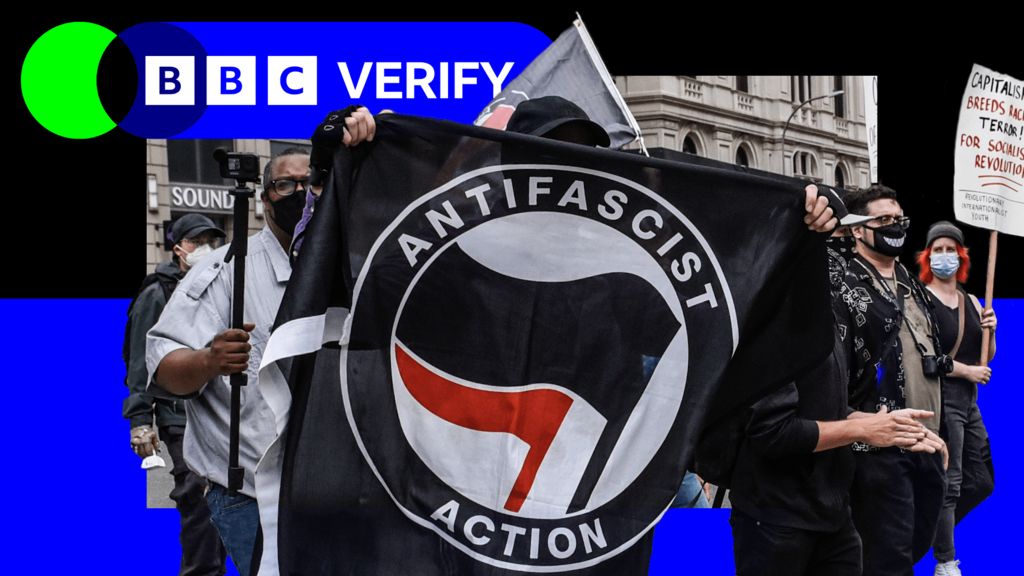
Former US President Donald Trump has announced his intention to designate Antifa as a ‘major terrorist organization,’ targeting what he describes as the ‘radical left.’ This declaration follows the killing of conservative activist Charlie Kirk, which has intensified political divisions in the country. In a post on his Truth Social platform, Trump labeled Antifa as a ‘sick, dangerous, radical left disaster’ and pledged a thorough investigation into the group. Antifa, a decentralized, leftist movement opposing far-right, racist, and fascist groups, has long been a focal point of Trump’s criticism. However, experts question the feasibility of this designation, given Antifa’s lack of formal structure, leadership, or membership. In 2020, then-FBI Director Christopher Wray noted that Antifa is better understood as an ideology rather than an organization. Despite this, Antifa remains a contentious topic among right-wing influencers and politicians, who argue it is part of a broader left-wing network undermining US values. The movement, whose name derives from the German ‘antifaschistisch,’ gained prominence after Trump’s 2016 election and the 2017 Charlottesville rally. Activists associated with Antifa have frequently clashed with right-wing groups, both online and in physical confrontations. Critics highlight the movement’s willingness to use violence, which activists claim is in self-defense. Trump’s proposal to designate Antifa as a terrorist organization faces legal hurdles, as the US government can only designate foreign groups as Foreign Terror Organizations (FTOs). Legal experts emphasize that the First Amendment protects the right of association, complicating any efforts to label domestic groups as terrorist organizations. This is not the first time Trump has targeted Antifa; he made a similar pledge in 2020 but did not follow through. His latest move comes amid heightened political tensions, with the Department of Justice recently removing a study on political violence that highlighted far-right extremism as a significant threat. Experts warn that politicizing violence risks escalating tensions rather than reducing them.