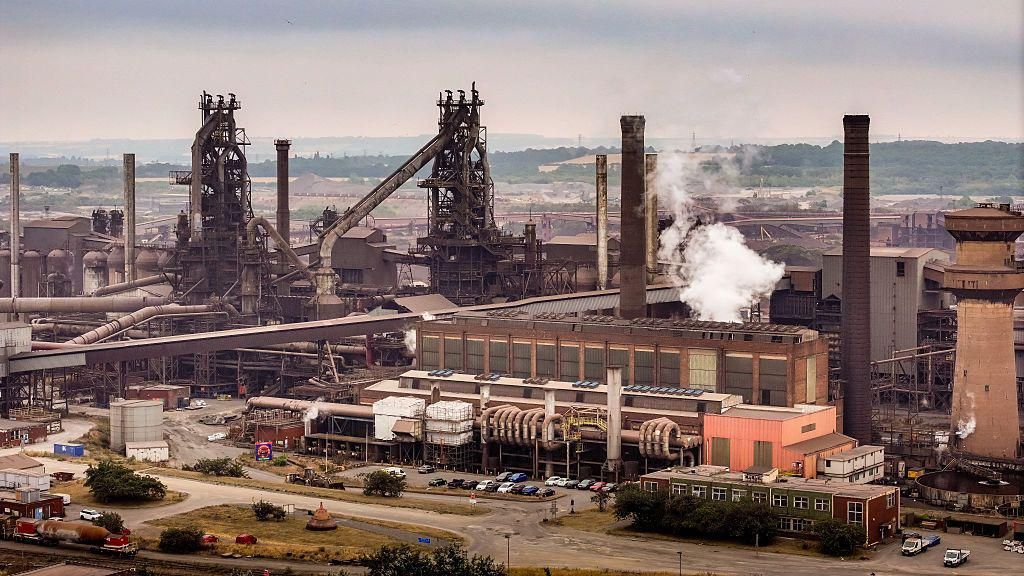
A major diplomatic dispute between China and the United Kingdom has erupted after London moved to fully nationalise loss-making British Steel, a move Beijing has condemned as an unfair seizure of private property.
Last year, the UK government already took over day-to-day operational control of British Steel’s primary facility in Scunthorpe, while formal ownership remained with China’s Jingye Group. That arrangement severely constrained Whitehall’s ability to make long-term strategic decisions about the plant’s future. This deadlock broke this week, when Parliament passed emergency legislation on Wednesday authorizing public takeover of steel assets that pass a public interest test. On Thursday, Downing Street formally executed the nationalisation, arguing that bringing the struggling steelmaker into public hands is the only way to protect thousands of domestic jobs and preserve what officials call a “vital national capability” for the UK’s industrial base.
Beijing immediately pushed back against the decision. In a formal statement released Friday, China’s Ministry of Commerce said the country “firmly opposes and is strongly dissatisfied with the British government’s decision.” The ministry accused the UK of disregarding the tangible economic and social contributions Jingye has made to the UK since acquiring the steelmaker, adding that the forced nationalisation carried out under the banner of national security “seriously infringed upon Jingye’s legitimate rights and interests and severely undermined the confidence of Chinese companies investing in the UK.” Beijing has called on London to uphold its binding obligations under the China-UK Bilateral Investment Treaty, and noted that it will closely track developments while supporting Jingye in pursuing all legal avenues to defend its interests. No specific countermeasures were outlined in the statement.
Jingye, which has confirmed the company was losing approximately £700,000 per day prior to the full takeover, has already stated it intends to pursue financial compensation for the nationalisation. The BBC has so far been unable to secure an on-the-record response from Jingye’s leadership regarding Thursday’s formal announcement.
For the UK government, the nationalisation resolves the operational uncertainty that has hung over the Scunthorpe plant for months. With full public ownership, officials now have full authority to map out the facility’s future while keeping its critical blast furnaces operational. However, the long-term financial burden is substantial: the UK’s National Audit Office estimated in March that the Scunthorpe works already costs public coffers roughly £1.3 million per day, a figure Business Secretary Peter Kyle acknowledged the government would cover “for the immediate future.” Analysts broadly agree that Downing Street has no intention of retaining permanent ownership of the loss-making business.
The timing of the dispute is particularly awkward for UK politics, as incoming Prime Minister Andy Burnham is set to take office on Monday. Burnham will now be forced to navigate a delicate balancing act: managing the fallout from the nationalisation while preserving the economic benefits that come from strong trade and investment ties with the world’s second-largest economy. The row threatens to create an early foreign policy strain on the new premiership, adding another layer of complexity to already fragile Sino-British relations.