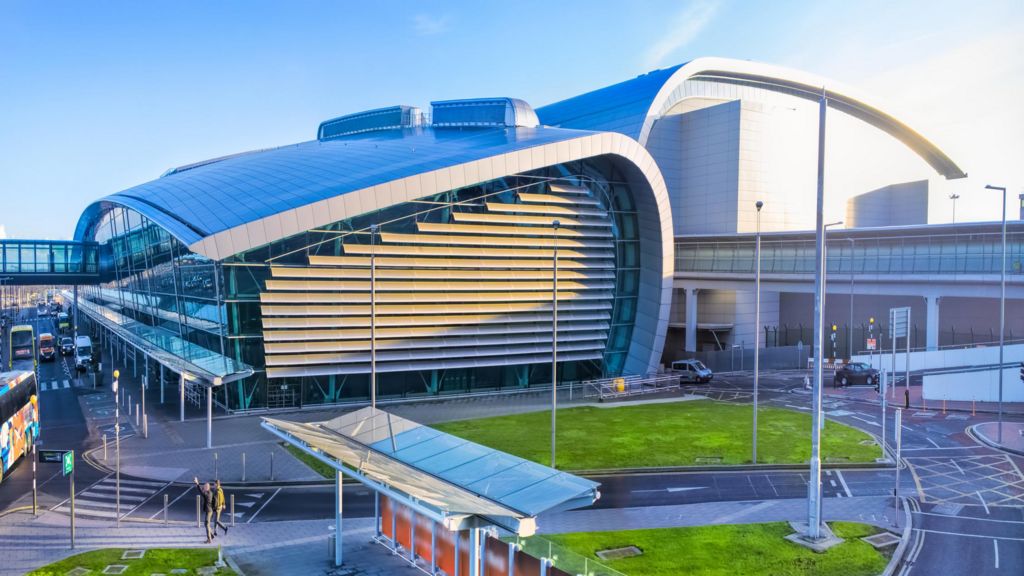
Nineteen years after Dublin Airport’s annual passenger cap of 32 million was first written into planning rules, Ireland has formally enacted legislation to eliminate the long-contested limit, marking a major shift in the country’s aviation strategy.
The newly signed Dublin Airport (Passenger Capacity) Act 2026 grants Ireland’s Transport Minister the formal authority to fully scrap the 2007-era restriction. The legislation cleared Ireland’s lower house of parliament, the Dáil Éireann, earlier this week, and received formal presidential approval from President Catherine Connolly this past Thursday.
The 32 million cap has been tied up in legal challenges for years, and has been temporarily suspended since a 2024 High Court ruling, with the suspension set to remain in place until a ruling from the European Court of Justice. Even with the cap on the books, official data from Irish national public broadcaster RTÉ shows the airport far exceeded the limit last year, handling roughly four million more passengers than the cap allowed. As far back as 2024, the restriction already created disruptive travel disruptions: Leinster Rugby was forced to depart from Belfast International Airport for away matches to avoid eating into Dublin Airport’s limited passenger quota. Last year, the airport also secured separate planning approval to expand its allowed number of nighttime flights, loosening another key operational constraint.
The original 2007 cap was introduced by city planners primarily to address growing concerns over chronic road congestion in the communities surrounding the airport. Today, opposition to lifting the limit remains, with local residential groups and environmental organizations still backing the cap. For environmental advocates, the restriction is a critical tool to curb growth in the aviation sector, one of the highest-emitting industries contributing to climate change.
But proponents of repealing the cap, which include major Irish, European and U.S. airlines, argue that retaining the limit would cause severe long-term economic harm to Ireland. Dublin Airport serves as the country’s primary international entry and exit point, and industry groups have repeatedly warned that a binding cap would limit tourism growth, block business connectivity, and harm Ireland’s global competitiveness.
Transport Minister Darragh O’Brien has emphasized that the new law formally acknowledges the airport’s outsize strategic role as Ireland’s leading international gateway. O’Brien said he intends to move swiftly to amend or fully revoke the cap once required environmental assessments are completed, stressing that all reviews will be finished within the strict timelines laid out in the new legislation. “This legislation recognizes the strategic importance of Dublin Airport as our primary international gateway,” O’Brien said, underscoring the government’s priority of unlocking the airport’s capacity to support national economic growth.