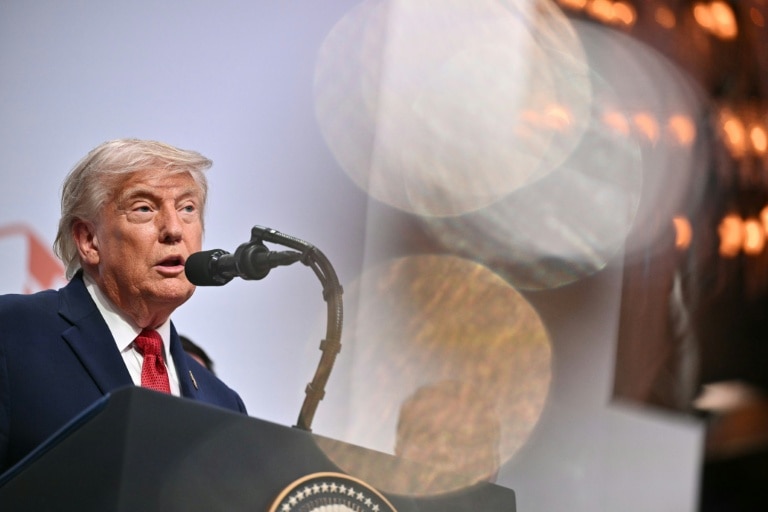
In a move that escalates transatlantic trade tensions between the world’s two largest agricultural economies, the Trump administration formally announced a 25 percent tariff on a broad swathe of Brazilian imports this Wednesday, capping off a 12-month investigation into what Washington calls unfair Brazilian trade practices. The new levy is scheduled to enter into force on July 22, forming a core part of the administration’s push to reestablish its trade tariff agenda after a major legal setback earlier this year. In February, the U.S. Supreme Court struck down a wide range of Trump’s globally imposed tariffs, leaving the White House eager to reassert its trade authority.
Senior U.S. trade officials confirmed that a number of key products have been granted exemptions from the new tariff, including Brazilian beef, coffee, select aircraft components, and goods that the U.S. does not manufacture domestically. The tariff action was authorized under Section 301 of the U.S. Trade Act, a statute that allows the executive branch to impose trade penalties on countries deemed to engage in unfair trade practices. Administration officials have already launched multiple other Section 301 investigations this year targeting a range of trading partners, including probes over alleged failures to combat forced labor in global supply chains.
U.S. Trade Representative Jamieson Greer laid out the Biden administration’s — correction, Trump administration’s — case for the tariffs in an official statement, arguing that Brazil’s “unreasonable acts, policies, and practices” have harmed American commerce by unfairly advantaging domestic Brazilian producers and artificially limiting American access to Brazil, which ranks among the world’s largest export markets. Beyond general trade barriers, senior administration officials specifically called out Brazilian policies on digital trade, and flagged what Washington calls unfair competition stemming from Brazil’s state-owned instant payment system PIX. Officials also claimed Brazil grants preferential trade treatment to other major partners including Mexico and India at the expense of U.S. exporters. Greer emphasized that Washington remains open to negotiated solutions to resolve the long-standing trade issues identified in the year-long probe.
U.S. Secretary of State Marco Rubio went further in his public criticism of Brazil’s left-wing government, saying on social media platform X that the administration of President Luiz Inacio Lula da Silva “has not negotiated with the US in good faith.” Rubio added that “Lula has put his own ego ahead of making a deal for the welfare of the Brazilian people, and these tariffs are the price for that.” A senior anonymous U.S. official rejected widespread claims that the Section 301 investigation and resulting tariff are being used for political purposes, noting that the door for diplomatic resolution remains open even after the announcement. While the administration says it does not anticipate retaliatory action from Brazil, it has explicitly warned that any reciprocal measures would be met with additional U.S. countertariffs.
Brazil swiftly pushed back against the U.S. announcement on Thursday, with Lula’s office issuing a sharp statement rejecting the tariffs and promising reciprocal countermeasures in response. “There is no justification for unilateral measures against our country,” the statement read. Brazilian officials have repeatedly dismissed all U.S. allegations of unfair trade practices as unfounded and absurd, rejecting the core findings of the year-long American investigation.
The tariff announcement also intersects with Brazil’s upcoming presidential election scheduled for October, where Lula, the incumbent left-wing leader, is locked in a tight race with right-wing challenger Flavio Bolsonaro, eldest son of former Brazilian president Jair Bolsonaro. Earlier this month, Flavio Bolsonaro spoke at a public hearing hosted by the U.S. Trade Representative’s office in Washington, where he urged American officials not to impose the new tariffs. Bolsonaro argued that the duties would politically benefit his rival Lula ahead of the election. This is not the first time trade tensions have flared between the two countries during this Trump administration term: last year, the White House imposed steep tariffs on Brazilian goods in response to the coup trial against Jair Bolsonaro, who is currently serving a 27-year prison sentence for his role in the 2022 Brazilian Capitol attacks. Most of those earlier tariffs were rolled back after bilateral negotiations between the two governments.