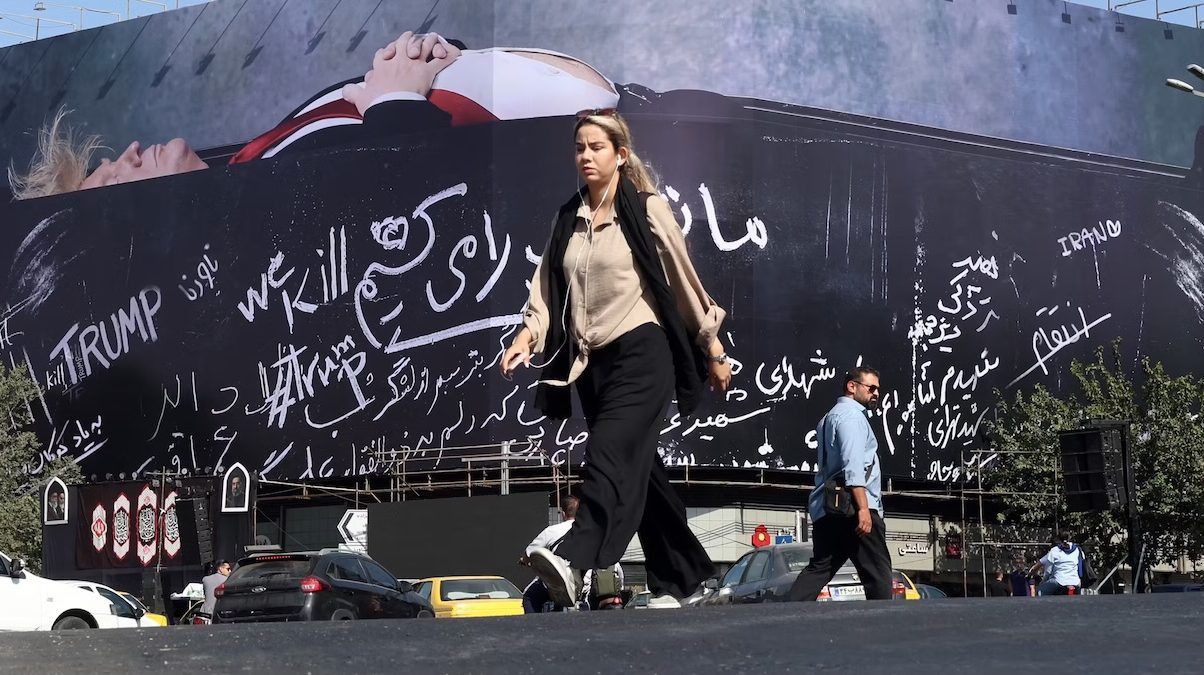
Eight weeks after a temporary ceasefire between the United States and Iran took hold, large-scale armed conflict has erupted once again in the Middle East. On July 8, former U.S. President Donald Trump announced that the June truce was formally terminated, and immediately ordered the U.S. military to launch a wave of intensive airstrikes targeting Iranian positions, alongside the full reimposition of a crippling economic blockade on the Islamic Republic.
In addition to military strikes, the Trump administration has revived a series of hardline threats first issued earlier in the ongoing conflict. Among these menacing warnings are suggestions of deliberate strikes on Iranian civilian infrastructure and a potential military seizure of Kharg Island, the critical hub that hosts the vast majority of Iran’s oil export and processing infrastructure.
The conflict, initially launched in partnership with Israeli Prime Minister Benjamin Netanyahu with the stated goals of curbing Iran’s nuclear program and potentially toppling the country’s ruling regime, has seen its strategic center of gravity shift dramatically over time. Today, hopes inside the White House for a negotiated agreement to resolve Iran’s nuclear activities have all but faded. Instead, Trump has framed his latest escalation as a pressure campaign to force Tehran to abandon its claimed control over the Strait of Hormuz, a critical chokepoint through which roughly a fifth of global oil supplies transit daily. The U.S. aims to restore the pre-war status quo of unimpeded free passage through the waterway, a move Trump claims would stabilize jittery global energy markets.
But analysts warn this rebooted strategy faces the same fatal flaws that derailed U.S. efforts from the start of the conflict: none of the pressure tactics Trump is now employing delivered acceptable outcomes for Washington in the past, and there is little evidence they will succeed this time around. Trump’s reliance on the same failed playbook lays bare just how narrow the administration’s viable options have become to resolve the crisis it created.
Today, the Strait of Hormuz has displaced nuclear concerns as the central flashpoint of the conflict. Iran’s top negotiator Mohammad Bagher Ghalibaf has asserted that future transit through the strait must operate under “Iranian arrangements,” meaning commercial vessels would only be allowed passage on terms set by Tehran. This demand is categorically rejected by Washington, which remains committed to restoring open, unregulated passage.
To understand why Washington has failed to achieve this goal after months of conflict, it is necessary to examine the limitations of the three main levers of U.S. power: military, diplomatic, and economic. Militaey analysts note that no single power can ever exercise full, uncontested control over the 21-mile-wide strait, which is surrounded by Iranian territory and a contested space where multiple global powers project military force. For Iran, however, full territorial control is not required to advance its strategic goals. Tehran only needs to maintain a credible enough threat to commercial shipping to deter insurers and vessel operators from transiting the waterway.
Iran retains a large, well-concealed stockpile of anti-ship missiles, attack drones, and fast attack craft well-suited for harassing commercial and military vessels, a supply the Central Intelligence Agency confirms remains abundant despite months of U.S. strikes. Eliminating these capabilities entirely would require the U.S. to seize and occupy large swathes of Iranian coastal territory, a mission that would almost certainly result in heavy U.S. casualties with no guarantee of long-term success.
A move to seize Kharg Island, while feasible in an initial invasion, would also carry enormous long-term risk. Any U.S. occupation force stationed on the island would remain highly vulnerable to retaliatory Iranian missile and commando attacks, and a prolonged occupation would almost certainly produce steady American casualties, making it impossible to hold the island as a lasting negotiating leverage.
While deliberate strikes on civilian Iranian targets would violate international law and carry significant ethical costs, Trump appears to be gambling that this pressure will force Tehran back to negotiations. But the far more likely outcome is a wave of devastating Iranian retaliation targeting energy infrastructure and civilian sites across the Persian Gulf, which would only deepen regional instability and drive global energy prices even higher.
The well-documented risks and high probability of failure of these military options pushed the Trump administration to explore diplomatic solutions over the past several months, but those efforts have also come up empty. Diplomatic outcomes almost always reflect the balance of power on the battlefield, and with Washington lacking a viable military option to roll back Iran’s influence over the strait, Tehran has no incentive to concede its core strategic demand. Mohsen Rezaee, an adviser to Iranian Supreme Leader Mojtaba Khamenei, recently described Iran’s strategic influence over the strait as “more important than dozens of nuclear bombs,” a comment that underscores the centrality of the waterway to Iran’s national security calculations. Control of the strait gives Tehran irreplaceable leverage over Washington, and it will not abandon that advantage without significant concessions that the Trump administration has so far refused to offer.
On the economic front, a prolonged full blockade of Iran’s ports represents the most effective tool the U.S. has to inflict pain on the Iranian government. Months of economic pressure have already fueled widespread domestic discontent: high inflation and widespread supply shortages sparked a wave of mass unrest across Iran in early 2026, which the Iranian regime put down with brutal force. The Trump administration is betting that further economic strain will erode public support for the regime enough to force concessions.
But the economic blockade inflicts pain on both sides. As long as the blockade remains in place, Iran will continue to disrupt oil and gas transit through the strait, pushing up global energy prices and creating significant domestic political headwinds for Trump ahead of upcoming elections. The blockade also imposes massive sustained costs on the U.S. military, requiring a permanent large deployment to the Gulf that strains American military resources already stretched thin by competing commitments in Europe and the Indo-Pacific. It cannot be maintained indefinitely. When the blockade is eventually lifted and U.S. forces draw down, Iran’s geographic proximity to the strait means it will immediately be able to resume disrupting shipping, erasing any gains the blockade achieved.
In the end, Trump’s escalatory moves have left the United States backed into an inescapable corner. For all of America’s overwhelming conventional military power, there are hard limits to what military force can achieve in this conflict. In a war of his own making, Trump is now running headlong into those limits, with no clear path out.