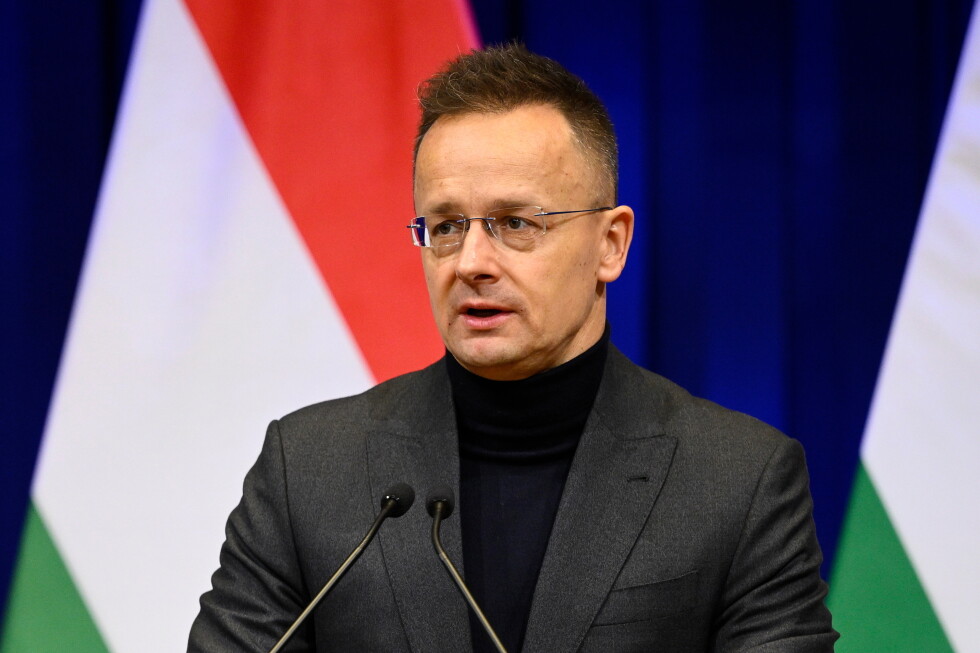
BUDAPEST, Hungary — In a surprise announcement posted to social media Wednesday, Péter Szijjártó, Hungary’s top diplomat for nearly 12 years under former Prime Minister Viktor Orbán, confirmed he has resigned his seat in the country’s national parliament to accept a senior executive role at Chinese electric vehicle manufacturing giant BYD.
Szijjártó, who first won a parliamentary mandate in 2002, lost his cabinet position following Orbán’s far-right Fidesz party’s landslide April election defeat to the pro-European Tisza party led by current Prime Minister Péter Magyar. In the months after the election, the former foreign minister was absent from the vast majority of parliamentary votes, made few public appearances, and stayed largely silent on social media platforms.
In his Facebook statement Wednesday, Szijjártó described the opportunity at BYD — the world’s largest producer of electric vehicles — as a “highly prestigious international position.” He hailed the Chinese automaker as one of the most remarkable success stories in the global automotive sector over the past two decades, and confirmed he will now serve as the executive leading the BYD group’s external affairs and expansion of new business lines.
The new role marks a full-circle moment for Szijjártó, who as foreign minister spearheaded years of negotiations to bring BYD’s first European manufacturing facility to Hungary. Announced in 2023, the Hungarian plant allows BYD to avoid punitive European Union import tariffs imposed on Chinese electric vehicles, a policy Szijjártó and Orbán’s administration openly opposed throughout their time in office. At the time of the 2023 announcement, Szijjártó noted the investment deal followed 224 separate rounds of talks between BYD and Hungarian officials, and called the project “one of the largest investments in Hungarian economic history,” adding the Orbán government would extend significant financial incentives to the company to support construction of the facility.
Under Szijjártó’s tenure as foreign affairs and trade minister, Hungary actively courted billions in Chinese investment, attracting a string of Chinese EV battery manufacturing plants across the country. The Orbán administration also partnered with Beijing on the Hungary-Serbia rail corridor, a key infrastructure project under China’s global Belt and Road trade initiative.
Beyond his economic outreach to Beijing, Szijjártó was a highly controversial figure in European diplomatic circles for his close alignment with Russia following Moscow’s full-scale invasion of Ukraine in February 2022. Breaking ranks with nearly all other EU foreign ministers, Szijjártó made repeated trips to Moscow to negotiate energy purchase agreements with Russian officials and met repeatedly with Russian Foreign Minister Sergey Lavrov, whom he openly described as a personal friend. In 2021, before the invasion, Russian President Vladimir Putin awarded Szijjártó the Russian Order of Friendship, one of the highest state honors granted to foreign citizens.
Controversy around Szijjártó’s ties to Moscow escalated during Hungary’s 2026 election campaign, when The Washington Post reported he provided Lavrov with live updates on discussions during high-level EU meetings. Szijjártó denied the core allegation of the report but confirmed he held regular consultations with Lavrov before and after EU foreign minister gatherings to discuss agenda items and policy outcomes. Earlier this year, the outgoing Orbán government filed espionage charges against a prominent Hungarian investigative journalist who was probing Szijjártó’s communications with Russian officials. Those charges were immediately dropped after the new Tisza government took office in April.