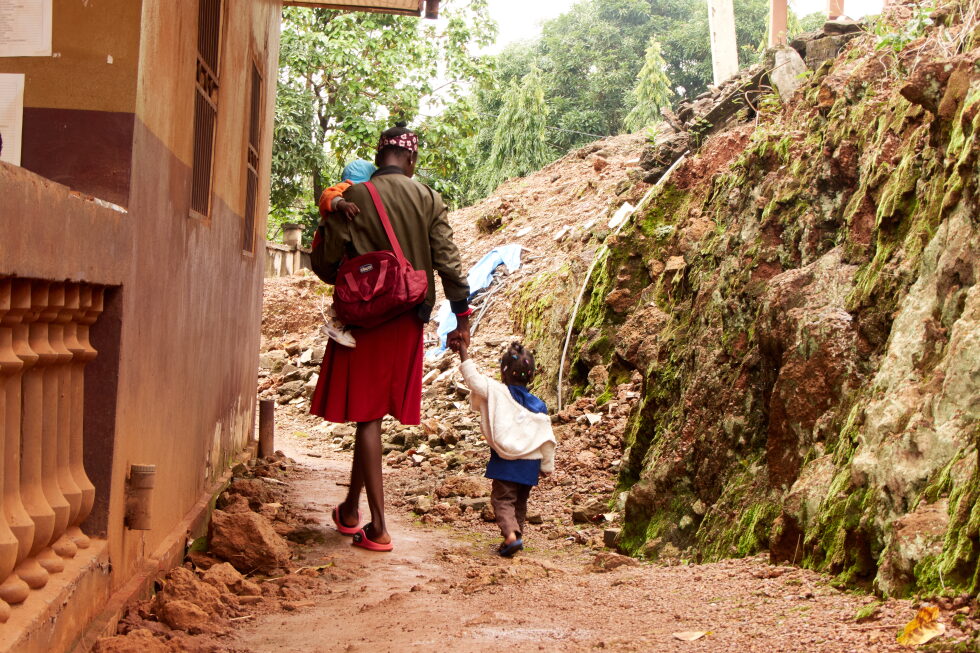
In the sweltering hills of central Cameroon, Mabel Djoumessi trekked for miles along rain-soaked, mud-caked dirt roads, her 9-month-old son Kenfack strapped securely to her back. Her destination: a local clinic, where Kenfack was scheduled for his malaria vaccine — an appointment too urgent to skip, even in poor conditions.
For generations, malaria has reigned as one of the deadliest threats to young children across the African continent, leaving millions of families grappling with repeated sickness and unmanageable medical costs. Today, Kenfack has never contracted the disease, a outcome his mother credits directly to the new malaria vaccine that has entered routine childhood immunization schedules across the country. “My other children, who never had access to the vaccine, get sick all the time,” Djoumessi explained, as she sat alongside other mothers holding their infants at Soa District Hospital.
It has now been more than two years since Cameroon made history as the first nation to integrate the RTS,S malaria vaccine into its standard routine immunization program, and frontline health workers are already documenting clear public health gains: severe malaria cases among children have dropped noticeably, and pediatric hospital wards that once overflowed with sick young patients are now far emptier. But a critical gap threatens to undermine these hard-won gains: too few families are returning for the fourth and final booster dose that the World Health Organization (WHO) confirms is essential to sustaining long-term immunity against the parasite.
This low fourth-dose coverage is not an isolated challenge limited to Cameroon. It reflects a systemic issue that plagues multidose vaccine rollouts across the entire African continent, where barriers ranging from travel costs to competing work and childcare responsibilities keep families from returning for follow-up doses months after the initial rounds of vaccination.
Global public health data underscores just how high the stakes are: the WHO and UNICEF estimate that malaria kills one child under the age of five every single minute worldwide, with more than 90% of those deaths occurring in Africa. Cameroon alone is among 11 nations that bear roughly 70% of the world’s total malaria burden; the country recorded an estimated 7.6 million cases and 11,700 deaths from the disease in 2024. Early 2025 data from Cameroon’s National Malaria Control Program shows a 33,000-drop in cases compared to the previous year, though experts caution that the vaccine is not the sole driver of this decline.
“Isolating the specific impact of malaria interventions requires advanced statistical modeling, and we do not yet have a framework to quantify the vaccine’s exclusive contribution,” explained Dr. Bomba Amougou, head of prevention at the National Malaria Control Program. “It is accurate to say the vaccine has contributed to falling cases and deaths, but it is not the only cause.”
The WHO first endorsed broad use of the RTS,S vaccine in 2021, after multi-year pilot programs in Ghana, Kenya and Malawi found the shot cut child mortality from malaria by 13% among eligible children. Separate clinical trials across several African nations found that both RTS,S and the newer R21 vaccine reduced clinical malaria cases by more than 50% in the first year after three doses. To date, more than 52 million doses have been delivered to 25 high-risk African nations, supported by Gavi, the Vaccine Alliance. But the rollout faces major funding constraints following sweeping cuts to foreign aid from the Trump administration and other donors. Currently, Gavi is only able to guarantee vaccine supplies to cover up to 70% of eligible children in the world’s lowest-income countries.
In Cameroon, coverage for the first three doses of the vaccine — given at six, seven, and nine months of age — has slowly improved since the program launched, climbing from 66% to 68% for first doses, 53% to 58% for second doses, and 48% to 59% for third doses between 2024 and 2025, according to Amougou. But coverage for the fourth dose, scheduled when a child turns two years old, remains stuck at just 25% as of 2025.
Amougou noted that gaps stem from both parent and provider awareness issues: “Parents and even some health workers sometimes forget the fourth dose, particularly because it is administered more than a year after the third, and this is still a relatively new vaccine.” Receiving all four doses is critical, he emphasized: “Getting every shot makes the protection far more potent, and vaccination must work alongside other tools like bed nets, early treatment, and improved sanitation to beat malaria.”
Data from the earlier pilot programs across Ghana, Kenya and Malawi confirms that the low fourth-dose coverage problem is widespread. While 80% of eligible children received their first dose in those countries, coverage dropped to just 46% for the fourth dose, according to a 2024 study published in the peer-reviewed Malaria Journal. Researchers found that high parent acceptance of the vaccine itself — driven by widespread familiarity with malaria’s deadly toll — but barriers like transport costs, lack of appointment reminders, poor care follow-up, and competing work and family obligations keep families from returning for the final booster months later.
Gavi Chief Executive Officer Dr. Sania Nishtar emphasized that low late-dose coverage is an early, solvable challenge that should not overshadow the vaccine’s life-saving value. Nishtar noted that malaria vaccine actually has the lowest rate of parental hesitancy of any routine vaccine, a reflection of how desperate communities are for tools to protect their children from a preventable killer. “There is huge demand from governments and communities for this vaccine,” she said.
In response to the coverage gap, Cameroon and other affected African nations have launched national “Big Catch-up” campaigns to remind parents and health workers to prioritize the fourth dose and bring eligible children who have missed their booster in for vaccination. Looking ahead, global health researchers are actively developing a single-dose malaria vaccine, which would eliminate the need for multiple follow-up visits and dramatically improve coverage. “The fewer the doses of a vaccine to be administered, the higher the uptake and the easier the administration,” Nishtar explained.
For many low-income families across Cameroon, preventing malaria is not just a matter of child health — it is also a matter of financial survival. Georgette Caroline Mengbwa, a mother of three waiting for her youngest daughter’s third dose at Soa District Hospital, explained that her two older children were born before the vaccine was available, and face repeated bouts of sickness that drain the family’s limited income. “They fall ill every two or three months, and I have to spend between $53 and $107 every time one or all of them get sick,” she said. “It’s a lot of money.” Those costs are devastating in a country where the official monthly minimum wage is just $76, and nearly 40% of the population lives below the poverty line.
For mothers like Djoumessi, the vaccine is already a life-changing tool, and she says she has every intention of returning for Kenfack’s fourth dose when he turns two. “I don’t want him to suffer like the others,” she said.