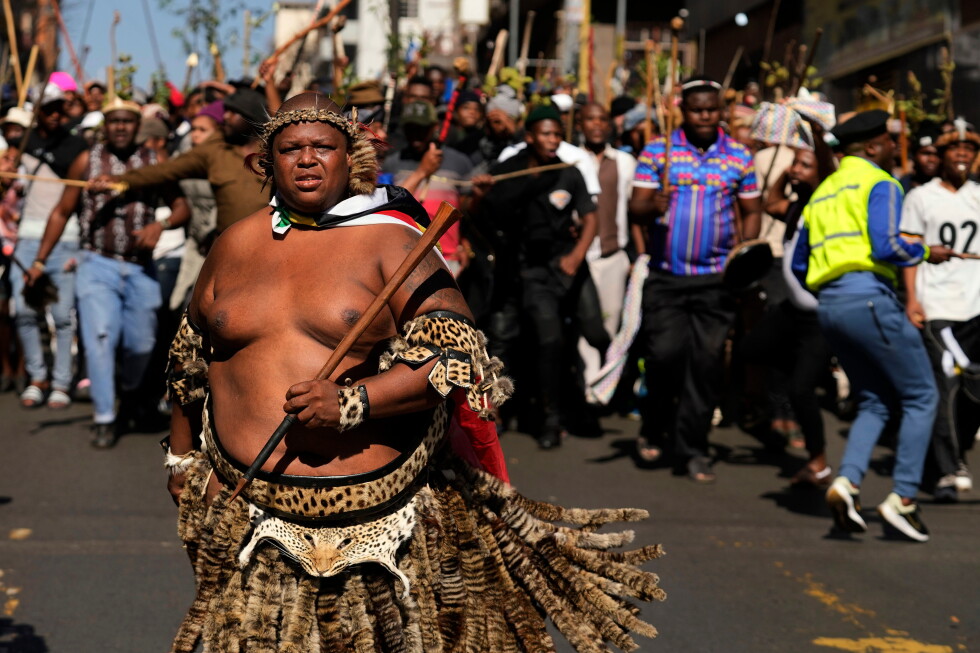
JOHANNESBURG – In a sweeping month-long government crackdown on undocumented migration that has unfolded alongside a wave of violent anti-immigrant demonstrations across the country, South Africa has expelled or repatriated more than 53,000 African migrants, officials have confirmed. In a public briefing Sunday, Justice Minister Mmamoloko Kubayi disclosed that over 80 percent of the migrants returned to their home countries originated from Malawi, though officials have not yet published a breakdown separating forced deportations from cases of voluntary repatriation.
The operation comes amid a sharp rise in anti-immigrant sentiment across South Africa that has erupted in targeted attacks on foreign-born residents, leaving multiple communities on high alert. Several African nations have deployed aircraft and ground transportation to retrieve their citizens from South Africa amid the unrest.
Local law enforcement reports that 350 people have been taken into custody on charges linked to public violence, intimidation, and extrajudicial immigration checks – a dangerous practice where civilian vigilante groups stop migrants to demand proof of legal residency. Investigations are currently underway into the deaths of at least three migrants: two from Mozambique and one from Malawi. Nigerian officials have said two of their citizens were killed during anti-immigrant demonstrations, a claim that South African authorities reject, saying there is no evidence linking the deaths to the protests.
Officials confirmed that while the vast majority of repatriated and deported migrants were from Malawi, Zimbabwe, and Mozambique, the group also included citizens of Nigeria, Uganda, Kenya, and other African nations.
The current crackdown and unrest follow an announcement last month by South African President Cyril Ramaphosa of new plans to bolster border security and enforce existing immigration laws in Africa’s most industrialized economy. Ramaphosa openly acknowledged growing public tensions around migration, caving to political pressure from anti-migrant groups that have spread unsubstantiated claims that undocumented immigrants are responsible for South Africa’s persistently high unemployment rate and widespread violent crime. The president has publicly warned South African citizens against engaging in vigilante justice following reports of targeted attacks on migrant communities.
The most recent large-scale anti-immigrant protest was held on June 30, a date the groups framed as a self-imposed deadline for all undocumented migrants to leave South Africa. The national government rejected the unofficial deadline, but the threat still drove thousands of Malawian migrants to gather at a temporary immigration processing site in the eastern coastal city of Durban to request voluntary repatriation. South African officials note that while some migrants chose to leave voluntarily, many others were formally deported after being found to lack valid residency documentation. Separately, more than 20,000 migrants have been expelled or repatriated from another temporary processing center set up in the northern border town of Musina, according to government data.
South Africa has long drawn migrants from across the African continent, drawn by the country’s relative economic prosperity compared to many neighboring nations. This steady inflow of migration has been a recurring source of social tension for decades. In 2008, a major outbreak of xenophobic violence left more than 60 foreign-born residents dead, and smaller waves of anti-immigrant violence have erupted periodically in the years since.
Immigrant rights advocates say the current climate of fear has pushed even legally residing migrants to flee the country. Sabina Tadera, who works with the Southern Africa Network for Immigrants and Refugees, a regional organization that defends migrant rights, told the Associated Press that many Malawian migrants who recently gathered at temporary repatriation camps actually held valid documentation to stay in South Africa, but left out of fear of becoming targets of violence. “There is a widespread misconception that every person moving across borders in the region is undocumented,” Tadera explained.
The crackdown and accompanying violence have also sparked diplomatic friction with several origin countries, which have publicly condemned South Africa for allowing what they describe as a growing culture of xenophobia to take root. Laura Freeman, an independent human rights and migration consultant based in the region, noted that for generations, South Africa has been viewed as a land of opportunity for migrants from poorer neighboring countries who cannot find stable work at home. “However, repeated waves of xenophobic violence, including this current outbreak, have shifted that reputation dramatically, and South Africa is increasingly seen as an unwelcome place for foreign-born workers,” Freeman said.