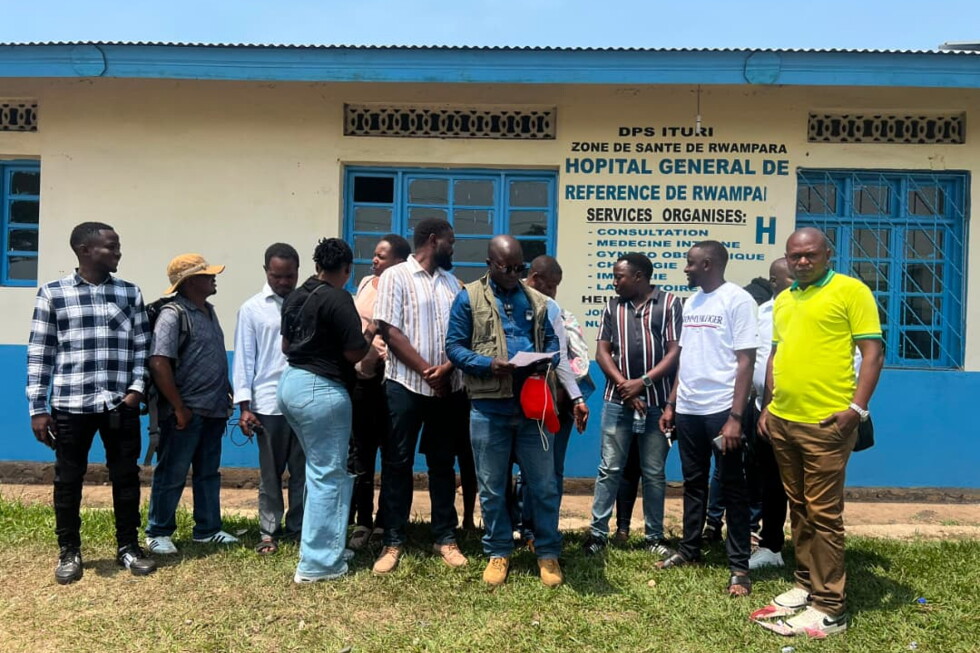
In the northeastern Democratic Republic of the Congo, a critical Ebola response effort has been thrown into chaos by industrial action, as dozens of frontline workers walked off the job Monday to demand months of unpaid salaries and performance bonuses. The walkout, which has closed the Rwampara General Hospital’s Ebola treatment center in Ituri Province, includes every tier of outbreak response staff: epidemiologists tracking virus spread, contact tracers investigating new cases, ambulance drivers, and gravediggers tasked with safe burials, all of whom confirm Congolese government authorities have failed to disburse their pay.
Protesting staff not only shut down the treatment facility but also blocked the main access road leading to the site, amplifying their demands. Discontent has been building for days, with a small group of workers launching an initial strike last week, claiming wages have been withheld since the outbreak was officially declared in mid-May.
Bahati Claude, a frontline health worker assigned to the Rwampara health zone, shared his team’s frustration in an interview with the Associated Press. “We cannot understand how we have gone two full months without pay,” he said, adding that the striking staff remain committed to their public health mission: “We do not want to abandon our posts.”
The current Ebola outbreak in the DRC, caused by the rare Bundibugyo virus strain, carries uniquely high risks: no licensed vaccine or targeted antiviral treatment exists for this variant. Congolese authorities only declared the outbreak on May 15, after the virus had spread undetected through local communities for several weeks, World Health Organization officials confirmed. As of the latest official update, the outbreak has recorded 1,926 confirmed cases and 702 deaths across the country. Last week, the Africa Centres for Disease Control and Prevention labeled this outbreak the fastest-growing Ebola event ever documented on the African continent.
During an official visit to Ituri last week, Congolese Health Minister Roger Kamba acknowledged the payment delays, blaming inaccurate payrolls that have included names of people not working on the outbreak response. “We must guarantee that these funds reach the people who are actually doing the work,” Kamba said. “We have encountered several hurdles, particularly constant revisions to staff lists, which have left legitimate workers out of pay cycles and sparking these complaints. We have the resources to resolve this issue.”
Parallel to the strike, international updates on the outbreak emerged Monday: WHO Director-General Tedros Adhanom Ghebreyesus announced via social media platform X that a second U.S. citizen, a humanitarian worker based in eastern Congo who contracted Ebola, has been evacuated to Germany for specialized care. The first American infected during this outbreak was a physician working in the DRC in the early weeks of virus spread.