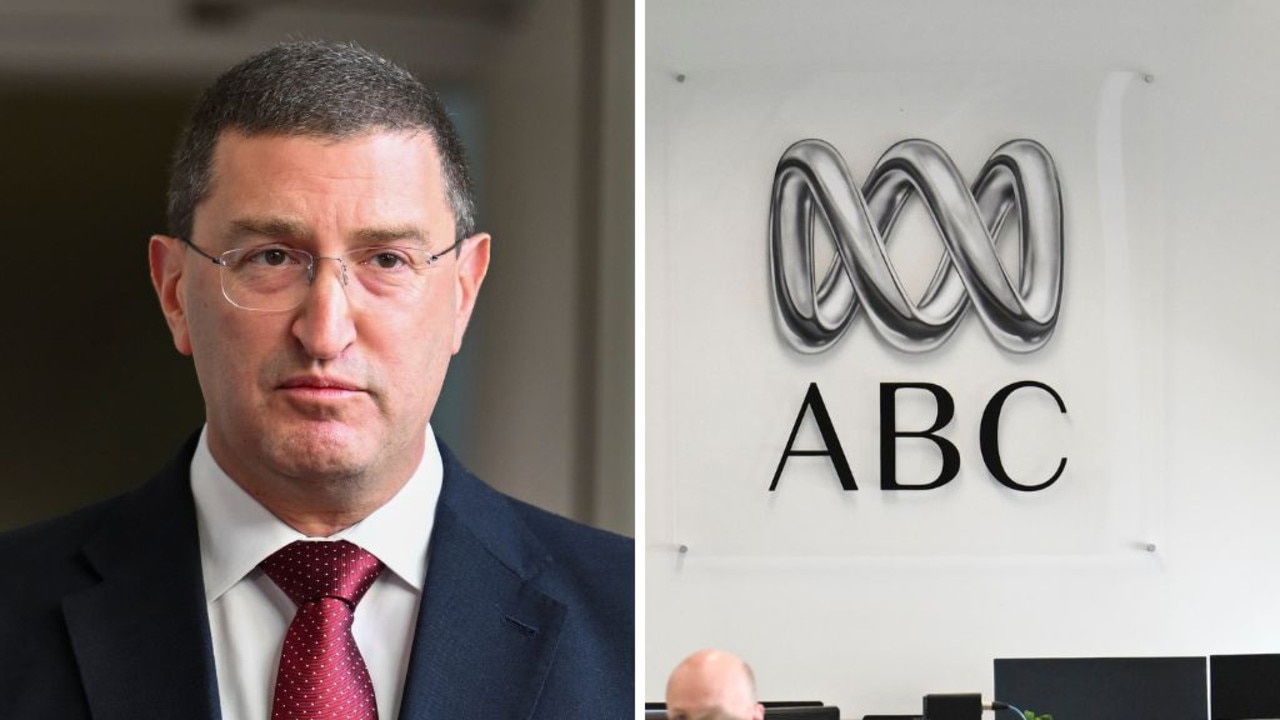
As Australia’s Royal Commission into Antisemitism and Social Cohesion prepares to hear testimony from Jewish university staff and students, a senior opposition politician has launched a pointed public attack on the country’s two major state-funded broadcasters, demanding they address long-running allegations of systemic bias against Israel in their coverage of the ongoing Israel-Gaza war.
Julian Leeser, the opposition’s education spokesperson and member of the Berowra electorate who identifies as part of Australia’s Jewish community, made the demand on Monday, tying the call for broadcaster accountability to the federal government’s new anti-racism rules for Australian higher education institutions. Leeser confirmed that the country’s Special Envoy into Antisemitism, Julian Segal, has formally raised repeated complaints about the public broadcasters’ Israel coverage, which has unfolded amid a conflict that has killed more than 73,000 people in Gaza since the October 7, 2023 Hamas terror attack that left more than 1,000 mostly civilian Israelis dead.
“I think the public broadcasters actually have to be prepared to address systemic bias against Israel in their reporting, and I think they need to subject themselves to greater transparency mechanisms as outlined by the envoy,” Leeser told ABC Radio National in an interview, adding that the exact structure of new transparency rules would be determined by the ongoing Royal Commission.
Australia’s two public broadcasters, the ABC and SBS, have faced sustained criticism from peak national Jewish groups over their coverage of the 10-month-long Israel-Gaza conflict. Last week, the ABC issued a public correction and acknowledged it made a “bad mistake” when it incorrectly reported that 14,000 babies would die of starvation in Gaza within a 48-hour window.
Despite that misstep, ABC Editorial Director Gavin Fang defended the public broadcaster’s overall coverage during testimony to the Royal Commission, noting the outlet has made a deliberate effort to center the experiences of Australia’s Jewish community when reporting on rising antisemitism domestically. Fang added that covering the Middle East conflict, which has profound impacts on Australian communities, aligns directly with the ABC’s legislated charter obligation to deliver independent news and current affairs. “We have covered the impact of a variety of domestic attacks, for instance, on Jewish synagogues, on graffiti and other incidents of anti-Semitism,” he said.
For its part, SBS has faced criticism from Segal over its use of casualty statistics published by the Gaza Health Ministry, which was previously overseen by Hamas’ now-defunct civilian administration. Amanda Wicks, SBS Director of News and Current Affairs, pushed back against that criticism, noting the outlet always contextualizes its use of the data by clearly stating Hamas is recognized as a terrorist organization by Australia and controls the Gaza Strip.
Both broadcasters have also rejected repeated calls from Segal to adopt the International Holocaust Remembrance Alliance (IHRA) working definition of antisemitism, a policy that critics argue disproportionately and unfairly restricts legitimate criticism of the Israeli government and its military actions in Gaza. Leeser, a staunch supporter of mandating the IHRA definition, pushed back on that critique, noting the definition explicitly states that criticism of Israel comparable to that leveled against any other sovereign nation cannot be classified as antisemitic.
Leeser’s calls for broadcaster accountability come as the federal government rolling out new mandatory anti-racism standards for Australian universities, which require institutions to establish more transparent public antisemitism complaint handling processes. The opposition has gone further, demanding that universities make combating antisemitism on campus a formal requirement to access federal funding. Pro-Palestinian student encampments have sprung up on multiple Australian university campuses since October 7, mirroring similar protests across the globe.
Leeser also slammed Home Affairs Minister Tony Burke for failing to mandate the IHRA definition for all universities, arguing that more than a year since the October 7 attacks, there is no more room for delay. “The universities said ‘oh, we don’t like IHRA, we’ll adopt our own definition’, and yet they’d had more than a year and failed to do so,” Leeser said. “The time for mucking around with these issues is long past. 15 people were allegedly murdered in cold blood on our most famous beaches because of their religion. The time to adopt IHRA is now, and I’m calling on the minister to mandate the IHRA definition.”
Leeser added that while legitimate criticism of Israel is acceptable, the spread of antisemitic rhetoric and imagery on university campuses crosses a clear line. “There are lots of Jewish people in this country who criticise the state of Israel, but the idea that you can walk around your university campus and use Nazi iconography to describe Israel and to describe Jews is just wrong,” he said.