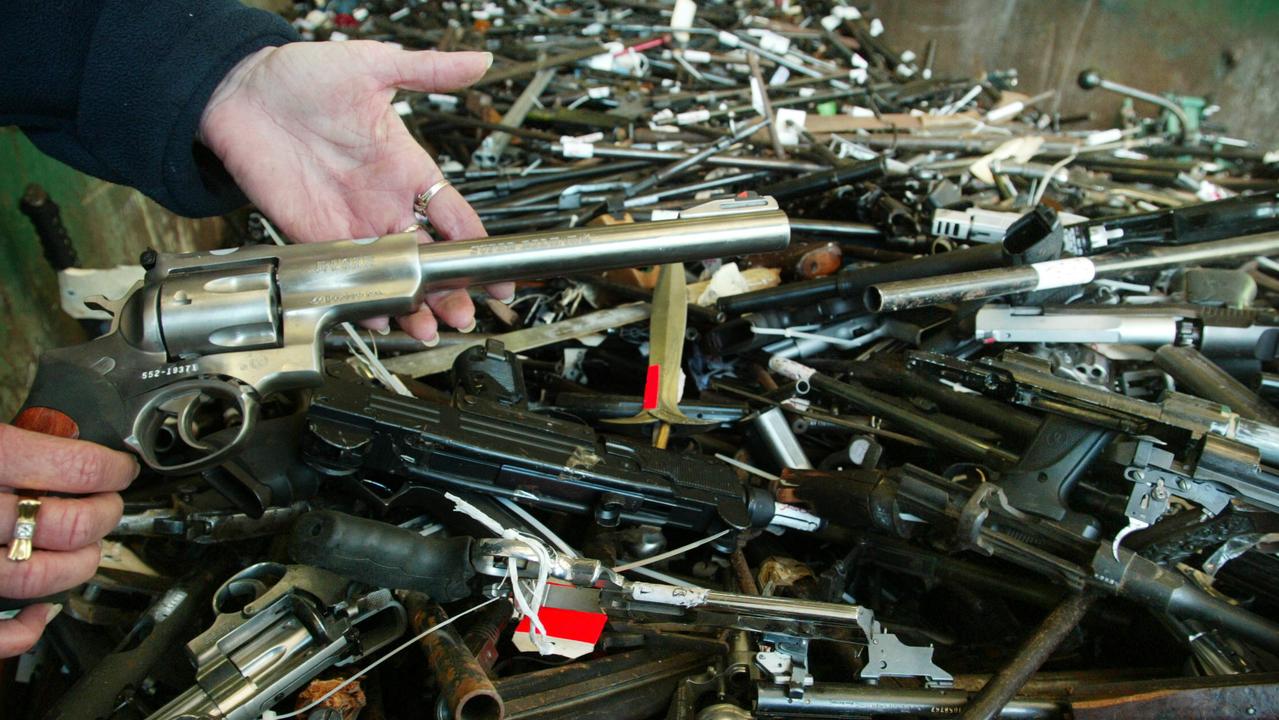
Six months after the deadly Bondi Beach terrorist attack that claimed 15 innocent lives, New South Wales Premier Chris Minns has confirmed his state will proceed with a contentious national gun buyback scheme, even as most other Australian jurisdictions have walked away from the federal government’s reform plan.
Late last year, Prime Minister Anthony Albanese laid out an ambitious timeline to secure buy-in from all state and territorial governments for a unified national firearms reform package, with all legislation slated to pass by July 1. The proposed buyback was explicitly modeled after the landmark 1996 gun control measure introduced by then-Prime Minister John Howard in the wake of the Port Arthur massacre, one of Australia’s worst mass shooting events.
But widespread pushback has derailed the national framework. Most states led by conservative opposition parties have refused to commit to sharing the cost of the voluntary buyback program. Even the center-left Labor government of Victoria rejected the scheme in May, following an independent policy review, choosing instead to direct enforcement resources exclusively at criminal firearms possession.
Addressing reporters on Monday, Minns acknowledged that only the Australian Capital Territory has formally signed on to the federal plan, with Western Australia taking a separate, tangential approach. “To be frank … it does look like it will be NSW, the ACT, and a very similar form of reform in Western Australia – but, that’s likely to be the only states,” Minns said. “Nonetheless, we’re going ahead with it. We think it’s important for our state. We’re the ones who had the worst terrorism event the country’s seen and we want to have tough gun laws in place to keep people safe.”
Minns noted the buyback was briefly raised during the most recent national cabinet meeting but was not a major topic of debate. While he expressed disappointment that more jurisdictions did not join the national effort, he made clear NSW would not weaken its standards to align with less restrictive policies across the country. “We’re not going to be drawn down to the lowest common denominator across those jurisdictions,” he said. “If we’re going to have to, or we have to have, the toughest gun laws in Australia, that’s exactly what will happen.”
Western Australia has not formally joined the Albanese government’s coordinated buyback, but it has launched its own independent state-level buyback program that will run through 2026. Many of NSW’s post-Bondi firearms restrictions, including caps on the number of guns an individual can own, were already modeled on WA’s existing regulatory framework. The ACT is also moving forward with parallel reforms aligned with the national plan, including its own gun ownership cap and reclassification of certain weapon categories.
The reform push has faced sharp criticism from political opponents, who argue the new rules disproportionately penalize law-abiding gun owners rather than targeting violent criminals. Nationals Leader Matt Canavan recently condemned the plan as a failure, arguing that targeting legal firearm owners was never an appropriate response to the Bondi attack. “This was confirmed by the interim report of the royal commission, which said that no state or federal agency reported that the laws as they stood at the time were insufficient to prevent an attack,” Canavan said. “States and territories have rightly walked away from this unworkable scheme because it went too far. The only thing Labor accomplished was demonising lawful firearm owners.”
Albanese’s federal government secured parliamentary approval for the reform package – including enabling legislation for the buyback, new requirements that gun licences only be issued to Australian citizens, and new limits on licence length – when parliament resumed in early January. However, the vast majority of firearms regulation in Australia falls under state jurisdiction, leaving the federal government dependent on state cooperation to implement a uniform national regime.
A full royal commission examining the Bondi attack, focused on issues of anti-Semitism and social cohesion, is currently holding public hearings, with a final report expected to be released before the end of the year.