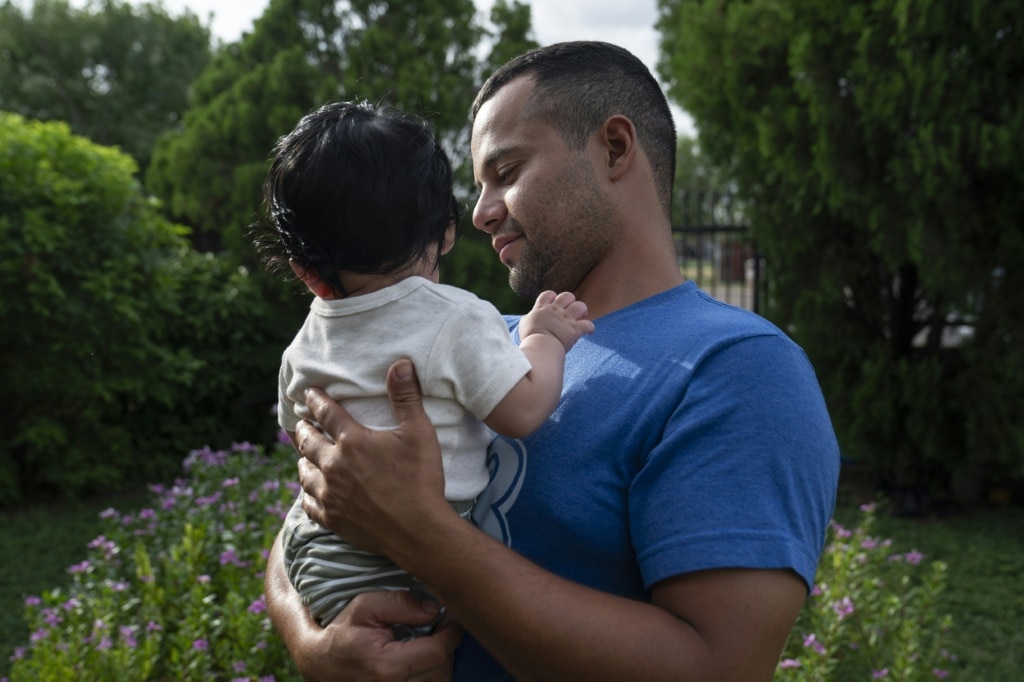
Three individual stories of so-called ‘dreamers’—recipients of the Obama-era Deferred Action for Childhood Arrivals (DACA) program—have cast a harsh spotlight on the Donald Trump administration’s aggressive crackdown on undocumented immigration, revealing how protected immigrants are being expelled from the only country many have ever called home, despite legal safeguards designed to prevent their deportation.
DACA was launched in 2012 to grant temporary protection from deportation to people who were brought to the United States as undocumented minors. The program allows recipients to legally live and work in the U.S. while they pursue long-term immigration status adjustments. Currently, an estimated 500,000 active DACA recipients, widely known as dreamers, live across the country, according to federal government data.
But new reporting from AFP details how the Trump administration, which has long sought to dismantle the program, has targeted hundreds of DACA recipients for deportation. According to advocacy organization Home is Here, which cites a formal Department of Homeland Security letter to Congress, U.S. immigration officials have arrested at least 343 DACA recipients and deported at least 86 of them, even while the program’s protections remained in place after courts blocked Trump’s earlier attempt to end DACA entirely during his first presidential term.
Jose Contreras, a 30-year-old DACA recipient who grew up in the U.S. after arriving as a child, thought he was safe from deportation when he attended a routine immigration hearing in early January. When he asked for a short stay of removal to wait for the birth of his first child, he told AFP immigration officials laughed at his request, reacting as if his ask was absurd. He was handcuffed, put on a plane, and deported to his native Honduras that same day. His son was born in Texas weeks later, in late February, without Contreras present for the birth.
“I lost it, you know. I fell to the ground. And then I cried,” Contreras said. “Because I wasn’t planning to not be there for my son.” After 118 days in Honduras, a U.S. court ultimately ruled his deportation was unlawful and ordered his return, allowing him to reunite with his family in Edinburg, Texas, where he now wears an ankle monitor required following his return.
A similar case unfolded for Maria de Jesus Estrada, 42, who was brought to the U.S. at age 15 and built a life in California. When she attended an immigration hearing accompanied by her 23-year-old daughter, she was immediately confronted by six immigration agents who ordered her arrested. Distraught, she only asked for a moment to say goodbye to her child. “I’m not gonna resist anything. I just need a minute. I need to hold my daughter. I need to hug my daughter,” she recalled telling agents. She was deported to Mexico that same day, before a court later ruled her expulsion illegal and ordered her return.
Immigration officials have defended the deportations by citing old, outstanding removal orders issued when Contreras and Estrada were minors. But their legal attorney Stacy Tolchin argues the cases prove the Trump administration has deliberately broken existing law to target protected dreamers. “The cases of Jose Contreras and Maria de Jesus Estrada are evidence of this administration’s unlawful and inhumane distortion of the law,” Tolchin said.
For other DACA recipients, there has been no lucky court-ordered return. Jessica Trevino, who was brought to the U.S. from Mexico at age 7 and has lived in the country almost her entire life, was arrested by immigration agents in Alamo, Texas, in late December as she left church with her family. Cellphone video of the encounter, which showed agents roughing up Trevino’s husband, spread widely on social media. Both Trevino and her husband were deported to Mexico in March, leaving their three U.S.-raised children behind to live with relatives in Texas.
Now living in Matamoros, Mexico, Trevino waits for U.S. courts to hear her case, and holds out hope she will return in time for her daughter’s 15th birthday in August. “Although I was not born in the United States, I have lived here my whole life,” she said. “Sometimes I go to sleep thinking that I will wake up at home.”
Advocacy groups say the deportations are part of a deliberate strategy to dismantle DACA through incremental action, after the Supreme Court blocked the administration’s attempt to end the program outright. “We are seeing this administration dismantling DACA through delay, denials, detentions and deportations,” said Todd Schulte, president of pro-immigration advocacy group FWD.us. The Trump administration is currently pressing Congress to pass a permanent resolution to the country’s long-running immigration policy dispute, as the future of DACA remains unresolved.