Five years into the ongoing Russia-Ukraine conflict, U.S. President Donald Trump has announced that diplomatic efforts to broker a ceasefire have advanced further than most observers acknowledge, bringing a long-awaited end to the war within closer reach than ever before.
Speaking to reporters on Monday, Trump outlined that both Russian President Vladimir Putin and Ukrainian President Volodymyr Zelenskyy have expressed a shared desire to conclude the conflict, with active negotiations already underway to finalize a path forward. “I think we are getting much closer than people realize,” he stated. “We’re in talks, and we’ll see if we can get it ended.”
The comments came just days after Trump held separate phone calls with both heads of state over the weekend, including an 85-minute conversation with Putin on the U.S. Fourth of July holiday. A Kremlin aide confirmed that Trump used the call to present new proposals aimed at advancing peace negotiations. Trump added that his administration has maintained open lines of communication with both Moscow and Kyiv, and that ending the conflict will be a top priority at the upcoming NATO summit, where he is scheduled to hold one-on-one talks with Zelenskyy on the sidelines of the gathering in Ankara. A senior U.S. official told Reuters that the bilateral meeting will center on launching a renewed diplomatic push to end the war, with Trump expected to follow up the discussion with another conversation with Putin to build on any progress.
While the Kremlin has struck a cautious tone, with spokesperson Dmitry Peskov noting that Moscow has not observed any shifts in the U.S. position on conflict resolution, Zelenskyy offered a more optimistic assessment in an interview with the *Financial Times*. The Ukrainian president argued that Trump’s outlook has been updated by recent Ukrainian military gains on the battlefield, noting that “President Trump wants to be where there’s success.”
Even as diplomatic momentum builds, however, the conflict has seen a sharp new escalation in military operations over the past 48 hours. Overnight Monday into Tuesday, Ukraine launched the largest drone attack on Moscow in more than two years, dispatching over 430 unmanned aerial vehicles toward the Russian capital. Moscow Mayor Sergey Sobyanin confirmed in a social media post Tuesday that most of the drones were intercepted and destroyed by Russian air defense systems at long range before they could reach the city center, with only 36 UAVs downed near Moscow’s outer limits. No casualties or major infrastructure damage were reported in the attack.
A day earlier, Ukrainian military forces announced they had carried out targeted strikes on three Russian oil refineries, including Russia’s largest refinery located in Omsk, more than 2,400 kilometers inside Russian territory. The strikes also hit two “shadow fleet” commercial vessels operating in the Sea of Azov.
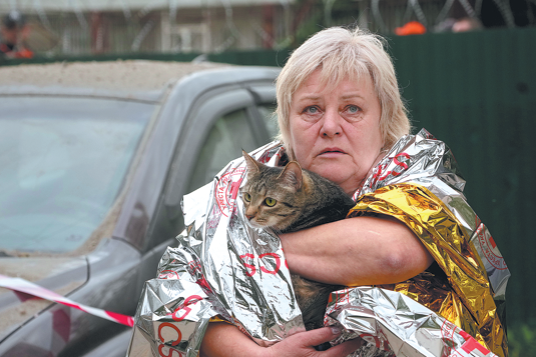
Russia responded to the Ukrainian attacks with a massive retaliatory strike on Kyiv and surrounding areas, using a combination of long-range precision weapons launched from air, land, and sea platforms alongside drone strikes. Ukrainian emergency services confirmed that the attack left at least 24 civilians dead and dozens more injured, with multiple residential high-rise buildings destroyed in two central Kyiv districts. Search and rescue operations were still ongoing as of Monday evening to recover survivors from the rubble.
The conflicting developments—optimistic diplomatic signals on one hand, and intensifying military violence on the other—set the stage for high-stakes discussions at the NATO summit this week, as global leaders weigh new efforts to bring the drawn-out conflict to a close.