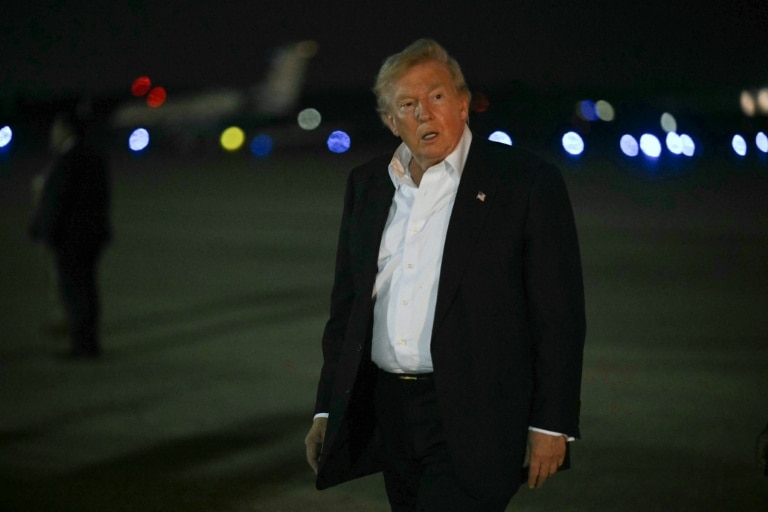
Fresh cross-border strikes between the United States and Iran have thrown a fragile months-long truce into chaos, even as US President Donald Trump confirmed Friday he has accepted Iran’s request to resume diplomatic negotiations between the two long-standing adversaries. The new flare-up of violence, which marked a second consecutive day of exchanged attacks on Thursday, comes just three weeks after Washington and Tehran signed a landmark agreement designed to cement their temporary ceasefire into a lasting regional peace, raising urgent fears of a return to full-scale open conflict.
Trump broke his latest announcement via his Truth Social platform Friday, writing, “The Islamic Republic of Iran has asked us to continue ‘talks.’ We have agreed to do so, but the United States has stated to them, in no uncertain terms, that the Cease Fire is OVER!” This marks the second time Trump has publicly declared the ceasefire defunct; he first made the claim earlier this week during the NATO summit, where he dismissed diplomatic engagement with Tehran as “just a waste of time dealing with them.”
To date, US and Iranian negotiating teams have completed one round of direct talks in Switzerland following the signing of their initial memorandum of understanding, alongside indirect negotiations hosted by mediator Qatar. However, no tangible diplomatic breakthrough has been announced since the early rounds of discussions. No direct talks have been held between the two sides since last month, but Iranian state media confirmed a Qatari mediation delegation arrived in Tehran this week after the latest exchange of strikes.
Despite this week’s tensions – which include Iran’s claim it attacked US assets in the Persian Gulf and Qatar’s public accusation that Tehran targeted one of its liquefied natural gas tankers in the strategic Strait of Hormuz – Doha remains committed to pushing for continued diplomacy. Iran has denied any involvement in the attack on the Qatari tanker. According to Iran’s Tasnim News Agency, the Qatari delegation’s visit is focused on shoring up Doha’s mediation role in the wake of Tuesday’s clashes, when Qatar condemned the alleged assault as an “unacceptable attack.”
Pakistan, another key mediator in the conflict, also joined diplomatic outreach Friday: Prime Minister Shehbaz Sharif held a call with Qatar’s emir to discuss the recent escalation, per a statement from Sharif’s office, and later spoke separately with Iranian President Masoud Pezeshkian to urge Tehran to protect the “hard-earned peace” that had been forged, Sharif announced on the social platform X.
Qatar’s Prime Minister and Foreign Minister Sheikh Mohammed bin Abdulrahman Al Thani emphasized in a call with Egyptian Foreign Minister Badr Abdelatty that “the need for all parties to commit to dialogue and diplomacy” and to honor the terms of the original US-Iran memorandum of understanding, according to Qatar’s foreign ministry. Abdelatty’s ministry in Cairo echoed the call, saying the Egyptian diplomat pushed for an immediate “return to the negotiating table.”
Not all Iranian officials have signaled openness to de-escalation, however. Mohammad Bagher Ghalibaf, Iran’s chief negotiator in talks with Washington, struck a defiant tone in comments carried by Iran’s ISNA news agency. “Ending the war is a priority for the countries of the world, but everyone must know that this confrontation will never end with Iran’s surrender,” Ghalibaf said, adding that Iranians are “fully prepared to defend ourselves.”
The current conflict traces its origins to late February, when the United States and Israel launched a massive surprise offensive against Iran that killed much of Tehran’s top senior leadership, including long-time supreme leader Ali Khamenei. Iran retaliated by effectively closing the Strait of Hormuz – the global chokepoint through which roughly one-fifth of the world’s total oil and liquefied natural gas supplies pass – and launching strikes against Israeli and US interests across the Gulf region. The war spilled over into Lebanon when the Iranian-backed group Hezbollah launched rocket attacks on Israel, prompting a full Israeli ground invasion into Lebanese territory.
A ceasefire agreement halted large-scale fighting on April 8, but sporadic outbreaks of violence have persisted ever since, most tied to long-running disputes over the Strait of Hormuz. Tehran has demanded full control over the waterway and has pushed to implement transit fees for commercial ships passing through, a right it did not hold before the war. While the strait includes territorial waters from both Iran and Oman, international law bars the two nations from blocking commercial passage or imposing tolls on transiting vessels.
Tensions boiled over again this week after the US and Qatar accused Iran of targeting commercial tankers in the strait. The US responded with airstrikes against dozens of Iranian targets on Wednesday and Thursday, and Iran announced it retaliated with missile attacks on US military bases across the Gulf. Jordan also confirmed it shot down incoming missiles that entered its airspace amid the exchange.
By Friday evening, no new strikes had been reported in the Gulf region, but Tehran doubled down on its promise of retaliation for any future attacks. “Any attack on infrastructure will be retaliated against, and the criminal Zionist regime responsible for these atrocities will not be safe from the response of our fighters,” said Mohammad Bagher Zolghadr, head of Iran’s top security body, in a statement carried by Iranian state television. On Thursday, Tehran accused the US of intentionally targeting civilian infrastructure including railway bridges, labeling the US strikes a “gross war crime.”