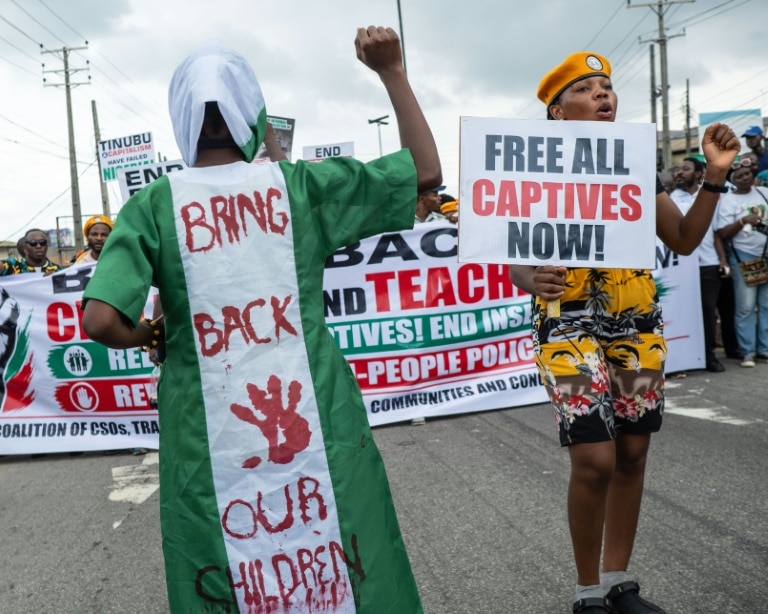
In a major breakthrough that brings an end to a 56-day hostage crisis that sparked national outcry, Nigerian authorities have successfully rescued 46 abducted schoolchildren and teachers kidnapped in a rare mass attack on educational institutions in the country’s southwest, the presidency confirmed Friday. The abduction, which was carried out by gunmen identified by the Nigerian military as Boko Haram jihadists, took place on May 15 at three schools located in the rural agrarian communities of Esiele and Yawota in Oyo State, on the boundary of the expansive Old Oyo National Park. What made this incident particularly alarming was that it shattered long-held assumptions about the security of southwest Nigeria, a region long regarded as one of the country’s most stable, even as Nigeria grapples with persistent interlinked security crises ranging from ransom kidnappings to Islamist insurgency across other parts of the nation. Mass school abductions have been a common tactic of insurgent groups operating in Nigeria’s restive northern states for years, but such large-scale attacks have historically been extremely rare in the southern part of the country, so this event stoked widespread fears that Islamist violence was expanding into a new, more populous region of the nation. The abduction quickly escalated into a major national political and social issue: it triggered widespread public protests, a month-long strike by teachers across Oyo State, and widespread condemnation from national and international leaders. President Bola Tinubu announced the successful rescue in an official statement, expressing profound relief at the outcome of the joint operation carried out by military, police, and intelligence units. The operation not only freed the hostages but also neutralized several of the terrorists responsible for the abduction and apprehended eight additional suspects, according to the president. The news of the rescue was first shared publicly by Tinubu’s spokesman Bayo Onanuga on the social media platform X, where he also published photographs of several of the freed children. Speaking after the rescue, Onanuga confirmed that the kidnappers had demanded the Nigerian government release a jailed, prosecuted member of their network as a condition for freeing the hostages. Defence Minister Christopher Musa had noted earlier this week that the abductors were using the captured pupils and teachers as political leverage to pressure the government into releasing detained insurgent commanders, and had threatened to kill all hostages if security forces launched an assault on their hideout. While full details of how the rescue operation was executed have not yet been released, Onanuga explicitly ruled out any prisoner exchange or compromise, stating clearly that there was “no quid pro quo” in securing the hostages’ freedom. In a video released by the presidency, one of the freed teachers publicly thanked President Tinubu and the security forces for their work. “We understand your commitment to our safety and we appreciate all you did for us,” she said. “Security operatives tried so much and that is why we are still alive right now.” Oyo State Governor Seyi Makinde announced that authorities’ immediate focus moving forward will be reuniting the freed hostages with their families and providing specialized rehabilitation support to help them process the trauma of their 56 days in captivity. Tragically, the successful rescue in Oyo comes amid ongoing uncertainty for another group of kidnapped Nigerian schoolchildren: on the same day as the Oyo abduction, more than 40 pupils – some as young as two years old – were kidnapped from schools in Borno State in northeast Nigeria, and they remain in insurgent captivity. Boko Haram has a decades-long history of using mass school abductions as a tactic of terror to destabilize the Nigerian government. The group’s 2014 abduction of 276 schoolgirls from Chibok Secondary School in Borno State became a global cause célèbre, drawing international attention to the threat of Islamist insurgency in the region. A wave of large-scale school kidnappings in late 2020, including the abduction of two dozen schoolgirls in Kebbi State and nearly 300 students and teachers in Niger State, renewed international scrutiny of Nigeria’s ongoing security challenges and the government’s ability to protect vulnerable civilian communities, particularly students.