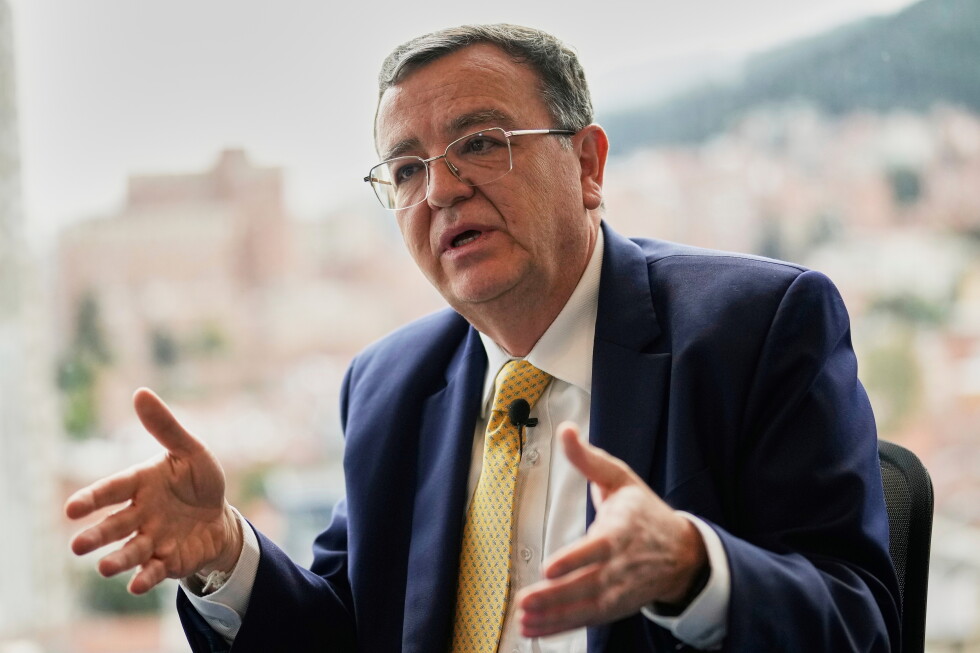
Ten years after the Colombian government signed a landmark peace agreement that ended Latin America’s longest-running guerrilla insurgency, the specialized justice body created to investigate and prosecute conflict-related crimes stands at a crossroads, as incoming president Abelardo de la Espriella has pledged to dismantle it.
Known officially as the Special Jurisdiction for Peace (SJP), the tribunal has been a source of deep national division since its creation, mirroring the longstanding political split over the 2016 peace deal with the now-disbanded Revolutionary Armed Forces of Colombia (FARC). De la Espriella, a conservative candidate endorsed by former U.S. President Donald Trump, has publicly labeled the SJP a “failed” institution. However, legal analysts and international law experts warn that dismantling the body is far from a straightforward process, as it is protected by both domestic constitutional safeguards and international legal frameworks.
The SJP is enshrined in Colombia’s constitution and receives formal backing from the International Criminal Court (ICC). In 2021, the ICC closed its own 18-year preliminary investigation into the Colombian conflict, concluding that the country was meeting its international justice obligations largely due to the steady progress made by the SJP. Alejandro Ramelli, president of the tribunal, told the Associated Press that the ICC’s decision to close its probe was explicitly conditional on the SJP continuing its mandated work. An abrupt end to the tribunal, Ramelli warned, would push Colombia into violation of its international legal commitments to the global court.
The SJP’s official mandate runs through 2028, with an additional five-year window set aside for completing ongoing trials, after which Colombia’s Congress will hold a vote on whether to extend the body’s authority for another five-year term. It began formal operations in 2018, and to date has opened cases involving more than 14,000 suspects accused of war crimes and crimes against humanity committed during the decades-long conflict. Of these suspects, approximately 70% are former FARC guerrillas, 29% are retired or former members of Colombian security forces, and the remaining 1% are civilians linked to conflict violence.
Supporters of the tribunal frame it as a historic breakthrough for transitional justice, crediting it with creating the conditions for ending the insurgency and finally holding perpetrators of atrocities accountable to victims. Critics, meanwhile, have repeatedly argued that the court is structurally biased against former military personnel. In a seeming contradiction, the stance of de la Espriella’s own transition team has shifted slightly in recent weeks: Iván Cancino, the president-elect’s nominee for justice minister, told Colombia’s Caracol Radio this week that the administration does not plan to fully eliminate the SJP, but will instead push for faster results and launch a full review of the tribunal’s spending.
Colombia’s outgoing president Gustavo Petro, who has himself expressed criticism of the SJP’s performance over his term, recently took to social media platform X to argue that the tribunal’s budget “must be strengthened,” emphasizing that “establishing the judicial truth about the conflict is fundamental to national reconciliation.” Even as political debate swirls around its future, Ramelli warned that budget cuts to the court would “seriously affect the fundamental right of access to justice” for millions of victims of the decades-long armed conflict, and that an abrupt termination of the SJP’s work would leave thousands of unresolved cases in legal limbo.
Ramelli pointed to the court’s key landmark rulings to underscore its impact: the tribunal has convicted FARC’s former top leadership for their role in more than 21,000 kidnappings, and convicted a group of former military officials for over 100 documented extrajudicial killings. In both high-profile cases, the accused parties acknowledged responsibility, and were granted alternative non-custodial sentences that required them to complete community restitution projects directly benefiting victims of the crimes. The court has also handed down a 20-year prison sentence to a former soldier who rejected charges of involvement in extrajudicial killings.
Ramelli emphasized that beyond convictions and sentencing, the tribunal has unlocked critical truth about the full scale of the conflict’s violence that was previously unknown to the Colombian public. “What is the value of the truths uncovered through the judicial process?” he said. “We now know the true scale of FARC kidnappings, the recruitment of more than 18,677 children, the sexual violence committed by the FARC and the extrajudicial killings carried out by security forces. The country simply did not know the full extent of these crimes.”
Today, a decade after the original peace accord was signed, Colombia still struggles to break a persistent cycle of violence: armed groups including FARC dissident factions that rejected the 2016 deal, the National Liberation Army (ELN) guerrilla group, and the Clan del Golfo drug cartel continue to battle for control of lucrative illegal economies centered on drug trafficking and unregulated mining.