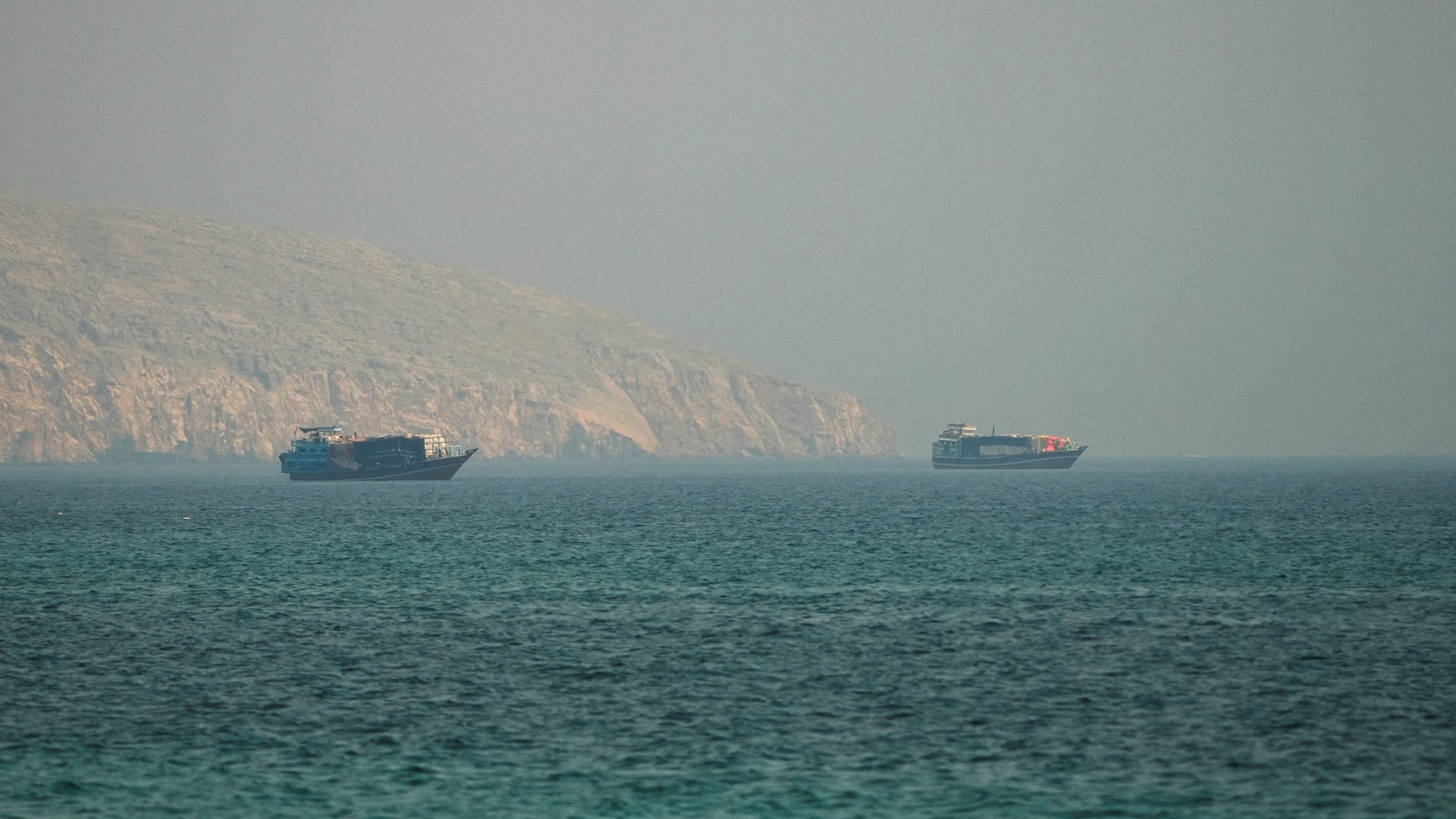
Escalating military tensions between the United States and Iran have triggered a rushed evacuation of Iranian crude oil exports, with Tehran deploying six tankers carrying a combined 11 million barrels of crude over a 24-hour window to avoid a potential new blockade of its key ports, Bloomberg reported Thursday.
According to Bloomberg’s real-time vessel tracking data, five of the six departing tankers have already moved into open water: four have signaled their positions in the Gulf of Oman, while a fifth is currently transiting the Strait of Hormuz, the world’s most critical chokepoint for global oil trade.
The urgent dispatch of the vessels came immediately after a second consecutive day of U.S. military strikes targeting Iranian territory. Iranian Health Ministry spokesperson Hossein Kermanpour confirmed that the airstrikes hit civilian infrastructure including railway bridges, leaving 14 people dead, 78 injured, and 47 people still undergoing hospital treatment as of Thursday.
The resumption of large-scale offensive strikes has put the recently signed Islamabad Memorandum of Understanding (MoU), which was meant to de-escalate tensions around the strategic waterway, at severe risk of collapsing. Already, commercial maritime traffic through the Strait of Hormuz has slowed to a cautious standstill as shipping companies reroute vessels to avoid the conflict zone.
The escalating conflict has already sent shockwaves through global energy markets. Oil prices have jumped nearly 9% this week, trading close to $79 per barrel by Thursday trading sessions. The 11 million barrels of crude being rushed out of Iran is roughly equivalent to the volume of Iran’s total pre-conflict weekly crude exports, though market analysts note it remains unclear if pre-negotiated buyers are lined up to take delivery of the cargoes.
Tensions flared earlier this week after the Trump administration revoked a 60-day sanctions waiver that had temporarily allowed unrestricted Iranian oil sales. The waiver was canceled after Iran launched attacks on commercial vessels off the coasts of Qatar and Saudi Arabia earlier this week, which halted tens of millions of barrels of Iranian crude already in transit.
On Thursday, Iran’s Islamic Revolutionary Guard Corps (IRGC) Navy issued a stark warning in response to the U.S. airstrikes and attempts to redirect commercial shipping through the Strait of Hormuz. The IRGC statement said U.S. actions were disrupting the temporary reopening of the waterway, and any further American intervention would be met with a “crushing response.”
In a significant shift from years of tension centered on Iran’s nuclear program, the Strait of Hormuz has now emerged as the primary flashpoint for conflict between Washington and Tehran.
The now-fragile Islamabad MoU was reached in June, after Iran’s earlier blockade of the strait inflicted widespread economic damage that pushed the Trump administration to agree to a 60-day ceasefire extension. Speaking on the sidelines of the G7 summit ahead of the signing, Trump noted he “didn’t want to see an economic catastrophe,” and the White House framed the agreement as a first step toward permanent peace through follow-up negotiations.
Under the terms of the MoU, the Strait of Hormuz would remain open and toll-free for 60 days, with long-term governance of the waterway to be negotiated later. The framework left open the possibility of future transit fees and granted Iran more control over the strategic waterway than it had held in decades. A formal Iranian briefing confirmed that Tehran planned to coordinate future waterway management with Oman and other Persian Gulf littoral states in line with international law.
The U.S. oil sales waiver, which was tied to progress in ceasefire talks and set to expire on August 21, was the biggest sticking point in negotiations between the two sides. Its revocation earlier this week followed Iran’s attacks on commercial vessels, ending the temporary de-escalation.
Trump had foreshadowed the current collapse of the agreement back in June, when he downplayed the durability of the MoU in public remarks. “It’s a memorandum of understanding. And if I don’t like it, we’ll go back to shooting at them, dropping bombs on their head,” Trump said at the time. “If I don’t like it, if they don’t behave, we’ll go right back to dropping bombs right smack in the middle of their head, OK?”