Deep inside the Lahn al-Hayat complex in rural Damascus, soft lullabies drift from sunlit apartment-style units where full-time caregivers known as “mothers” tend to 50 swaddled infants of unknown parentage. Just a few years ago, this compound, built under the former Assad regime, functioned as a tool of state repression, used to disappear the children of political detainees. Today, it stands at the center of a quiet revolution in Syrian child protection, shaped by a decades-long crisis of child abandonment and a grassroots movement that is rewriting the rules for vulnerable infants across the newly reunified nation.
Child abandonment has long been a persistent crisis in Syria, driven by deep-seated religious stigma, widespread poverty, and the cascading harm of 14 years of civil conflict, compounded by the devastating 2023 Turkey-Syria earthquake. Infants are regularly found abandoned on mosque steps, outside hospital entrances, and even in rubbish bins—some only hours old, their bodies still coated in the protective vernix of newborns. Swedan, a case worker with the Syrian-founded child protection organization Child Houses, still carries a photo of one such infant: a newborn abandoned by her family and discovered bloodied after being attacked by a scavenging animal in a dumpster. She is one of 200 children that Swedan and his team placed with foster families between 2021, when the group operated out of an emergency shelter in HTS-held Idlib, and Syria’s 2024 reunification.
Following reunification, all abandoned children previously cared for by Child Houses were transferred to the newly restructured Lahn al-Hayat, a state-run care complex that now uses the Idlib-based organization’s community-centered model with ongoing guidance from the Child Houses team. Since the transfer, an additional 100 infants have been placed in foster care through the new partnership, marking a dramatic shift away from Syria’s long reliance on large institutional orphanages.
The transformation of Lahn al-Hayat is one of the most visible signs of this change. Under the former Assad government, the facility was tied to the regime’s security apparatus, and former Child Houses executive director Faisal al-Hammoud alleges that prior to 2024, facility leaders exploited children for corrupt trafficking purposes. Today, under the leadership of Moutasem al-Salloumi, a veteran child protection specialist who previously worked in Idlib, the complex has implemented strict new child safeguarding protocols, digitized its record-keeping, and prioritized family-based care over institutional placement.
“Before the liberation, the management of Lahn al-Hayat were using children as pieces for trading in a business. Now they are treated like children,” al-Hammoud told Middle East Eye in an interview. Salloumi, for his part, emphasizes that no institutional setting can match the emotional and developmental benefits of a loving family. “No centre can replace the love of a family. They will always get a better, normal life with a father, a mother, a family,” he said, while noting that the facility continues to provide high-quality, family-like care for children who cannot be placed with foster families. Inside the complex, children are grouped by age in home-like units, attend local public schools during the academic year, and receive consistent care from full-time resident caregivers, creating an environment that feels far more intimate than traditional large-scale orphanages.
A key challenge shaping Syria’s new fostering framework is the country’s religious and legal context. Western-style adoption, which grants a child full inheritance, lineage, and naming rights within their adoptive family, is illegal across most of the Arab world, including Syria, due to sharia law requirements that preserve a child’s original lineage. To address this, Child Houses worked with Idlib authorities starting in 2021 to build a care system aligned with kafala, the Islamic legal framework for long-term foster guardianship. Under this model, children do not take their foster family’s name or receive automatic inheritance rights, and biological parents retain the right to reclaim their child at any time if it is determined to be in the child’s best interest. Case workers also spend three months actively searching for biological family before a child is classified as of unknown parentage, though reunification is rarely pursued for infants abandoned due to stigma around extramarital birth.
One of the earliest and most impactful reforms championed by Child Houses was the elimination of an outdated administrative label for children of unknown parentage that translated to “bastard,” replacing the slur with a neutral coded numbering system. While the official language has changed, deep-seated social stigma around abandoning children born outside of marriage—long one of the most common drivers of infant abandonment in Syria—remains a major barrier. Many foster mothers even hide their identities in Child Houses’ public outreach for fear of social judgment. But the upheaval of war and the 2023 earthquake opened a new public conversation about vulnerable children, exposing the failures of institutional care and creating space for alternative approaches.
Fourteen years of conflict left tens of thousands of children orphaned, separated from their families, or displaced without care, while many infertile Syrian couples began seeking ways to expand their families. Into this gap, Child Houses built a grassroots fostering movement that started with no formal framework and grew as ordinary families stepped forward to welcome children. Khawla and Abdulkhaleq, a couple who struggled with infertility for 13 years, welcomed their foster son Ahmad just days after the 2023 earthquake, after seeing social media coverage of the disaster’s toll on children. “There were a lot of children who lost fathers and mothers. I thought maybe we can take care of a child,” Khawla told Middle East Eye. After consulting with their extended family and a local imam, the couple completed the screening process, and Ahmad’s aunt breastfed him to establish kinship recognized under Islamic tradition. For Khawla, who endured years of social stigma for her infertility, Ahmad restored her confidence, and the family remains unapologetic about their choice to welcome him, even amid lingering community gossip.
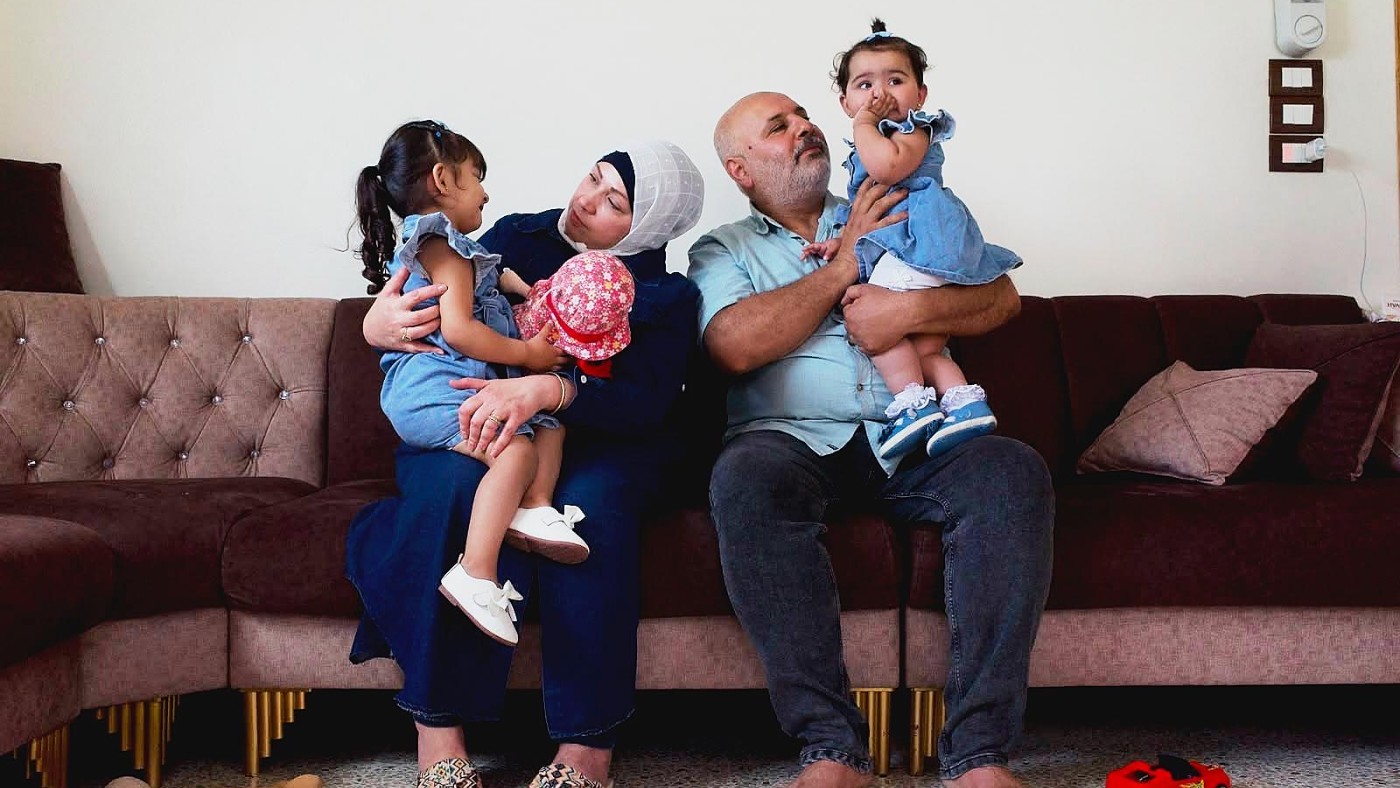
Aliaa and her husband, who have fostered two young girls, Farah and Nesme, tell a similar story. After facing questions and judgment from community members who raised stigma around the girls’ origins, the couple remained committed to providing a loving home. Over time, their example shifted local attitudes: neighbors who once criticized them eventually began fostering their own children. “People followed our lead,” Aliaa said.
This ripple effect has built a growing roster of approved foster families, the vast majority from Idlib—Syria’s one of the most conservative governorates, but also the birthplace of the Child Houses model. Every family that welcomes a foster child changes not just their own life, but the attitudes of their broader community, Audrey Bingaman, Child Houses’ partnerships and development manager, explained. “Grandparents, aunts, uncles, neighbours and friends saw these children growing up in loving homes and began to see what was possible,” she said.
As the movement grows, new challenges are emerging. Child Houses conducts regular home visits and connects foster families through a support network where they exchange advice and navigate the unique challenges of foster care, with one recurring question rising to the forefront: when and how should children be told about their origins? As the first cohort of fostered children approach school age, the organization is developing new psychosocial support guidelines to help families navigate this uncharted territory. Formal legal codification of the new fostering framework also awaits the first session of Syria’s new post-reunification parliament, but the shift toward family-based care is already well underway.
After decades where children of unknown parentage were confined to overcrowded institutions and defined by the stigma of their birth, ordinary Syrian families are opening their homes and rewriting that narrative—one loving placement at a time.