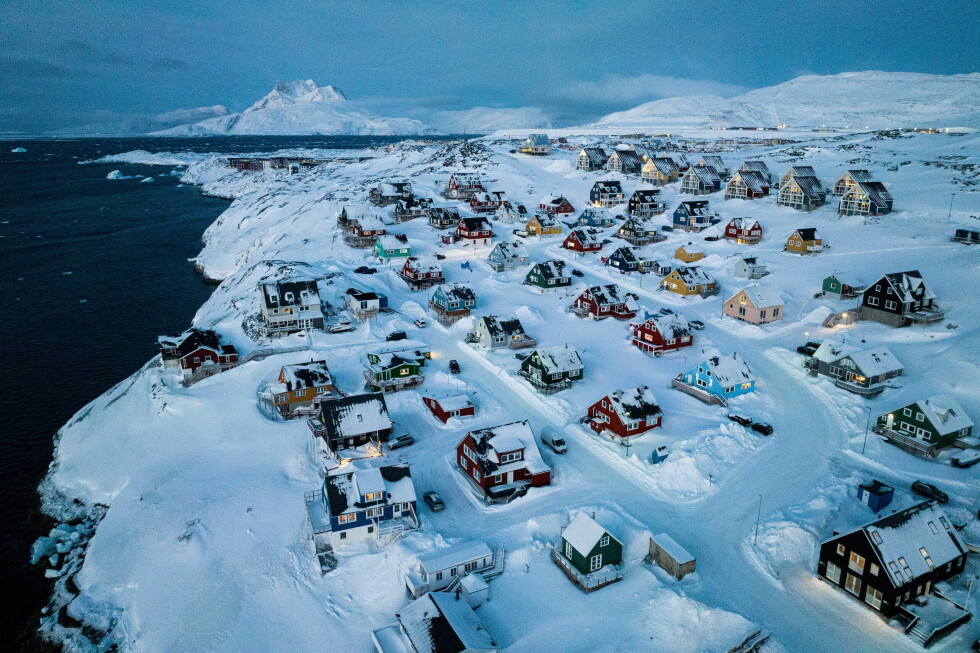
For decades, the world’s largest island sat largely on the geopolitical sidelines, its 56,000 mostly Inuit residents disconnected from the great power rivalries reshaping the 21st century. But today, Greenland’s position straddling key Arctic and North Atlantic shipping and defense routes has catapulted it into the center of a growing international debate over security, resources and territorial sovereignty, driven by shifting climate patterns, rising great power tensions and a scramble for critical raw materials. At the heart of this debate sits former U.S. President Donald Trump, who has repeatedly pushed for American control of the mineral-rich island, even threatening military force to achieve the goal – a move that has shaken the NATO alliance and sown deep discomfort among long-time U.S. European allies.
Greenland has been an autonomous self-governing territory within the Kingdom of Denmark, a U.S. ally that has flatly rejected all of Trump’s overtures to acquire the island. Greenland’s own elected government has also pushed back firmly against American designs, issuing a clear statement that the future of the island will be determined exclusively by its own people.
During his time in office, and amid discussions of potential territorial expansion that have also included Canada and Venezuela, Trump has returned to Greenland again and again, framing a U.S. takeover as critical to American national security. Speaking at a NATO summit, Trump argued, “Greenland is very important to the United States, but it’s not important to Denmark. We need it for protection of the world, not just the United States.” Early in his first term, Trump declined to rule out using military force to seize the island to secure what he called U.S. “right, title and ownership,” though he later claimed to have taken military options off the table. Trump has justified his demands by claiming the U.S. needs Greenland to counter growing Russian and Chinese influence in the region, repeatedly making unsubstantiated claims that Russian and Chinese military forces are operating near the island’s coast.
Geography lies at the root of Greenland’s outsized strategic importance. More than two-thirds of its land mass sits north of the Arctic Circle, and it lies off Canada’s northeastern coast, a position that has made it critical to North American defense since World War II, when U.S. forces occupied the island to prevent Nazi Germany from seizing control and securing key North Atlantic supply routes. For decades after the Cold War ended, the Arctic was largely defined by international cooperation. But climate change has rapidly melted the region’s permanent sea ice, opening the possibility of year-round commercial shipping through the Northwest Passage and unlocking access to vast untapped mineral reserves, triggering a new era of great power competition for influence and resources in the region.
In 2018, China labeled itself a “near-Arctic state” as part of a push to expand its regional influence, and unveiled plans to develop a “Polar Silk Road” as an extension of its global Belt and Road Initiative, which has already built extensive economic ties with nations across the world. Then-U.S. Secretary of State Mike Pompeo openly pushed back against China’s move, asking: “Do we want the Arctic Ocean to transform into a new South China Sea, fraught with militarization and competing territorial claims?”
Russia has also moved aggressively to expand its influence across large swathes of the Arctic, pitting it against the U.S., Canada, Denmark and Norway in competing claims. Moscow has significantly boosted its military presence in the polar region, which hosts its strategic Northern Fleet and a former Soviet nuclear test site that Russian military officials have said is ready to resume testing if needed. Since 2014, the Russian military has restored dozens of abandoned Soviet-era military infrastructure sites, opened multiple new bases and reconstructed Arctic airfields to project greater power in the region.
European concerns over Russian ambitions in the Arctic have grown sharply since Moscow launched its full-scale invasion of Ukraine in February 2022. Last year, Russian President Vladimir Putin acknowledged that Moscow views expanding NATO activity in the Arctic as a major threat and has committed to strengthening Russian military capabilities in the region to counter it, though he added that Russia remains open to expanded international cooperation in the Arctic.
Contrary to Trump’s claims that U.S. control of Greenland is needed to advance American security, defense analysts note that the U.S. already enjoys unprecedented security access to the island. The U.S. Department of Defense already operates Pituffik Space Base in northwestern Greenland, established under a 1951 bilateral defense treaty with Denmark, that supports critical missile warning, missile defense and space surveillance operations for both the U.S. and NATO. Greenland also forms one end of the GIUK Gap – the strategic maritime corridor stretching from Greenland to Iceland to the United Kingdom that NATO relies on to monitor Russian naval activity in the North Atlantic.
Thomas Crosbie, associate professor of military operations at the Royal Danish Defense College, told the Associated Press that a full American takeover of Greenland would bring no meaningful new security benefits to the U.S. “The United States will gain no advantage if its flag is flying in Nuuk (Greenland’s capital) versus the Greenlandic flag,” Crosbie explained. “There’s no benefits to them because they already enjoy all of the advantages they want. If there’s any specific security access that they want to improve American security, they’ll be given it as a matter of course, as a trusted ally. So this has nothing to do with improving national security for the United States.”
In recent years, Denmark has already expanded U.S. military access across its territory. Last year, Denmark’s parliament passed legislation formally allowing additional U.S. military bases on Danish soil, expanding a 2023 agreement with the Biden administration that granted U.S. troops broad access to Danish air bases. Danish Foreign Minister Lars Løkke Rasmussen confirmed last summer that Denmark would immediately terminate all military cooperation agreements with the U.S. if Washington moves to annex any part of Greenland.
Beyond its strategic value, Greenland also holds massive economic appeal for Western powers: it is home to some of the world’s largest untapped reserves of rare earth minerals, critical components for smartphones, laptops, electric vehicle batteries and a wide range of other high-tech products that are expected to drive global economic growth for decades. Western governments have increasingly sought to develop new rare earth supply chains outside of China, which currently dominates global production of the critical minerals. That said, developing Greenland’s mineral resources remains a major challenge: the island’s harsh Arctic climate creates significant logistical barriers, and strict environmental regulations have added further hurdles for potential investors.