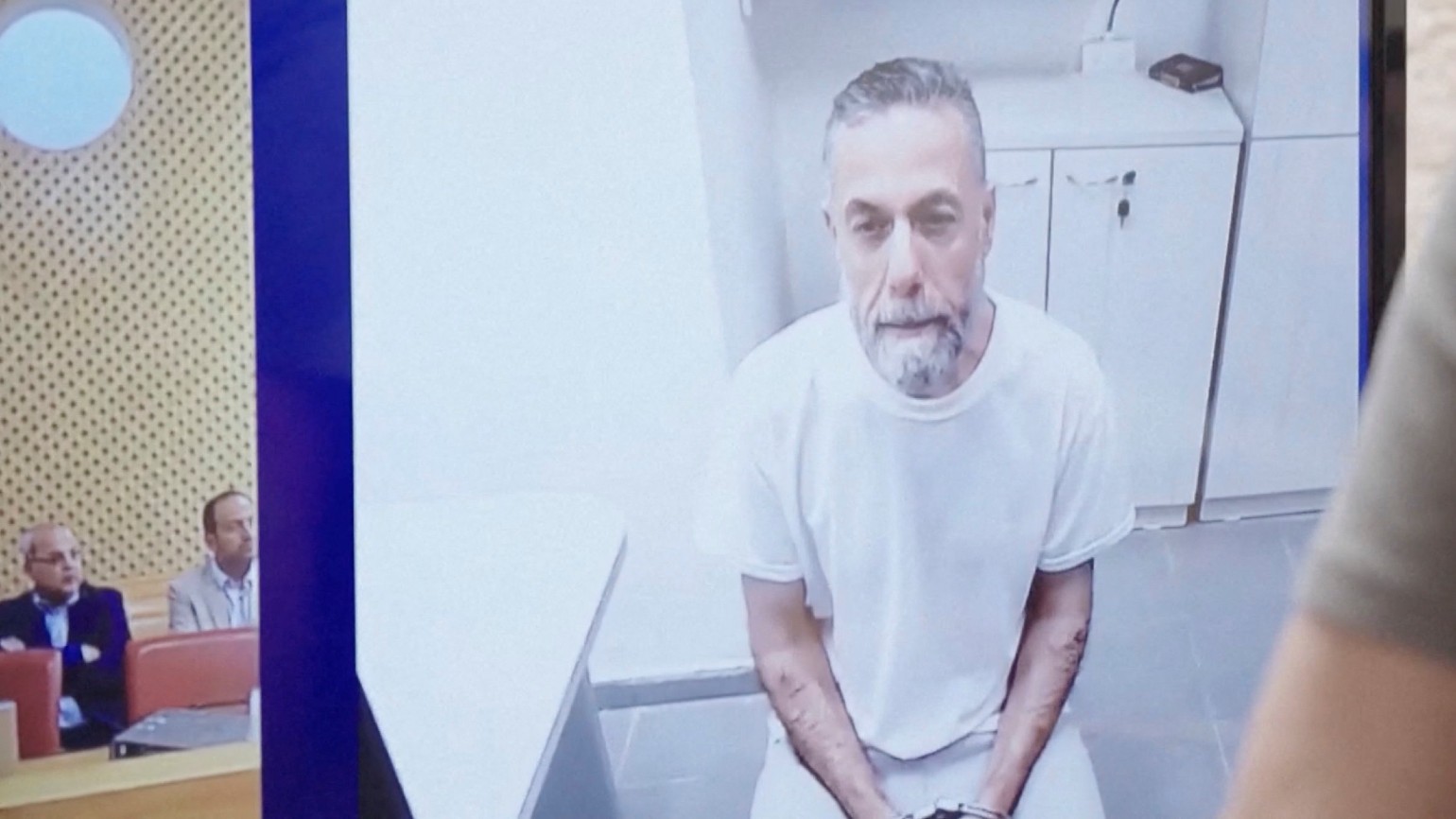
The family of a prominent detained Palestinian doctor has issued a desperate final appeal for international intervention, accusing global human rights bodies and the wider international community of betrayal amid mounting evidence that the medic is being tortured to death in Israeli custody. Dr. Hussam Abu Safiya, a respected paediatrician and former medical director of Gaza’s Kamal Adwan Hospital, has been held without formal charges by Israeli authorities since his abduction in December 2024. His rapidly deteriorating health, compounded by ongoing abuse and denied medical care, has left his life hanging by a thread, according to lawyers and advocacy groups monitoring his case.
In an exclusive interview with Middle East Eye, Abu Safiya’s son Elias, a medically trained professional who once worked alongside his father at Kamal Adwan during Israel’s military campaign in northern Gaza, said the era of quiet diplomatic appeals has ended. “The moment for simple appeals has passed. This is a final, urgent call for every person of conscience to intervene and speak out publicly about my father’s situation,” Elias stated. He added that the stark double standard in global responses to the Israeli-Palestinian conflict has left his family with no illusions: “The world clearly does not see us as fully human, or as people deserving of equal rights. There is exponentially more support for Israeli causes than for Palestinian lives. We have been abandoned, and Palestinians like my father are left to die alone in Israeli prison cells.”
The gravity of Abu Safiya’s condition was first confirmed by his lawyer, Nasser Odeh, who visited the medic on July 2 at Israel’s secretive Rakefet underground interrogation facility, located inside Nitzan Prison in northern Israel. Odeh told reporters he barely recognized his client after brutal new assault left visible injuries across his face and head. The paediatrician was described as extremely frail, struggling to breathe and speak, and suffering severe psychological breakdown. In a devastating message passed through his lawyer, Abu Safiya reportedly said: “This is the last time you will see me… They brought me here to kill me. I don’t see myself surviving. This is the end.”
Details of the abuse emerged publicly after Physicians for Human Rights Israel (PHRI), an Israeli advocacy group, issued an urgent warning last week that Abu Safiya’s life is in imminent danger, calling for his immediate release. According to PHRI’s investigation, four to five Israeli prison guards assaulted Abu Safiya in his cell ahead of his June Supreme Court hearing, beating him with a hammer and metal batons that left him with extensive injuries across his body and skull. After the attack, the medic was transferred to the Rakefet facility, where he has faced daily beatings that have repeatedly knocked him unconscious. He has been held in solitary confinement for more than a month, and has been consistently denied any form of independent medical treatment.
Abu Safiya already carried six pieces of shrapnel in his leg from an Israeli quadcopter attack that targeted his family as they slept inside Kamal Adwan Hospital earlier in 2024. The untreated wound continues to bleed and swell, and he has developed an enlarged heart from chronic high blood pressure during his detention. Medical analysts close to the family say his current symptoms, resulting from the recent head assaults, strongly suggest he has developed a life-threatening blood clot putting pressure on his brain.
Derek Summerfield, an honorary senior lecturer at King’s College London and a leading researcher on the psychiatric impacts of detention and torture for Palestinian prisoners in Israeli custody, told Middle East Eye that the systemic abuse of Abu Safiya fits a long-standing pattern that has grown worse in recent years. “Torture is very much an everyday matter in Israel and has been used as a weapon against Palestinians in interrogation suites for decades. The savagery inflicted on Palestinian detainees has increased markedly since 2023. The Israeli state feels it has complete impunity, and doctors who speak out are specifically targeted as part of that crackdown,” Summerfield explained. He added that Israeli authorities likely intend for Abu Safiya to die in custody rather than be released to share his account of abuse with the global public. “Dr Abu Safiya represents a heroic resilience that Israel is determined to quash. The more international pressure we can build, the more likely it is they will back down and not allow him to die,” Summerfield said.
Abu Safiya is one of 14 Gaza-based doctors currently held without charge by Israel, and his case echoes the tragic fate of another prominent Gazan health leader, Adnan al-Bursh, the former head of orthopaedics at Gaza City’s Al-Shifa Hospital. Al-Bursh was detained by Israeli forces in December 2023 and was found dead in Israeli custody in April 2024. Testimonies from released prisoners confirm he was repeatedly beaten, tortured and sexually assaulted during his detention, and Israel has still refused to return his body to his family for burial.
According to data collected by Healthcare Workers Watch, an organization that tracks the treatment of Palestinian detainees in Israeli prisons, Abu Safiya was specifically targeted for harsher humiliation, starvation and torture because of his public profile and his refusal to abandon his patients. When the Israeli military declared northern Gaza a combat zone and ordered all civilians and medical staff to evacuate, Abu Safiya stayed behind to continue treating injured and sick children. He also publicly spoke out about the widespread famine and child casualties caused by Israeli military operations, a stance that his family says has made him a target. Last year, in October 2024, Elias’s 20-year-old brother Ebrahim was killed by Israeli fire; the family believes the killing was a deliberate act of revenge against Abu Safiya. “We don’t even know whether to grieve the son we already lost, or wait to grieve the father we are losing now. Words cannot describe the depth of the pain we have endured,” Elias said.
Elias, who worked alongside his father through relentless Israeli bombardments and the eventual siege of Kamal Adwan Hospital, said he remains deeply proud of his father’s unwavering commitment to his patients. “When the local population was being starved and killed, he stood steadfast and refused to betray their trust or shirk his responsibilities, and as a result people saw him as a beacon of hope. I don’t have the words to describe how proud I am of his courage,” Elias said. He added that his father’s last instruction to him was to speak out not just for him, but for all Palestinian health workers being abused in Israeli custody.
International bodies including the United Nations have called for the immediate release of all detained Palestinian healthcare workers, and PHRI has filed a formal petition with Israel’s Supreme Court calling for Abu Safiya’s release and access to an independent medical evaluation. The court is set to receive a response from Israeli state authorities on July 7. Israeli Knesset member Ofer Cassif has also publicly called for Abu Safiya’s immediate release. Elias noted that even within Israeli society, the severe abuse of his father has become impossible to ignore.
Activist groups across the UK are mobilizing this week to shine a spotlight on Abu Safiya’s case, with a coalition of medical organizations set to demonstrate Friday outside the Royal College of Paediatrics and Child Health (RCPCH) in London. The RCPCH has a long history of training doctors from Gaza, and activists will deliver a petition urging the college to publicly condemn the targeting, detention and killing of Gazan health workers and call for Abu Safiya’s immediate release. To date, the college has not issued any public statement on the case.
“Dr Abu Safiya’s situation is no longer tolerable for any medical professional with a conscience. When one paediatrician is punished for protecting children, all paediatricians must speak up. The Royal College of Paediatrics and Child Health used to train Gaza’s doctors and has a duty to speak up,” said Reyhana Alborz, co-chair of Child Health Advocates 4 Palestine. Amira Nimerawi, co-founder and CEO of Health Workers 4 Palestine, echoed that sentiment, telling Middle East Eye: “Every institution with the power to demand his release has the facts in front of them. Silence at this point is not neutrality, it is complicity in whatever happens next to him.”
For Elias, carrying his father’s message forward is both a privilege and a duty, rooted in the example his father set until the moment of his arrest. “He was still defending his people, still carrying the humanitarian mission of his profession up to the point of his arrest, and it is a privilege and an honour to carry his message to the world. He taught us that sacrifice comes at a price, and this is a price we have paid and continue to pay,” Elias said. “Those who remain silent now are complicit and colluding with Israel, and I urge anyone who is in a position of influence to put pressure on these criminals by speaking out for my father and all of the Palestinian prisoners.”