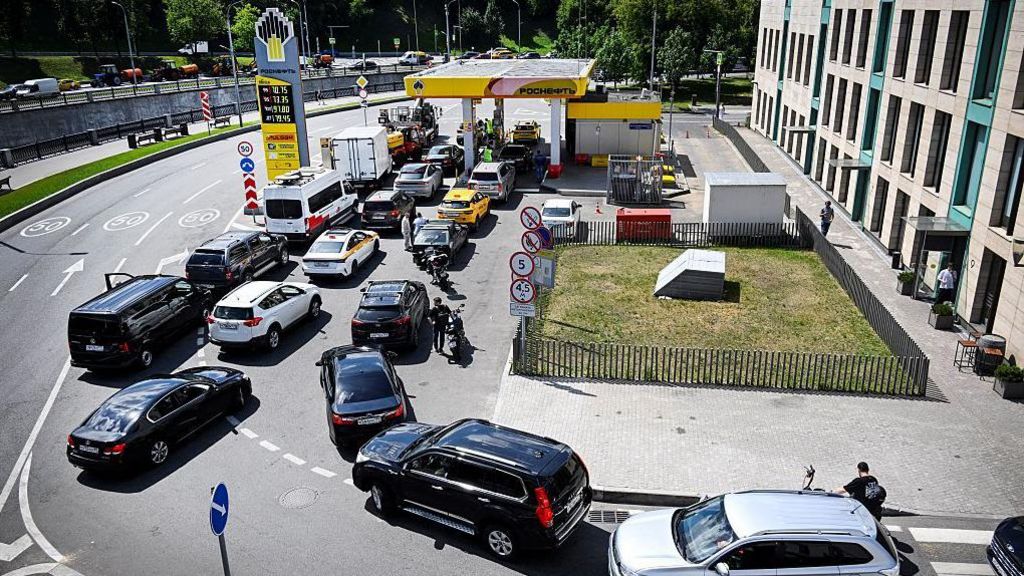
Across Russia, even in the resource-rich capital of Moscow, a severe fuel crisis has brought the far-reaching consequences of the ongoing Ukraine conflict directly to ordinary citizens’ daily lives. A day of travel through Moscow’s streets reveals a consistent scene: lengthy queues of passenger cars and heavy goods vehicles snake out from nearly every operating petrol station, while any forecourt without a line has already run dry and closed its gates.
For a country that ranks among the world’s top crude oil producers, this widespread shortage of gasoline and diesel has come as a shock to many residents. Even in the nation’s wealthiest, most well-supplied capital, federal and local authorities have failed to maintain steady fuel distribution for motorists. Among those waiting in lines, the prevailing mood is frustration rather than open rage, though quiet anxiety over future supplies simmers beneath the surface.
Yekaterina, one motorist stuck in a queue, acknowledged widespread panic driven by fears of total fuel depletion, but expressed hope that restructuring distribution networks would resolve the issue. Elmar, another driver planning a long-distance trip to Dagestan, complained of skyrocketing prices and hours wasted waiting to refuel, saying he now doubts whether he can safely make the journey by car. When asked to identify who was responsible for the crisis, he offered a knowing, cautious smile, noting that open criticism of leadership is not something most Russians feel comfortable sharing in public. Valery, meanwhile, pointed to both systemic unpreparedness and Ukrainian missile strikes on energy infrastructure as contributing factors, saying it is absurd for a major oil-producing nation to face such widespread shortages, and expressed hope for a quick resolution to the chaos.
The roots of the crisis stretch back to escalating Ukrainian drone and missile strikes targeting Russian oil refineries deep within Russian territory, including facilities within striking distance of Moscow. These strikes have disrupted domestic refining capacity, leaving the country unable to meet even baseline domestic fuel demand. The situation has been exacerbated by internet restrictions that limit the spread of real-time information about fuel availability, allowing panic to spread faster than accurate updates.
Social media platforms are flooded with user-posted images of queues stretching for miles, and reports of violent scuffles between frustrated drivers have become common. In the Black Sea coastal resort of Anapa, local Cossack units have been deployed to maintain order at crowded petrol stations. Fuel rationing is now in place across most regions, many areas have banned the use of portable jerry cans to prevent bulk hoarding, a Siberian mayor has arranged for portable toilets to be installed for drivers waiting multiple hours in lines, and local governments have been forced to cut back on public bus routes and municipal rubbish collection due to fuel shortages. Farmers across the country are already warning that the crisis could derail the critical summer harvest, threatening food security as well as energy supplies.
The shift in public mood is already visible in independent and state-run polling. Independent pollster Levada Center recorded a drop in President Vladimir Putin’s approval rating to roughly 74%, while the share of Russians who believe the country is moving in the right direction fell 9 percentage points to just 52% between May and July. Last week, Gallup reported that Russian pessimism about the national economy has hit a 20-year high, with 60% of respondents saying local economic conditions are worsening. Even state-run polling firm VCIOM recorded a 3.4 percentage point drop in public trust in Putin over one week, falling to 73%.
In Kyiv, military and political strategists are counting on this growing public frustration to build enough domestic pressure to force the Kremlin to enter peace negotiations. That expectation is shared by some NATO leaders gathering in Ankara, who are watching the economic turmoil closely for signs of political cracks in the Kremlin.
The Kremlin has not ignored the growing discontent. Putin publicly addressed the shortage on state-run television, acknowledging that Ukrainian strikes have “obviously created problems” but insisting the situation is not critical. Even as he downplays the severity, authorities have moved quickly to mitigate the crisis: they have ramped up fuel imports, introduced price subsidies to cap rising costs, and authorized the sale of lower-grade fuel that many experts warn could damage vehicle engines.
Analysts are divided on whether the fuel crisis will shift the Kremlin’s strategic course on the war. Christopher Weafer, head of regional consultancy Macro Advisory, called the shortage a potential “game-changer” for Russian economic growth, noting that “the costs of the conflict are rising. While the full impact from the fuel crisis will not be seen in the statistics until July, the likelihood of lasting crisis has significantly dimmed the growth prospects for the remaining part of the year.”
Nina Khrushcheva, a professor of international affairs at The New School in New York, argues that Western hopes for public pressure forcing Putin to the negotiating table are misplaced. “The more pressure he feels, the more likely he would act aggressively and repressively,” she explained. “I think it is serious, but the Western expectation that Russians are going to just take down the regime is very far-fetched.” She added that while many Russians feel anger and desperation, there is also widespread resignation to the current situation, making broad public opposition unlikely.
All current indicators suggest Putin is doubling down on his military strategy rather than backing down. Last Friday, he was filmed meeting with frontline commanders in military fatigues, where he claimed ongoing victories on the front line and pledged to seize additional Ukrainian territory. “The Russian Armed Forces continue to confidently hold the strategic initiative in the special military operation zone,” he stated. He also ordered commanders to analyze the involvement of Ukraine’s European allies in what he calls “real combat actions” that are prolonging the conflict, saying the analysis would inform future decision-making. The vague, charged statement has raised alarm in diplomatic and military circles, leaving Western capitals questioning what escalation Putin may pursue next.