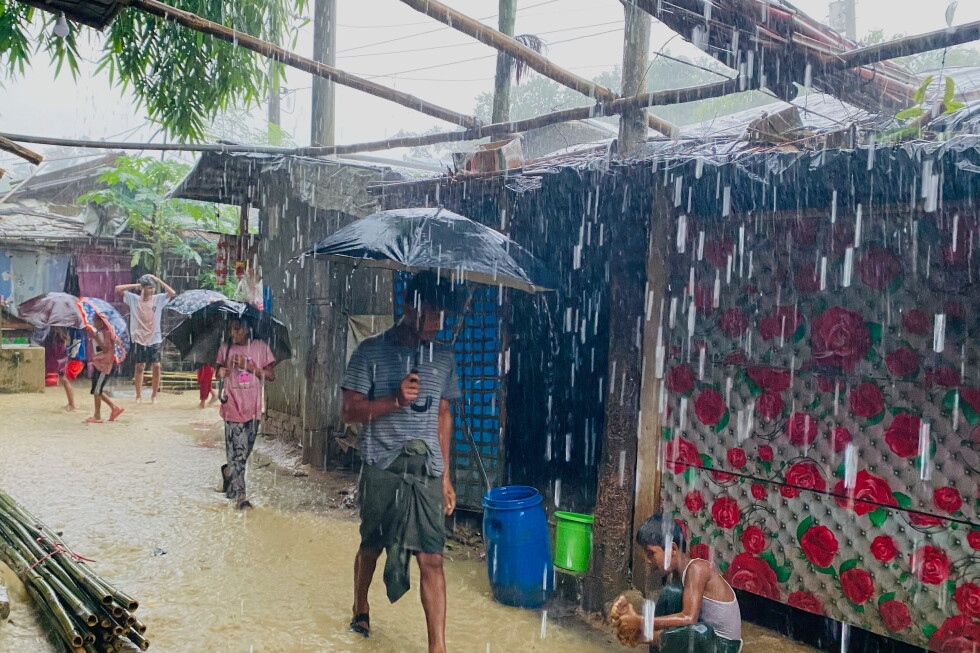
Annual monsoon season has brought devastating loss of life and destruction to South Asia this year, with deadly landslides hitting Rohingya refugee camps in southeastern Bangladesh and widespread flooding claiming victims across northern and western India. As of the latest official updates, at least 21 people have been confirmed dead across both countries, with dozens more injured and thousands displaced from high-risk zones.
In Bangladesh’s Cox’s Bazar district, home to more than 1 million Rohingya refugees who fled violence in neighboring Myanmar, the disaster unfolded between late Sunday and early Monday. Intense downpour loosened unstable soil on hilly slopes where thousands of makeshift refugee shelters are built, triggering multiple hill collapses that buried structures as residents slept. Dollar Tripura, a senior official with the district’s Fire Service and Civil Defense, confirmed to the Associated Press that eight bodies were recovered: seven by professional rescue teams, and an eighth by refugee residents themselves. All remains have been returned to their families, and two injured children have been pulled from the debris for medical treatment.
The Cox’s Bazar refugee camps have long faced high risk of monsoon-related disasters. Data from the United Nations High Commissioner for Refugees (UNHCR) shows that between 2021 and 2026, 36 Rohingya refugees have been killed and at least 86 injured in similar landslide events across the camp network. In response to this latest disaster, local authorities have accelerated relocation efforts, moving vulnerable households away from steep, erosion-prone hill slopes. So far, more than 1,000 people have been moved to safer designated areas, but the Bangladesh Meteorological Department’s Dhaka office has forecast continued heavy rainfall in the region over the coming days, raising fears of further disasters.
The crisis is not isolated to Bangladesh: monsoon rains have also battered large swathes of neighboring India, leaving 13 people dead in rain-related incidents across the country in recent days. In western India’s Maharashtra state, where the financial capital Mumbai is located, widespread flooding has closed schools, submerged critical road infrastructure, and disrupted daily life. In Pune district, landslides forced a temporary closure of key sections of the busy Mumbai-Pune Expressway, cutting off the primary traffic link between the two major urban centers. The India Meteorological Department has issued warnings for more heavy rainfall across Maharashtra in coming days, noting that low-lying areas face ongoing flood risks.
Further north, in the Himalayan regions of Jammu and Kashmir and Himachal Pradesh, torrential downpours have sparked flash floods and additional landslides. These events have damaged critical road networks, suspended public transport services, and cut off connectivity to dozens of remote mountain villages. Emergency response teams have already been deployed to the affected areas to evacuate stranded residents and deliver life-saving aid.
India’s annual southwest monsoon, which runs from June through September, is a double-edged sword for the country’s 1.4 billion people. The seasonal rains are critical to the nation’s agricultural sector, which supports more than half of the country’s population, and replenishes critical freshwater reserves across the subcontinent. However, the intense annual rainfall also routinely causes widespread death and destruction, fueled by unplanned urban development, poor drainage infrastructure in dense population centers, and increased soil erosion in the ecologically fragile Himalayan region.
Compounding the crisis in Bangladesh, recent renewed fighting between Myanmar’s military government and the Arakan Army in Rakhine State has sparked international concern that a new wave of Rohingya refugees could cross the border into Bangladesh, placing even more strain on the already overcrowded and high-risk Cox’s Bazar camp network.