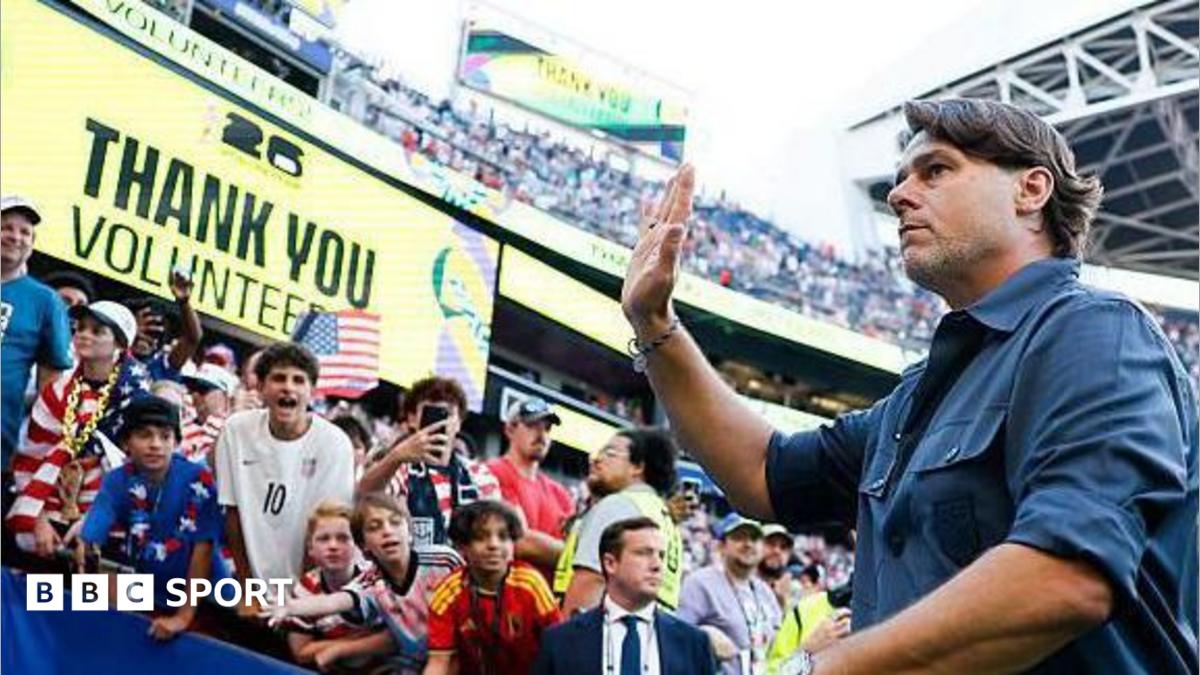
The 2026 FIFA World Cup co-host United States saw its fairytale first-ever title dream go up in smoke on Tuesday, falling to a lopsided 4-1 defeat to Belgium in the round of 16 that sent the European side through to a quarter-final clash against Spain. What was supposed to be a festive, history-making night at Seattle Stadium, kicked off with all the expected fanfare: a raucous, flag-waving American crowd, pre-match fireworks, billowing smoke flares, and a ceremonial military flyover that stoked patriotic fever. But by the final whistle, the stands were half-empty, and the momentum that had carried the US through to the knockout stage had dissolved into disappointment.
The 4-1 scoreline marks the Americans’ heaviest World Cup defeat since 1990, and the result was overshadowed by days of controversy surrounding US striker Folarin Balogun, who was cleared to start the match despite receiving a straight red card in the team’s previous round fixture against Bosnia-Herzegovina. FIFA’s shock decision to suspend Balogun’s automatic one-match ban sparked widespread outrage from football governing bodies and opposing coaches, including UEFA, Belgium’s camp, and England manager Thomas Tuchel. The controversy even spilled into US politics, with former President Donald Trump confirming he had personally asked FIFA to review the original red card ruling, arguing the challenge on Bosnian defender Tarik Muharemovic was not a foul.
Going into the match, Belgium defender Timothy Castagne openly acknowledged the controversy had shifted global public opinion in his side’s favor, saying, “It’s great to have the world on our side against the United States.” Balogun, who entered the match with three tournament goals to his name, offered little comment on the uproar: “I accepted the decision when I was given the red card, and then I also accepted the decision when I was told I could play. There’s not too much else I can really say on the matter.” Despite the off-field noise, Balogun failed to threaten the Belgian defense all night, leaving the US attack toothless for much of the match.
US manager Mauricio Pochettino, whose contract expires at the end of the tournament, dismissed claims that the controversy impacted his side’s performance. “It didn’t affect our performance. It’s not an excuse. It wasn’t our day,” he told reporters after the match. Pochettino did, however, hit out at critics who accused the US federation of manipulating the process, adding, “I feel disappointed with too many people. They put politics and manipulation, talk about ethics and integrity [first]. If we talk about the history of this game, I am disappointed in a personal way.” After the final whistle, Belgium manager Rudi Garcia revealed Balogun had approached him post-match, and he made clear he held the striker blameless: “It’s not his fault, he’s not the one to blame and that’s what I told him.”
While the Balogun saga dominated headlines in the build-up, poor defensive discipline and unforced errors, not off-field drama, were the root of the US collapse. Charles De Ketelaere scored two first-half goals for Belgium, first tapping in an opener after being left unmarked in the 18-yard box, then outjumping two American defenders to head home just minutes after the US had equalized the score. The most calamitous US mistake came for Belgium’s third goal, when hesitant goalkeeper Matt Freese strayed off his line to clear a loose ball, only to be dispossessed by De Ketelaere, leaving Hans Vanaken with an empty net to slot home from outside the penalty area. The 3-1 lead drained the life out of the home crowd, with fans streaming for the exits in the final 10 minutes before Romelu Lukaku put the final nail in the coffin with an injury-time fourth goal.
Pochettino conceded his side never found their rhythm from the first whistle. “Everyone saw from the beginning that we did not connect with the game,” he said. “We were never in the game, even when we scored the goal [to equalise], we conceded in the next action. It was really tough from the beginning.” Reactions from fans exiting the stadium reflected the disillusionment, with one telling BBC Sport, “There was no willingness to go for the ball. There was nothing there. There was no drive, football wasn’t alive today.” Another acknowledged Belgium’s clinical performance: “The US had unforced errors all over. They didn’t play their best game but Belgium played the way they needed to win that game. To silence the crowd like they did, they put themselves in a great spot to win.”
The exit makes the US the third North American co-host to exit the tournament at the last 16 stage, following earlier knockouts for Canada and Mexico. Despite the disappointing end to the campaign, many players and fans struck a measured tone about the long-term impact of hosting the World Cup on American soccer. After a slow pre-tournament build-up, public interest surged as the US advanced to the knockout stage, with fan zones and bars across the country packed for matches, and national team jerseys becoming ubiquitous. US midfielder Tyler Adams argued the campaign still achieved its core goals off the pitch: “You have good days and bad days and this was a bad day. We didn’t go as far as we’d like. But if we inspire a few kids on this journey then we have done something right.”
Many fans echoed that sentiment, noting that while the result was disappointing, hosting the tournament has already pushed soccer further into the American mainstream. “It is an amazing event we have put on and we are really excited for the future of soccer in the country,” one fan said. Another acknowledged the gap that remains for the US to compete with elite football nations: “Long term we have a lot of catching up to do. There’s a culture built around football and we’re just not there yet.”
The biggest lingering question following the exit surrounds Pochettino’s future. The former Tottenham Hotspur manager’s contract with the US Soccer Federation is set to expire after the tournament, and he offered no clarity on his next steps Tuesday. “Now it’s [time] to rest a little bit, to think, to have conversations and see what the decision is from the federation and from us,” he said. “I am so happy we built a very good relationship, but now is not the moment. In the next weeks we can start to talk, if the federation wants to talk.” For Belgium, however, the focus already turns to their quarter-final showdown with Spain, as they chase a deep run in the 2026 World Cup.