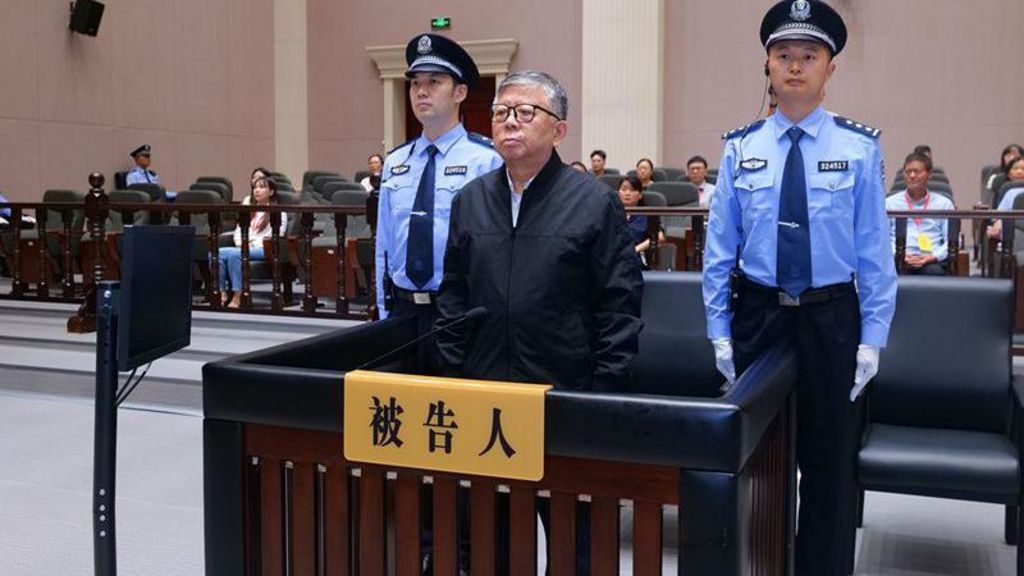
A court in eastern China has handed down a rare death sentence to a former senior local official convicted of amassing over 2.2 billion yuan ($325 million) in bribes across a 30-year period of corruption, in one of the highest-stakes graft cases prosecuted in recent years.
Yang Youlin, 69, held multiple senior leadership positions in Nanjing, the capital of Jiangsu province, between 1993 and 2023, with most of his career focused on overseeing the city’s economic and technological development initiatives. Beyond the massive bribery conviction, the Changzhou City Intermediate People’s Court also found him guilty of four additional criminal charges: embezzlement of public funds, abuse of official power, and money laundering to conceal his illicit proceeds.
Court documents and state media reporting confirm that Yang systematically abused the authority of his various government roles to provide unlawful favors to private and corporate actors in exchange for large cash payments and high-value assets. These favors included helping third parties secure lucrative public engineering contracts, push through preferential land transfer deals, and access approved government-backed financing, according to official accounts.
In its official ruling issued Monday, the court emphasized that Yang’s criminal acts were of an “extremely serious nature”, noting that his decades of corruption had “caused exceptionally heavy losses to the interests of the state and the Chinese people”. While Yang cooperated with investigators and provided information on other alleged offenders that has in many other cases led to reduced sentences, the court ruled that the scale and severity of his crimes meant this cooperation was “insufficient to warrant a more lenient punishment”. State media reports add that Yang entered a guilty plea during his trial and “expressed remorse in his final statement”.
Yang’s conviction and sentencing comes as part of the sweeping national anti-corruption crackdown spearheaded by Chinese President Xi Jinping, which has been ongoing since he took office in 2012. The campaign has targeted corrupt officials across nearly every sector of Chinese public life, from top military leadership to senior banking executives and local government administrations. Critics of the crackdown have previously argued that the anti-graft initiative is also used as a political tool to remove and discipline perceived political rivals within the ruling party.
Death sentences for financial and white-collar corruption crimes remain extremely rare in China, though they are occasionally handed down in cases involving illicit gains exceeding 1 billion yuan. Recent high-profile precedents include former top state finance executive Lai Xiaomin, who was executed in 2021 after being convicted of taking 1.8 billion yuan in bribes, and former Inner Mongolian senior official Li Jianping, who received a death sentence in 2024 for graft and embezzlement totaling more than 3 billion yuan. In most other large-scale corruption cases, defendants receive fixed jail terms or suspended death sentences, which are typically commuted to life imprisonment after a set period of good behavior.