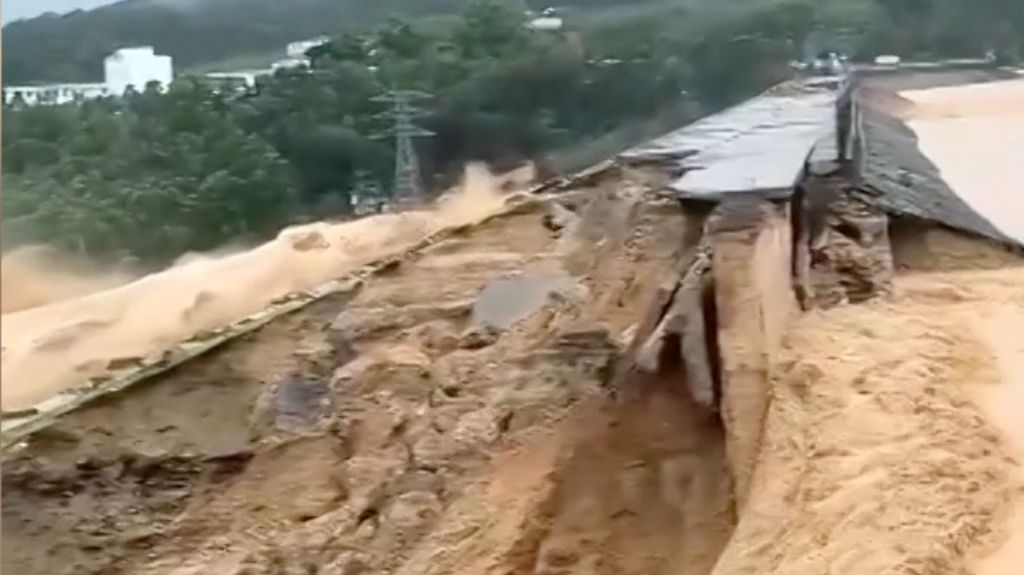
One of the earliest powerful tropical cyclones of the West Pacific season, Typhoon Maysak, has left a trail of destruction across southern China, triggering catastrophic flooding that breached a reservoir dam in Guangxi Zhuang Autonomous Region and caused fatalities across the affected area. Local authorities confirmed on Tuesday that the dam wall at a reservoir in Heng County, administered by Nanning, the regional capital, collapsed after days of relentless heavy rain pushed by the typhoon sent river and reservoir water levels surging far beyond safe operational thresholds.
As Maysak made its way inland from the South China Sea early last week, the storm dumped unprecedented volumes of rainfall across Guangxi, with many areas recording 24-hour precipitation totals that exceeded historical averages for the entire month. The sustained downpour quickly overwhelmed natural drainage systems, causing widespread river swelling that put enormous structural pressure on hundreds of small and medium-sized reservoirs across the region. Even though local officials had issued multiple early warnings and ordered pre-emptive inspections of water infrastructure ahead of the storm’s arrival, the scale of the flooding outpaced defensive preparations, leading to the dam breach in Heng County.
Local emergency management teams have been deployed to the affected area to carry out rescue operations, evacuate at-risk downstream communities, and assess the full extent of the damage. As of the latest update, official reports have confirmed multiple fatalities linked to the flooding, though full casualty and damage figures are still being compiled as access to remote hard-hit areas remains restricted by washed-out roads and continued floodwaters. Provincial and national disaster relief authorities have also allocated emergency supplies and funding to support response efforts, as teams work to restore basic services and prevent secondary disasters such as landslides and waterborne disease outbreaks in the wake of the storm.
The breach highlights the growing vulnerability of aging water infrastructure in parts of China to extreme weather events, which climate scientists warn are becoming more frequent and more intense due to global climate change. In recent years, southern China has faced an increasing number of severe typhoon-driven flooding events that have tested the country’s disaster preparedness and response systems, prompting calls for increased investment in upgrading outdated infrastructure to better withstand extreme weather shocks.