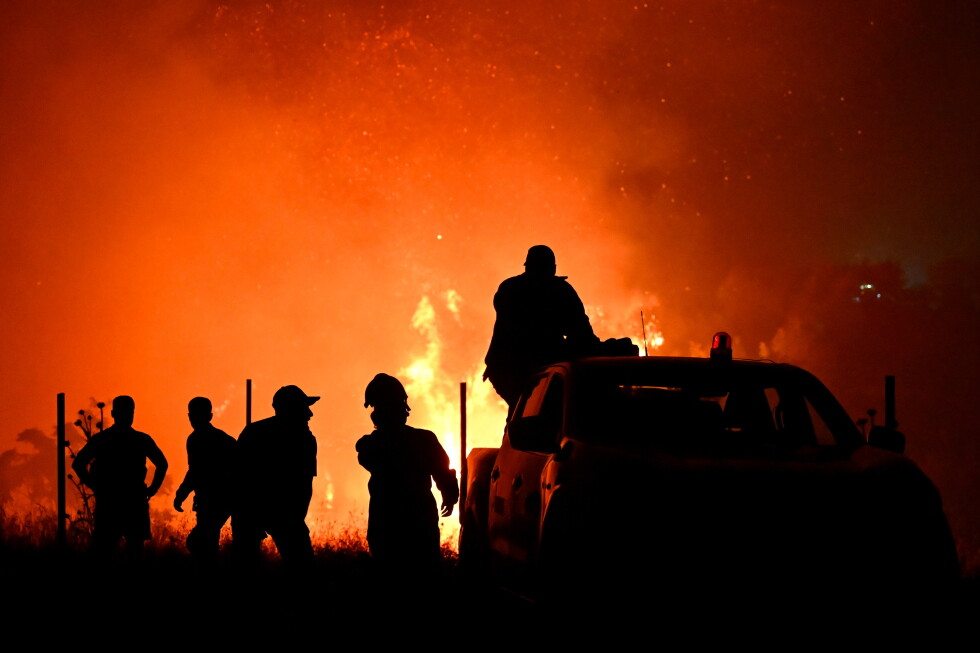
Southern Europe is facing a fresh wave of destructive wildfire emergencies this weekend, with hundreds of first responders struggling to contain large blazes across Portugal and Greece, while neighboring countries step in with emergency support to boost containment efforts.
In central Portugal’s Vouzela region, the most massive blaze has been burning out of control for more than three days after igniting last Thursday. As of Sunday, data from the European Union’s Copernicus satellite mapping service confirms the fire has already scorched 12,000 hectares—an area equal to 120 square kilometers, or 46 square miles—of land. More than 1,200 Portuguese firefighters, supported by a fleet of nearly 400 ground vehicles and 15 aerial firefighting aircraft, have been assigned to bring the blaze under control, according to Portugal’s national Civil Protection authority.
To address the scale of the emergency, the European Union has coordinated cross-border reinforcements: Spain dispatched 120 additional firefighters and 45 support vehicles to Portugal on Friday, and three extra water-bombing aircraft from both Italy and Spain have also been deployed to assist with containment.
Across the Iberian border in northern Greece, a separate fast-moving wildfire has triggered urgent public safety warnings near Thessaloniki, the country’s second-largest urban center. The blaze ignited Saturday evening on the city’s outskirts, quickly engulfing a local recycling plant and sending toxic plumes of smoke into adjacent residential neighborhoods. Strong gusty winds fanned the spread of flames, prompting immediate evacuation orders for three suburban communities and a care facility that houses 157 people with disabilities.
Around 160 Greek firefighters worked through the night to hold the fire line, waiting for daylight to allow water-dropping aircraft to begin aerial operations. Oraiokastro mayor Pandelis Tsakiris told Greece’s state-run public broadcaster ERT that multiple private businesses and residential properties have already sustained damage, though a full damage assessment is still pending. Greek fire department officials have taken a 76-year-old local man into custody on suspicion of negligence, alleging that sparks from his vehicle caught nearby roadside vegetation on fire to start the blaze. He is scheduled to appear before a public prosecutor for processing on Sunday.
This blaze comes only days after another nearby wildfire killed a 12-year-old boy and his father, underscoring the deadly risk the annual wildfire season poses to Greek communities. Fire department spokesperson Brigadier Ioannis Artopoios told ERT Sunday that an estimated 85% of all wildfires in Greece are caused by preventable human negligence. Common causes include sparks from agricultural equipment, carelessly discarded cigarette butts, and unregulated outdoor grilling, he explained, noting that “this means most of them could have been avoided.”
Greece has long faced frequent, devastating wildfire outbreaks during its hot, dry summer months, a risk that has grown steadily more severe as climate change amplifies drought and high temperatures. The 2018 wildfire east of Athens claimed more than 100 lives, and a 2023 blaze that burned through a remote northeastern Greek nature reserve remains the largest single wildfire ever recorded in the European Union. In response to the growing threat, the Greek government has increasingly turned to satellite technology to improve early detection and monitoring: four new wildfire-monitoring satellites launched into low Earth orbit in May are currently being integrated into the country’s national wildfire response system.
While Greece has so far avoided the extreme, record-breaking heatwaves that have scorched much of Western Europe over recent weeks, dozens of smaller wildfires have still broken out across the Greek mainland and its popular island chains this summer, stretching response resources thin.