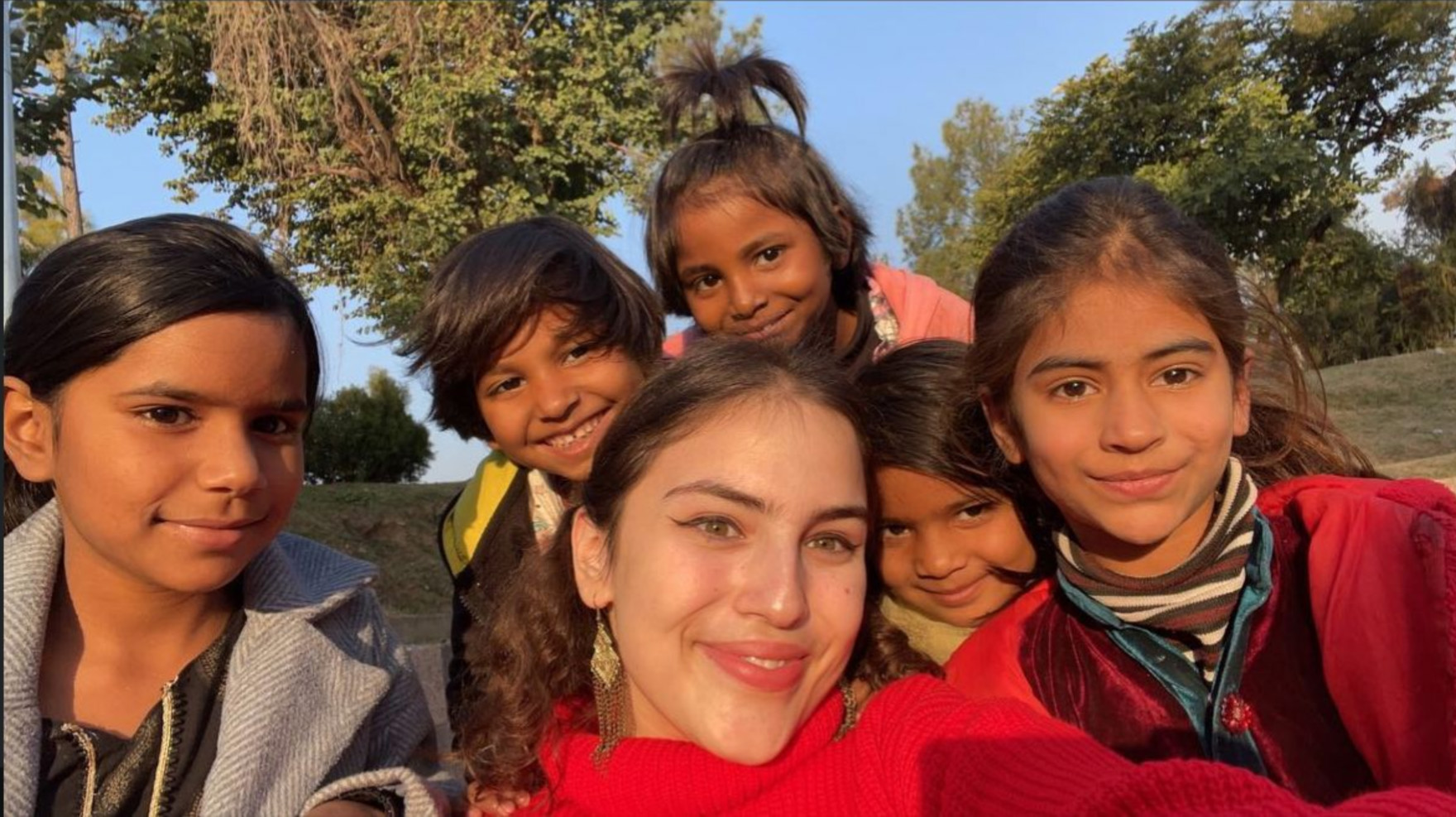
For millions of women and girls across Pakistan, access to basic menstrual hygiene has long been a privilege, not a right. Growing up in Punjab’s Attock district, 26-year-old Bushra Mahnoor knows this reality all too well. In a household with six menstruating people, commercial sanitary pads were treated as a precious, rationed commodity. Supplies ran out constantly, and steep costs – driven by government taxes that labeled the products non-essential luxury goods – forced the family to stretch every purchase as far as it could go.
“We felt like we were competing with each other for the supplies,” Mahnoor recalled, adding that constant anxiety about leaks haunted her school days, where she would sneak and hide spare bits of supplies whenever she could. Like generations of women in Pakistan, she grew up surrounded by harmful misinformation: that bathing during menstruation causes illness and weight gain, that periods are a mark of impurity. Teachers refused to discuss the topic in class, leaving families too shamed to address it at home.
This deeply unfair experience is not an isolated case. Latest 2025 World Bank data underscores the scale of the crisis: women make up 49.3% of Pakistan’s total population, yet only 12% can access and afford commercial menstrual products. Just 27% of Pakistani women understand menstruation is a normal, natural biological process. Campaigners trace this public health crisis to decades of government neglect and a pervasive cultural culture of silence and stigma that has pushed menstrual health out of public discourse.
That silence began to crack earlier this month, when Pakistan’s Finance Minister Muhammad Aurangzeb announced the elimination of the 18% sales tax on menstrual products and contraceptives as part of the 2026–27 national budget. The long-contested levy, widely known as the “period tax,” has been a core target for gender equality advocates across the country for years.
UNICEF Pakistan has already hailed the policy change as a meaningful milestone, framing it as a critical step toward tackling widespread period poverty by officially recognizing menstrual products as essential health and hygiene items rather than unnecessary luxury goods. The reform comes after a year-long legal battle led by two young activists: 25-year-old women’s rights advocate and human rights lawyer Mahnoor Omer, and 29-year-old tax lawyer Ahsan Jahangir Khan.
Under Pakistan’s 1990 Sales Tax Act, menstrual products were classified as standard consumer goods, with imported products facing an extra 25% customs duty. Combined, these taxes inflated product prices by as much as 40%, putting basic sanitary care out of reach for the majority of low-income girls and women. The injustice was made starker by the fact that items like flavored yogurt and cottage cheese were granted essential goods status, while menstrual products were excluded.
Omer, who began working with non-profits serving low-income communities at a young age, had seen firsthand the human cost of this policy. She documented countless cases where women relied on rinsed, reused scraps of old cloth for days at a time, leading to recurrent urinary tract infections, skin rashes, and other preventable health complications. It was this experience that pushed her to act after she learned of a successful campaign by two Nepali law students who had overturned their country’s 13% VAT on sanitary pads in 2024, prompting the government to cut product prices by nearly 20%.
While working at the Supreme Court of Pakistan early last year, Omer connected with Khan, and the pair began drafting a legal challenge to Pakistan’s period tax. In January 2025, they filed a constitutional petition arguing that the discriminatory tax violated the principles of gender equality and human dignity enshrined in Pakistan’s constitution. A parallel online advocacy campaign quickly gathered tens of thousands of signatures from supporters across the country.
Though the Federal Board of Revenue initially defended the tax, claiming it was legally sound and non-discriminatory, the government reversed its position by early July, confirming the sales tax would be fully eliminated. Omer called the moment historic, noting that “In a province large enough to fit 20 European countries, menstruation has never been discussed this openly in the Punjab Assembly.” She added that women’s issues remain chronically underrepresented in Pakistani politics: most male lawmakers have no lived experience of menstrual injustice, while many privileged women in office are far removed from the struggles of low-income communities that bear the brunt of the crisis. Currently, women hold just 66 of 371 total seats in the Punjab provincial assembly, and deep-seated stigma has long blocked open debate of menstrual health policy.
The legal campaign received critical grassroots support from Mahwari Justice, an organization founded by Bushra Mahnoor in 2022 amid Pakistan’s worst modern flooding, which displaced 33 million people and submerged a third of the country. During the crisis, Mahnoor witnessed acute shortages of sanitary supplies in displacement camps, where women were already facing extreme vulnerabilities. She traveled across affected regions distributing hygiene kits with reusable pads, washing supplies and drying cloths, treating infections that developed after women were forced to use unhygienic cloth substitutes.
Even with the sales tax eliminated, campaigners emphasize that the fight for full menstrual justice is far from over. Imported menstrual products still carry a 25% customs duty that keeps retail prices artificially high. Advocates are now pushing for full reclassification of menstrual products as zero-rated essential goods, which would eliminate all remaining consumption-related taxes and make affordable products accessible to millions more.
A growing number of countries have already implemented this progressive policy: the United Kingdom, Ireland, Kenya, South Africa and Canada all impose no taxes on menstrual products, while 18 U.S. states still maintain sales taxes on the products as of March 2026. Despite the remaining barriers, activists in Pakistan say they are growing increasingly confident of securing full tax exemption.
“Our fight didn’t end with the government saying they will abolish the sales tax; it continues until the court declares this product tax-free,” Khan explained. Beyond tax reform, Omer is already planning her next campaign: pushing for education reform that would mandate comprehensive sexual and reproductive health education in all Pakistani schools. “You can flood the market with the healthiest food, but if children don’t understand why they should eat healthily, no one will buy it,” she said, framing education as a core long-term solution to end stigma.
In recognition of their groundbreaking work, Omer was named to Time Magazine’s Women of the Year list, while Mahnoor received the 2026 Commonwealth Youth Award, becoming only the fourth Pakistani to earn the honor. Both activists say that while recognition is welcome, it does not resolve the underlying crisis. Still, they point to Aurangzeb’s speech on the floor of the National Assembly – where he publicly described menstrual products as essential to women’s health – as a transformative shift. For decades, the word “menstruation” was rarely uttered in official Pakistani parliamentary spaces, so having the issue acknowledged on the official record is a victory in itself.
“I think menstruation products were never included on the list of essential goods because menstruation is a term refused to be uttered on the Punjab assembly floor. But it has now, and that’s a significant step forward,” Omer said.