As Ukraine ramps up long-range strikes on Russian energy infrastructure that have triggered widespread fuel shortages across the world’s second-largest oil exporter, Vladimir Putin has remained defiant, dismissing the disruptions as non-critical and rejecting all ceasefire proposals to continue his full-scale invasion of Ukraine. The Russian leader’s unflinching stance comes amid escalating tit-for-tat strikes that have pushed the conflict to new levels of intensity, with a massive 11-hour Russian aerial assault on Kyiv overnight Thursday killing at least 30 people, marking one of the deadliest single attacks on the Ukrainian capital since the 2022 full-scale invasion began.
Since the start of March, Ukraine has launched more than 50 documented strikes against oil refineries, storage depots, and other energy facilities across mainland Russia and illegally annexed Crimea, a strategic campaign Kyiv says is designed to bring the costs of the war home to ordinary Russians and pressure the Kremlin to negotiate an end to the conflict. The campaign has already succeeded in undermining Putin’s long-held narrative that the war does not disrupt daily life for Russian citizens, breaking through the controlled narrative most Russians consume through state media.
Industry analysts estimate that roughly one-third of Russia’s total oil refining capacity has been taken offline by the strikes, with damage that will cost billions of rubles to repair. Even Moscow’s top domestic refinery, protected by layers of advanced air defense systems, has been hit twice; the second strike in mid-June sparked a large fire that damaged critical infrastructure, with repairs expected to last through the end of 2025. Official Russian government data confirms domestic gasoline production has dropped by 17% to 850,000 barrels per day, forcing regional authorities to implement fuel rationing that has left motorists waiting in multi-hour lines to refuel across large swathes of the country. To alleviate immediate shortfalls, the Kremlin has authorized the sale of lower-quality gasoline with elevated sulfur content through the end of the year. The illegally annexed Crimean Peninsula has faced the most severe shortages, with authorities periodically halting all gasoline sales to civilian consumers entirely.
During a televised meeting with senior government officials last weekend to address the growing fuel crisis, Putin acknowledged the country is navigating a “difficult period” but downplayed the long-term impact of the strikes, framing the shortages as strictly temporary. He outlined a series of emergency steps to address the gap: accelerating repair work on damaged energy facilities, exploring gasoline imports to boost domestic supply, and ramping up production of air defense systems to prevent future strikes on key infrastructure. Putin characterized Ukraine’s energy strike campaign as a deliberate attempt to split Russian society, disrupt Moscow’s battlefield offensive, and force the Kremlin into negotiations on terms favorable to Kyiv.
“We will not give them that chance,” Putin stated firmly.
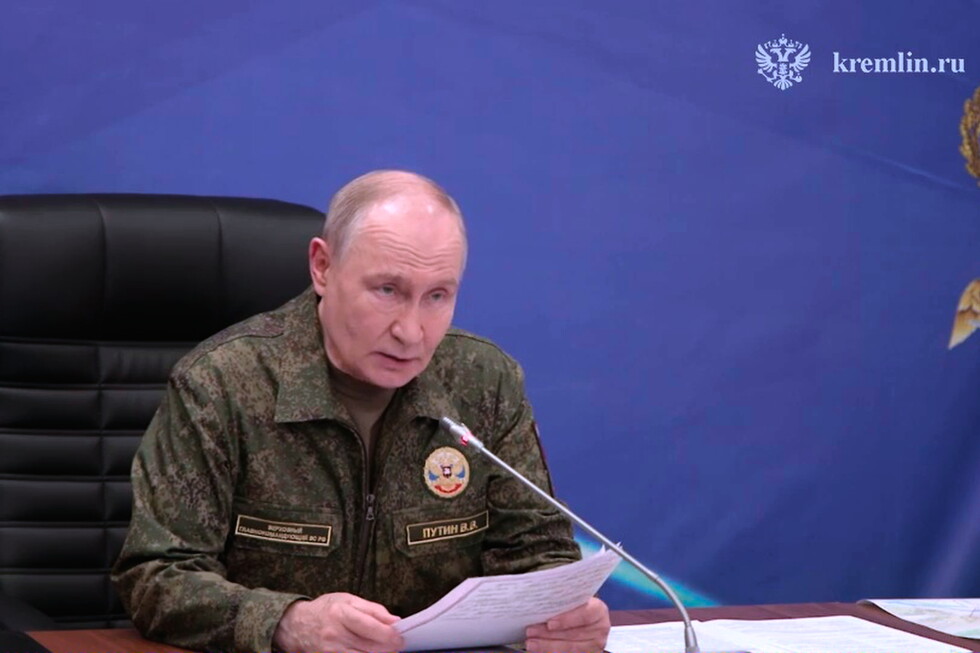
While Putin claims Ukrainian strikes on Russian energy facilities have “absolutely no effect on the situation at the front,” Western military analysts disagree, noting that midrange strikes on Russian logistics and supply lines over recent months have hampered military operations and slowed the pace of Russian advances, leaving most of the frontline locked in a tense stalemate. On Friday, Putin visited the Russian military command center overseeing operations in Ukraine to receive what Russian state media called an update on the capture of Kostyantynivka, a key industrial and transportation hub in the Donetsk region after weeks of brutal street fighting. Dressed in military fatigues, Putin hailed the capture as a major strategic step toward seizing Sloviansk and Kramatorsk, the last major heavily fortified Ukrainian strongholds in Donetsk’s forest belt.
Ukrainian officials have not confirmed Russia’s claim of seizing Kostyantynivka, and earlier Friday the Ukrainian General Staff reported that its forces had repelled 24 separate Russian assaults in the Kostyantynivka area and surrounding settlements. Putin also issued new warnings Friday, arguing that increased Ukrainian strikes on Russian civilian infrastructure will force Russia to expand a “security zone” inside Ukrainian territory to prevent future attacks. He also issued a veiled threat to Western countries supplying military aid to Ukraine, saying Russia would complete an analysis of Western “engagement in hostilities” to guide future “responsible decisions.”
Putin has also flatly rejected multiple ceasefire proposals put forward by Kyiv and its Western allies, responding to Ukrainian President Volodymyr Zelenskyy’s offer of direct talks by demanding Zelenskyy travel to Moscow — a non-starter for the Ukrainian government. Putin argues any truce would only allow Ukrainian forces time to rest, rearm, and regroup, making any ceasefire conditional on full Ukrainian withdrawal from the remaining territory Ukraine holds in Donetsk region, a demand Kyiv has already rejected outright. He also said any final peace agreement must require Ukraine to abandon its bid for NATO membership, demilitarize its armed forces, and enshrine legal protections for the Russian language and Russian cultural identity within Ukraine.
In a recent interview, Putin claimed Ukrainian officials had tabled a confidential proposal to limit active fighting to the four regions Russia illegally annexed in 2022 — Donetsk, Luhansk, Kherson, and Zaporizhzhia — none of which Russia controls fully. Putin said he rejected the proposal, arguing it would allow Ukraine to reposition troops from other fronts to reinforce defensive positions in the four regions. “Faced with a catastrophic shortage of personnel, the armed forces of Ukraine apparently believe this could be their salvation,” Putin said. “Saving the Kyiv regime is not part of our plans.” The Kremlin has said the offer was communicated through backchannel diplomatic routes, but Ukrainian officials have never publicly acknowledged any such proposal.
Putin also dismissed a separate Ukrainian proposal for a mutual moratorium on deep strikes into each other’s territory, noting that Russian deep strikes are “much more powerful, sensitive and, frankly speaking, destructive” than those Ukraine carries out. Thursday’s massive barrage on Kyiv followed that pattern, with Russian missiles and drones striking multiple residential neighborhoods despite Russian claims that all attacks targeted military infrastructure. Unlike Russian strikes, which regularly hit civilian residential areas and infrastructure, the vast majority of Ukrainian strikes inside Russia have targeted energy facilities, weapons production plants, and other military-related infrastructure.
More than three years into the full-scale invasion, United Nations data records that more than 16,000 Ukrainian civilians have been killed since the war began, with tens of thousands more injured and millions displaced from their homes.