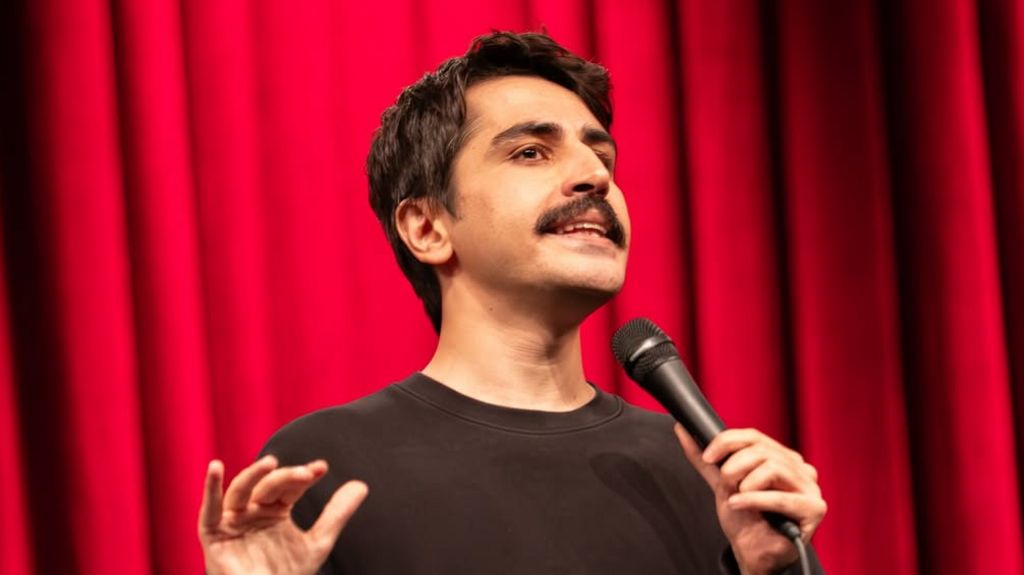
A high-profile Turkish stand-up comedian has been taken into custody following his arrest at Istanbul’s main international airport, launching a new flashpoint over freedom of expression in Turkey just days before the country hosts a landmark NATO leadership summit. Deniz Göktaş, one of Turkey’s most beloved and widely watched comedy performers, was detained upon returning from an overseas holiday, with footage of the handcuffed performer circulating rapidly online to spark immediate outcry from his large base of supporters.
Göktaş faces two serious criminal charges: insulting President Recep Tayyip Erdogan and violating Turkish law by publicly insulting religious values. The accusations stem from a 1 June stand-up set recorded at Istanbul’s iconic open-air performance venue, which was uploaded to YouTube on 24 June and has since racked up more than 9.4 million views. Turkish prosecutors have confirmed they received 185 formal complaints about the viral comedy clip, and on Friday, following hours of questioning at Istanbul’s Çağlayan courthouse, prosecutors formally requested that Göktaş be held in pre-trial detention as the case proceeds.
In his official testimony to prosecutors, Göktaş pushed back firmly against all charges. He stated that he held no intention to offend any individual’s religious beliefs, and outright denied insulting the president. The comedian noted that the controversial routine had been performed across nearly a dozen Turkish cities over the past three years without incident, adding that the phrasing that sparked the charges had long been a widely discussed topic in Turkish public discourse. He also emphasized that more than 100,000 people had attended his live performances of the routine, and not a single audience member had filed an official complaint about the contentious section before the viral video spread.
The controversy extends far beyond the comedy stage: Turkey’s top religious authority, the Presidency of Religious Affairs, highlighted the performance without naming Göktaş in its weekly Friday sermon delivered to all mosques across the country. In the sermon, the mufti’s office complained that digital platforms have allowed the mocking of sacred Islamic values under the guise of comedy, arguing that this trend is pulling Turkish youth away from traditional religious values.
Göktaş’s arrest is not an isolated incident, according to analysts and rights advocates, but rather part of a broad, accelerating crackdown on dissenting voices across Turkey that has intensified in the lead-up to the 7–8 July NATO Leaders’ Summit in Ankara. Turkish authorities have already blocked access to social media accounts belonging to dozens of LGBT+ organizations and activists, and have detained more than 200 people across the country in recent weeks. Security officials have deployed tens of thousands of security personnel across Ankara to secure the summit, which will bring U.S. President Donald Trump, European heads of state, and Ukrainian President Volodymyr Zelensky together for high-stakes talks.
Authorities have also implemented a full ban on all public demonstrations in Ankara through 10 July, and independent Turkish media outlets have reported that they have been denied official press accreditation to cover the summit. NATO has confirmed that it relies on host nation authorities to guarantee press access for the event, and that alliance representatives are in ongoing communication with Turkish officials over the issue.
The wave of detentions has touched nearly every sector of Turkish civil society: in late June, volunteers from the Tema Foundation, one of Turkey’s most respected environmental nonprofits, were detained while returning from a group nature trip. The foundation confirmed that most of the detained volunteers were retired citizens, and nearly all were released shortly after being taken into custody. The broader crackdown has also targeted journalists, lawyers, academics, trade unionists, and political opposition figures.
Hundreds of supporters gathered outside the Çağlayan courthouse on Friday to protest Göktaş’s detention, calling for his immediate release. The protest drew senior opposition figures, including former CHP presidential candidate Kemal Kılıçdaroğlu, who was recently reinstated as CHP chairman by an Ankara court in a move that has split the opposition. Kılıçdaroğlu has publicly condemned Göktaş’s handcuffed arrest and called for the comedian’s release, but many young opposition activists blame Kılıçdaroğlu for enabling the government’s crackdown on younger dissenting voices, after the court removed the entire elected CHP leadership in May to reinstall the 77-year-old former leader.
Human rights watchdogs and free expression groups have condemned Göktaş’s arrest as a violation of Turkey’s constitutional protections. The Media and Law Studies Association, a leading Turkish freedom of speech monitoring organization, noted that satire and political comedy are explicitly protected under both the Turkish constitution and the European Convention on Human Rights, warning that the comedian could face years of prison time simply for telling jokes. Human Rights Watch has repeatedly warned that the Erdogan administration has implemented far-reaching restrictions on political opposition, independent media, and the basic right to freedom of expression across Turkey.
The ongoing crackdown comes as the CHP, Turkey’s main opposition party, has faced escalating government pressure. The party’s most prominent figure, Istanbul Mayor Ekrem İmamoğlu, Erdogan’s leading political rival, has been held in prison for more than a year on charges including corruption, and went on trial last March. Opposition leaders have condemned the legal action against İmamoğlu and the party’s leadership as a judicial coup against Turkish democracy.