The 2026 FIFA World Cup knockout stage delivered one of the most dramatic and debated finishes in tournament history on Wednesday, as a last-gasp VAR ruling eliminated Croatia in cruel fashion and sent Portugal through to the quarter-finals. What unfolded over 90-plus minutes at Toronto Stadium packed in every element of high-stakes football: last-minute goals, offside disputes, generational career milestones and a technology-driven controversy that has reignited debate over the role of VAR in the modern game.
Portugal entered the match as marginal favorites, but the first half was largely underwhelming until Croatia broke the deadlock early in the second half through veteran winger Ivan Perisic. What followed was a chaotic second half that shifted momentum repeatedly. Portugal captain Cristiano Ronaldo, appearing in his sixth World Cup, had a stunning equalizer ruled out by a tight offside call before converting a controversial penalty to level the score at 1-1. The strike marked Ronaldo’s first ever knockout-stage goal at a World Cup, a milestone that added extra narrative to a night already thick with subplots.
Ronaldo was substituted in the 81st minute, leaving a dejected figure on the bench, but his evening was far from over. Portugal substitute Goncalo Ramos netted a go-ahead goal in the fourth minute of stoppage time, putting Portugal up 2-1 and prompting Ronaldo to sprint onto the pitch to celebrate with his teammates. With seconds remaining, and extra time seeming inevitable, Croatia thought they had forced an additional 30 minutes when defender Josko Gvardiol tapped home from close range in the 13th minute of stoppage time. Croatian players erupted in wild celebration, while Ronaldo sat stunned on the Portuguese bench.
That celebration was cut short when VAR intervened. Premier League official Jarred Gillett, the video assistant referee for the match, called for a full offside check, centered on whether Croatian forward Igor Matanovic had made contact with the ball in the build-up to Gvardiol’s finish. If Matanovic had touched the ball, he was in an offside position and the goal would be ruled out; if no contact was made, the goal would stand. Referee Espen Eskas reviewed multiple replay angles, which looked visually inconclusive, but a Snickometer-style ball-tracking technology, adapted from cricket and integrated with a microchip in the official Adidas Trionda match ball, detected a faint touch. The goal was disallowed, drawing immediate fury from the Croatian camp and fans in attendance.
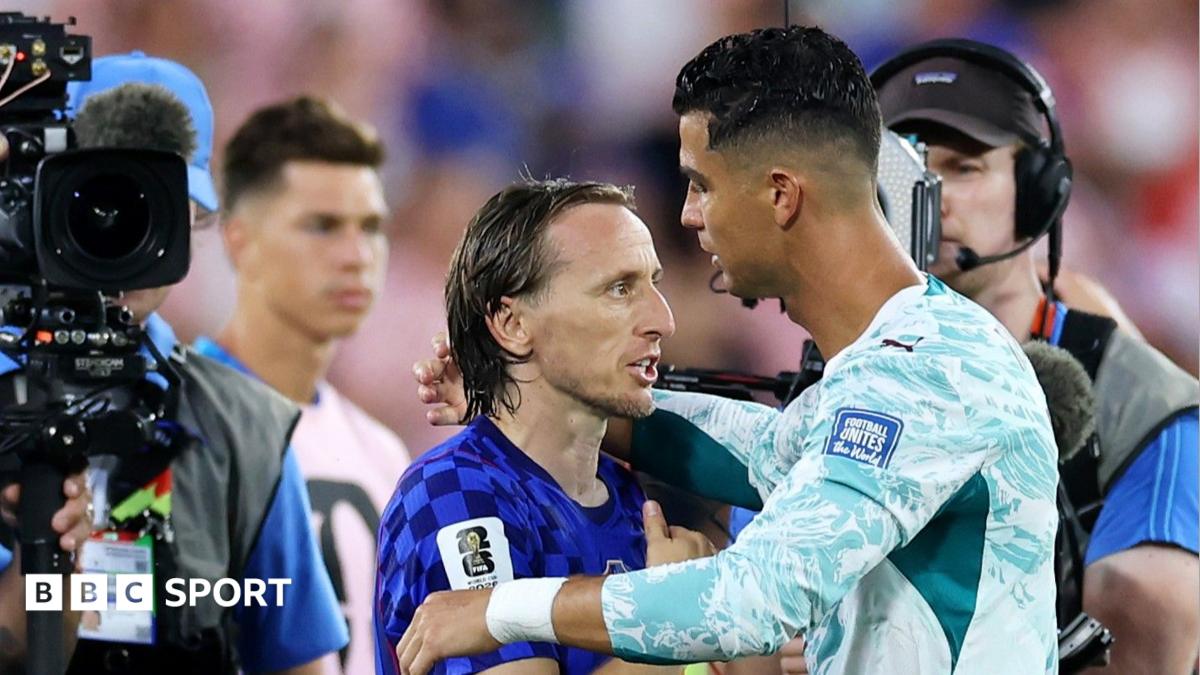
Angry Croatian supporters threw plastic bottles onto the pitch in protest, as the final whistle blew moments later, ending the Balkan nation’s World Cup campaign. The result also brings a close to what is almost certainly the final World Cup appearance for Croatian legend Luka Modric, the 40-year-old Real Madrid midfielder who made his tournament debut in 2006. Modric, who hit the 200-cap milestone for his country earlier in the tournament, was consoled by his former Real Madrid teammate Ronaldo after the final whistle, ending an era for one of the game’s most decorated midfielders.
Post-match reactions highlighted the deep divide over the controversial call. Croatian manager Zlatko Dalic launched a scathing attack on officiating and the impact of VAR on the sport. “I will not comment much about it but I will say the refereeing was very bad,” Dalic told reporters. “No fouls, no set-pieces on our side which should have been but that’s no reason to talk about the defeat. It was very bad refereeing. You were able to see to what extent emotions had been killed, and altogether all these decisions take you back and actually take the joy out of football. VAR kills emotions, it kills everything within you. We have gone too far with VAR.”
Portuguese manager Roberto Martinez defended the call, pointing to the precision of the in-ball sensor technology. “It’s a shame one of the two teams had to lose,” Martinez said. “But there is no bad decision or lucky decision. It was a clear moment. The balls now have a chip and the sensor shows the ball was touched.”
Pundits and former players were split on the ruling. Former England defender Matt Upson, commentating for BBC Radio 5 Live, said he remained unconvinced of a touch after reviewing multiple angles. “From what I can see, I don’t see any change in direction of the ball. What the telling thing is, is the spin on the ball doesn’t change and it looks like Matanovic has touched that ball but it’s interesting that they’re saying beyond any reasonable doubt he has. I can’t quite see that,” Upson said. Former Premier League assistant referee Darren Cann, however, backed the decision, saying the Snickometer technology “100% proves that he touched it with the flick-on.”
For Ronaldo, the result keeps his World Cup dream alive, just days after his sister labeled the tournament his “last dance”. The Portuguese captain had played every minute of his side’s tournament up to the knockout clash, and his substitution has reignited debate over whether he should retain his starting spot for the quarter-finals. Former England forward Theo Walcott backed Martinez’s call to withdraw Ronaldo, saying: “I think it was the right decision in the end, it really was.”
Tributes poured in for Modric after the match, with former Brazil midfielder Lucas Leiva calling the result a harsh end to an iconic career. “It is very harsh for Croatia to go out like this, for Luka Modric, probably his last game in the World Cup,” Leiva told BBC Sport. “A legend of the game. I think he has shown for 20-odd years how good he is. You feel sad for him, but he has had a great career. He took Croatia to the highest level in the World Cup. A great player.”