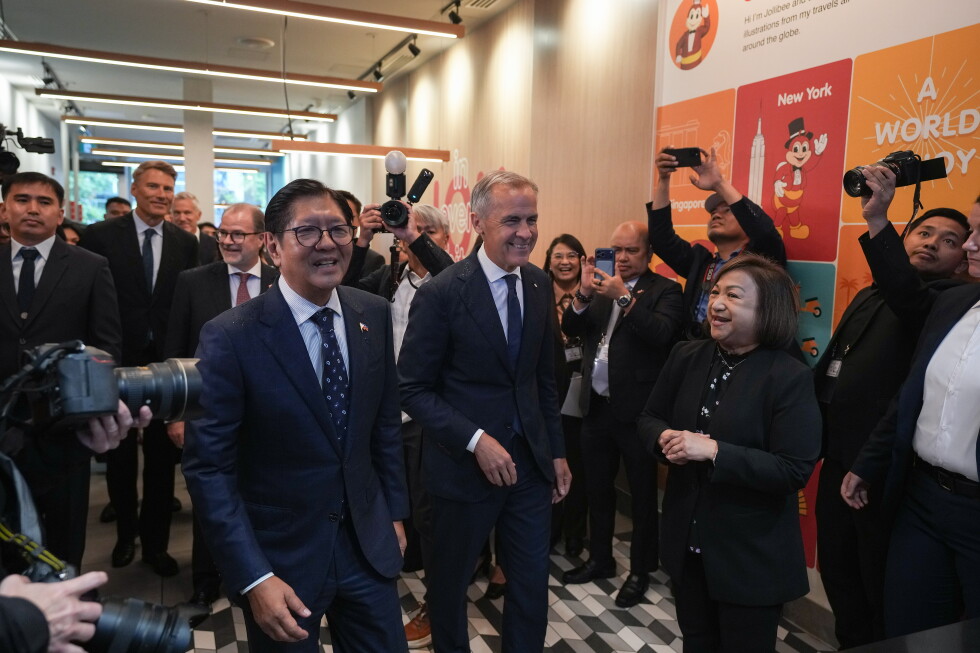
VANCOUVER, British Columbia – In a diplomatic move aligned with Canada’s broader strategy to expand economic engagement beyond its traditional reliance on the United States, Canadian Prime Minister Mark Carney and Philippine President Ferdinand Marcos Jr. have committed to strengthening bilateral collaboration across trade, energy, and security sectors during their meeting on Thursday. This agreement marks a key milestone in Canada’s deepening involvement in the dynamic Indo-Pacific region.\n\nAddressing the long-standing people-to-people connection between the two nations, Carney emphasized that the 1 million-strong Filipino community in Canada forms an integral social and economic backbone of the country. He noted that a targeted strategic partnership between Ottawa and Manila would deliver mutual gains on two pressing global priorities: bolstering regional energy security and expanding access to critical minerals, resources that are essential to the global transition to clean energy and advanced manufacturing supply chains.\n\nMarcos echoed Carney’s positive outlook, stating that the two nations share aligned global ambitions and common strategic goals that create a strong foundation for enhanced cooperation.\n\nDuring the talks, the two leaders laid out clear next steps for bilateral collaboration: they formally committed to advancing negotiations toward a comprehensive Canada-Philippines free trade agreement, deepening defense and maritime cooperation across the Indo-Pacific, and leveraging the tight-knit Filipino-Canadian community to drive stronger people-to-people and economic ties.\n\nCurrently, Canada is pursuing two parallel trade tracks in Southeast Asia: a bilateral deal with the Philippines and a separate broader agreement with the Association of Southeast Asian Nations (ASEAN) bloc. Carney has set an ambitious target to finalize these negotiations ahead of his scheduled November visit to Manila, where Marcos will assume the rotating chair of the annual ASEAN summit, providing a high-profile platform to announce progress on trade cooperation.\n\nThis push for diversified trade ties stems from a deliberate policy shift by the Carney administration. The prime minister has set a national goal to double Canada’s non-U.S. exports over the next 10 years, a target shaped by ongoing trade frictions and persistent American tariffs that have created uncertainty for cross-border investment and slowed business confidence in bilateral trade channels.
Carney and Marcos deepen Canada-Philippines ties as Ottawa looks beyond US trade