For more than a century, U.S. presidents have adhered to an unwritten code: avoiding direct personal profit from holding the nation’s highest office, often taking deliberate steps to separate their public duties from private financial interests. When Harry Truman left the White House in 1953, he relied solely on a $113 monthly military pension, arguing that commercializing the prestige of the presidency was morally wrong. Decades later, George W. Bush placed all his investments in a blind trust before taking office, and by the end of his tenure, he could not even say how the 2008 financial crisis had impacted his personal net worth. Today, that long-held norm has been shattered in a way no historian has ever recorded.
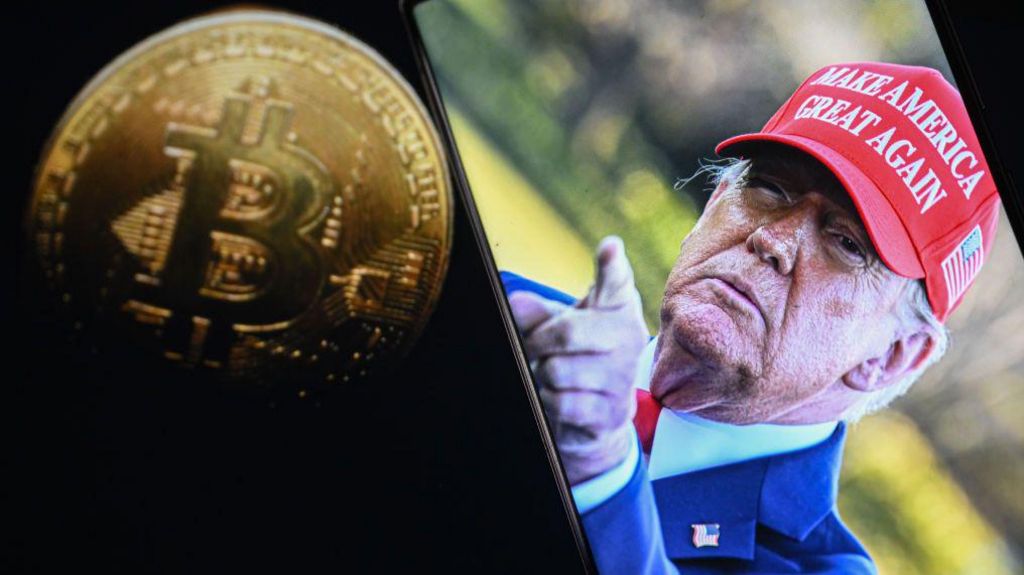
According to a mandatory public financial disclosure report released on Tuesday, former and current President Donald Trump earned at least $2.2 billion in his first year back in the Oval Office in 2025 – nearly four times the $622 million he reported in 2024, the year before he reclaimed the presidency. Of that staggering sum, more than $1.4 billion came directly from cryptocurrency ventures tied to his family and close political allies, a figure that has sparked widespread debate over ethical standards and conflicts of interest in the executive branch.
Breakdown of the president’s disclosed earnings shows $635 million in royalties from Celebration Coins, the entity behind the $TRUMP meme coin launched just days before his second inauguration. Another $500 million-plus came from World Liberty Financial, a crypto startup founded by Trump’s adult sons Donald Trump Jr. and Eric Trump, alongside the sons of Steve Witkoff – Trump’s appointed special envoy to the Middle East and Ukraine.
Presidential historians emphasize this level of personal profit while in office is completely without precedent in American history. “There’s just no precedent for this,” said Barbara Perry, a presidential scholar at the University of Virginia’s Miller Center. “It’s beyond anything we’ve ever seen in the presidency.” While past administrations have faced financial scandals, none have involved the sitting president directly earning billions while holding office. During Ulysses S. Grant’s tenure, Treasury Department officials were caught in gold and customs corruption schemes, but Grant was never accused of personal enrichment. The 1920s Teapot Dome scandal, which saw Interior Secretary Albert Fall accept bribes for oil leases, also did not implicate President Warren G. Harding directly in personal gain.
Even modern cases of family influence peddling pale in comparison to Trump’s earnings, historians note. Jimmy Carter’s brother promoted a beer brand during his brother’s presidency, and Hunter Biden drew scrutiny for business dealings with a Ukrainian energy firm while his father was vice president. Perry says the scale of Trump’s profits makes this a fundamentally different situation: “Making money hand over fist in office, it’s not illegal but it is unethical. Most [past] presidents didn’t want to do that.”
Trump has followed the same path in his second term that he took in his first, declining to place his business interests in a traditional blind trust or fully divest from his holdings. Before his 2025 inauguration, the Trump Organization announced the president would not participate in day-to-day operations, and Eric Trump pledged the company would follow “robust ethical standards.” But critics point to multiple policy moves that directly benefited the president’s crypto and business interests.
Just four months after World Liberty Financial launched its digital currency project, Trump signed federal legislation supporting stablecoin regulation. Last October, he pardoned Changpeng Zhao, founder of major crypto exchange Binance, a reversal of his earlier position that dismissed crypto as a “disaster waiting to happen.” Beyond crypto, a New York Times report revealed that after Trump struck a critical minerals deal with Kazakhstan’s president, his sons took a minority stake in a firm connected to the project, with ties to Commerce Secretary Howard Lutnick’s family investment firm also involved.
The White House has forcefully denied any wrongdoing or conflicts of interest. “Neither the President nor his family has ever engaged – or will ever engage – in conflicts of interest,” White House deputy press secretary Anna Kelly said in a formal statement. She added that all administration actions are taken exclusively for the benefit of the American public, and claims of improper profit are nothing more than a “tired, false narrative” pushed by political opponents and legacy media.
Trump himself has dismissed the criticism, attributing his earnings to broader stock market gains and saying he remains uninvolved in his personal financial affairs. “I don’t get involved in my personal [finances], we have funds that run my money,” he told reporters Wednesday. “I’ve made a lot of money before I became president, and they invest my money, and I don’t talk to them.”
Ethics experts, however, say the scale of Trump’s crypto profits – particularly those tied to policy actions he has taken – create an unacceptable conflict for American voters. “Of course it’s a conflict of interest,” said Richard Painter, former chief White House ethics lawyer under George W. Bush, in an interview with the BBC. “This is a very, very troubling situation for the American people to see their president making so much money.”